
Description
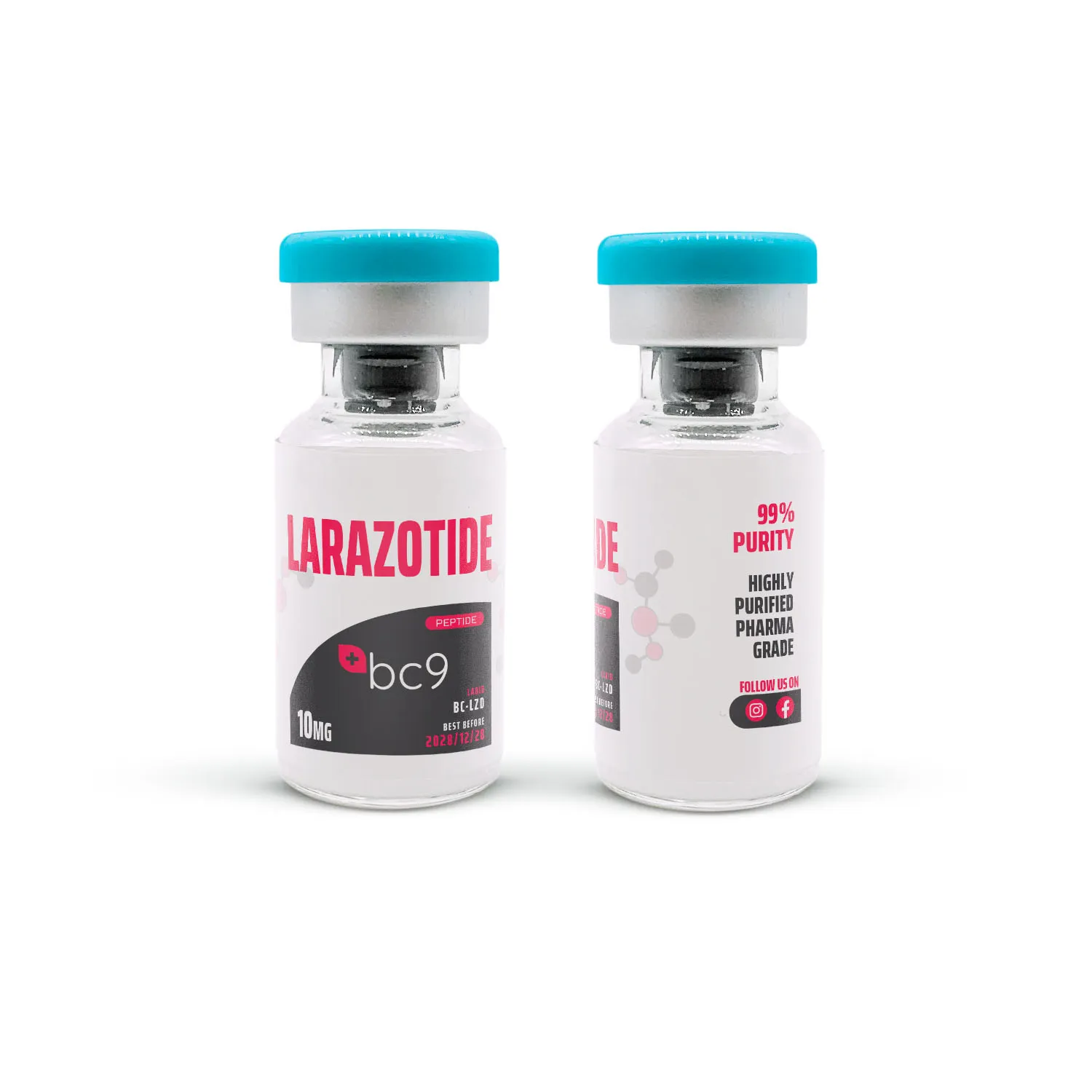
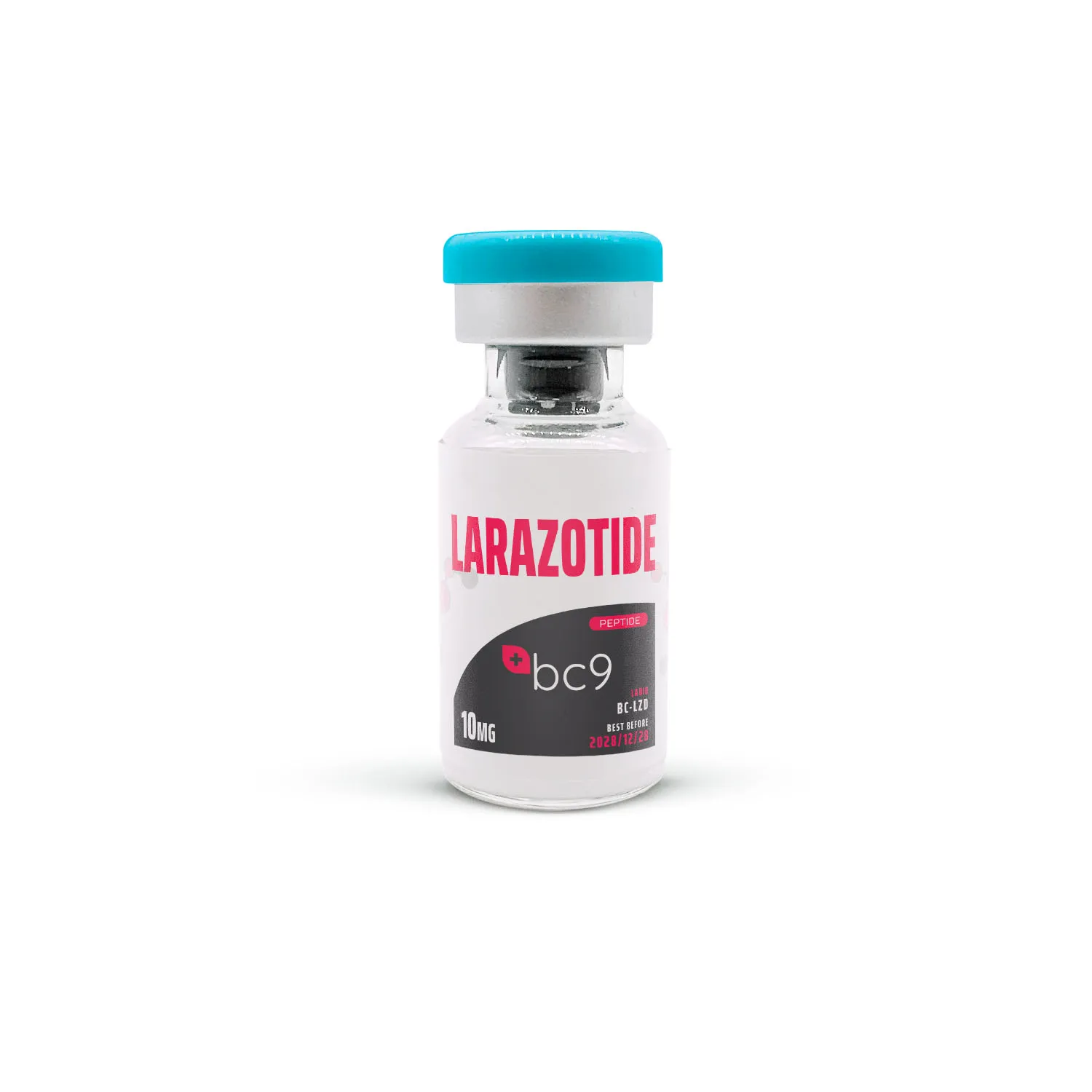
Larazotide 10mg
Larazotide acetate (INN: larazotide; also known as AT-1001) is a synthetic octapeptide derived from the zonula occludens toxin (ZOT) produced by Vibrio cholerae. It is classified as a tight junction regulator, a compound investigated for its capacity to modulate the assembly and permeability of intercellular tight junction complexes in epithelial tissue models.
The compound emerged from research into zonulin-pathway signaling, a biological axis involved in the dynamic regulation of paracellular permeability across mucosal surfaces. Preclinical and early investigational models have positioned Larazotide as a tool compound for studying tight junction disassembly and reassembly. It has particular relevance to barrier dysfunction research involving immune-mediated and inflammatory processes.
BC9’s Larazotide is supplied as a lyophilized powder in a 10mg research vial, manufactured to rigorous purity standards and intended strictly for qualified researchers operating within controlled laboratory environments.
| Property | Value |
|---|---|
| CAS Number | 258818-34-7 (free base) | Note: Larazotide is also available as the acetate | salt (CAS 881851-50-9, MW ~785.9 Da). Chemical | data on this page refers to the free base form. | Researchers should confirm the supplied form prior | to experimental use. |
| Molecular Weight | 725.845 g/mol |
| Molecular Formula | C32H55N9O10 |
| Pubchem CID | 9810532 |
| Synonyms | AT-1001, Larazotide Acetate, INN-202 |
Key Characteristics
Larazotide’s principal mechanistic interest lies in its antagonism of the zonulin signaling pathway. Zonulin is an endogenous protein that modulates tight junction opening via PAR2 (protease-activated receptor 2) and EGFR-mediated pathways.
Preclinical data suggest Larazotide competitively interferes with this signaling cascade, thereby attenuating paracellular permeability increases induced by zonulin or related triggers.
This tight junction-stabilizing profile makes it a functionally distinct research tool in the investigation of epithelial barrier physiology.
Possible Research Applications
Intestinal Barrier Integrity & Tight Junction Research
Preclinical findings suggest Larazotide may stabilize epithelial tight junction complexes by modulating zonulin-pathway activity. A few in vitro models also demonstrate that attenuation of paracellular permeability increases under challenge conditions.
Gluten-Mediated Permeability Modeling
Preclinical and early investigational data indicate that Larazotide may attenuate gluten-induced upregulation of intestinal permeability markers in controlled research models. Published investigational findings have examined tight junction protein redistribution and mucosal immune activation under gluten challenge conditions, providing a framework for barrier dysfunction modeling in immune-mediated permeability research.
Zonulin Pathway Research
As a structurally derived ZOT antagonist, Larazotide represents an investigational tool compound for delineating the functional role of zonulin signaling in epithelial biology. Research models have applied Larazotide to explore PAR2-dependent permeability regulation, EGFR-mediated pathway interactions, and associated downstream effectors governing paracellular transport across mucosal surfaces in controlled laboratory environments.
Disclaimer
This content is presented exclusively for educational purposes and should not be construed as medical advice. THE MATERIALS REFERENCED HEREIN ARE EXCLUSIVELY INTENDED FOR LABORATORY AND RESEARCH USE.
Any clinical research initiatives must be conducted under the guidance of the relevant Institutional Review Board (IRB). Similarly, preclinical research involving animals must comply with the directives of the Institutional Animal Care and Use Committee (IACUC), adhering to the standards delineated by the Animal Welfare Act (AWA).
Our informational content is meticulously designed for research-oriented insights and is not a substitute for individual analysis and verification from credible sources before any purchasing decisions are made.
Upon finalizing your order and payment, you explicitly acknowledge and agree to adhere to our Terms and Conditions. Customer contentment stands as our paramount concern. If you are dissatisfied with the product received, kindly contact us at 419-707-5450 or email our support team at support@bc9.co.
IMPORTANT NOTICE: All products showcased on our platform are EXCLUSIVELY INTENDED FOR LABORATORY AND RESEARCH APPLICATIONS. They are expressly not for use in veterinary or human utilization.
FAQs
What is Larazotide and what is it used for in research?
Larazotide (AT-1001) is a synthetic octapeptide derived from the zonula occludens toxin produced by Vibrio cholerae. In controlled preclinical research settings, it is investigated as a tight junction regulator and zonulin-pathway antagonist. Research applications include intestinal barrier integrity studies, gluten-mediated permeability modeling, and PAR2- dependent paracellular transport research in epithelial tissue models.
What is the difference between Larazotide free base and Larazotide acetate?
Larazotide free base (CAS 258818-34-7) has a molecular weight of 725.845 Da and formula C₃₂H₅₅N₉O₁₀. The acetate salt form (CAS 881851-50-9) has a molecular weight of approximately 785.9 Da and formula C₃₄H₅₉N₉O₁₂. Researchers should confirm the specific form supplied before applying reconstitution protocols or interpreting concentration-dependent experimental results, as the differing molecular weights affect molar dosing calculations.
How does Larazotide modulate tight junction function in preclinical models?
Preclinical data suggest Larazotide competitively interferes with zonulin-pathway signaling by antagonizing ZOT-derived receptor engagement at PAR2 and EGFR-mediated pathways. This mechanism attenuates paracellular permeability increases induced by zonulin or related triggers in epithelial tissue models, stabilizing tight junction complex assembly under challenge conditions in controlled laboratory environments.
What are the storage and handling requirements for Larazotide?
Larazotide is supplied as a lyophilized powder with a recommended storage temperature of –20°C or below, protected from light and moisture. Once reconstituted, aliquot immediately to minimize freeze-thaw degradation. Do not store reconstituted solution at ambient temperature. Handle using appropriate PPE including nitrile gloves and eye protection during reconstitution.
Is Larazotide listed on the WADA Prohibited List?
Larazotide is not currently listed on the WADA Prohibited List. Researchers operating in sport-adjacent research contexts are advised to verify current status via GlobalDRO.com prior to use, as prohibited list classifications are subject to annual revision.
Is Larazotide legal to purchase in the United States?
Larazotide is a research chemical not approved by the FDA for use outside of controlled laboratory settings. It is legal to purchase in the United States exclusively for laboratory research purposes. It is not approved for human or veterinary administration under any circumstance.
References
Paterson BM, Lammers KM, Arrieta MC, Fasano A, Meddings JB. The safety, tolerance, pharmacokinetic and pharmacodynamic effects of single doses of AT-1001 in coeliac disease subjects: a proof of concept study. Aliment Pharmacol Ther. 2007;26(5):757–766. 🔗 https://pubmed.ncbi.nlm.nih.gov/17697208/
Kelly CP, Green PH, Murray JA, et al. Larazotide acetate in patients with coeliac disease undergoing a gluten challenge: a randomised placebo-controlled study. Aliment Pharmacol Ther. 2013;37(2):252–262. 🔗 https://pubmed.ncbi.nlm.nih.gov/23163616/
Watts T, Berti I, Sapone A, et al. Role of the intestinal tight junction modulator zonulin in the pathogenesis of type I diabetes in BB diabetic-prone rats. Proc Natl Acad Sci USA. 2005;102(8):2916–2921. 🔗 https://pubmed.ncbi.nlm.nih.gov/15710870/
Lammers KM, Lu R, Brownley J, et al. Gliadin induces an increase in intestinal permeability and zonulin release by binding to the chemokine receptor CXCR3. Gastroenterology. 2008;135(1):194–204. 🔗 https://pubmed.ncbi.nlm.nih.gov/18485912/

Reviews
There are no reviews yet