
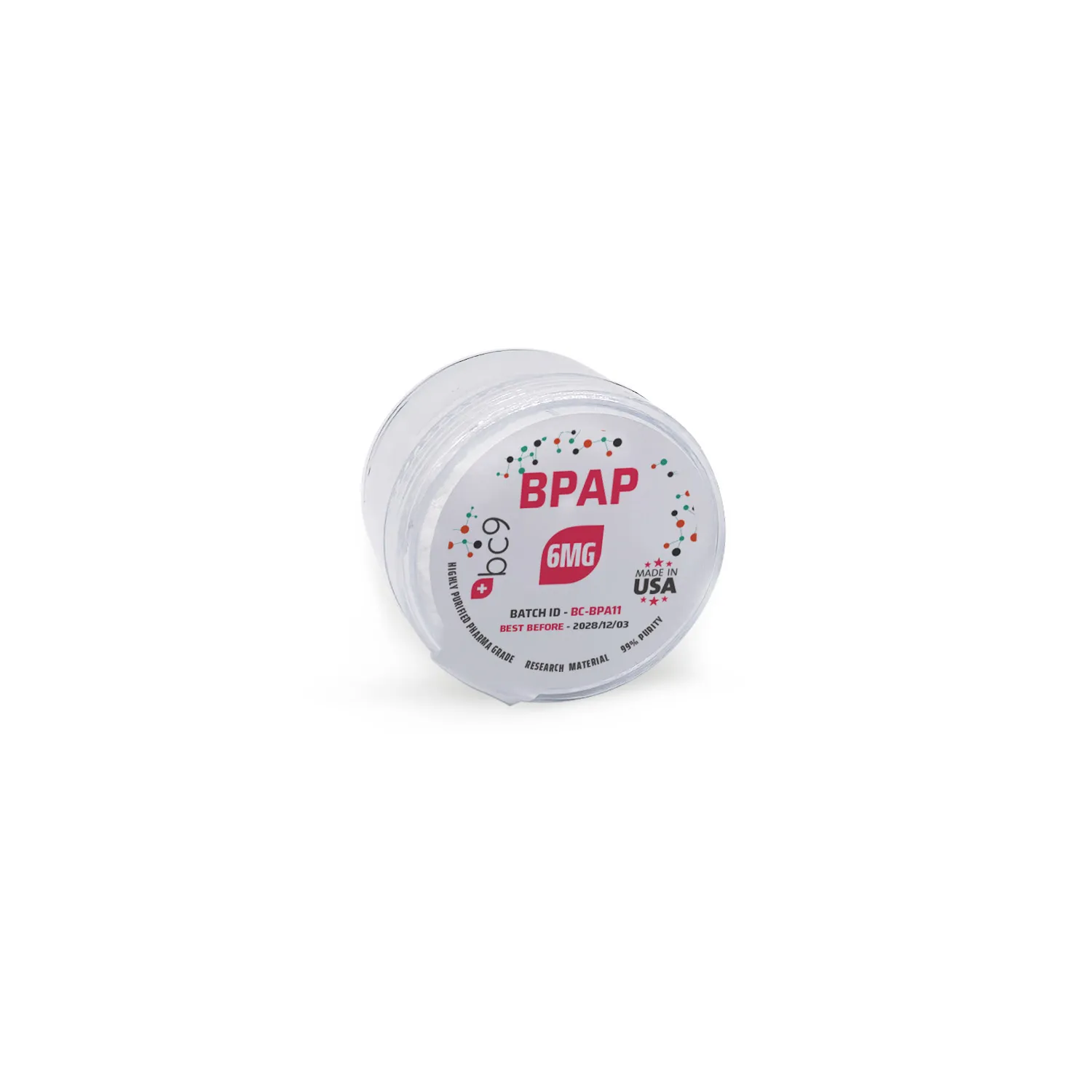
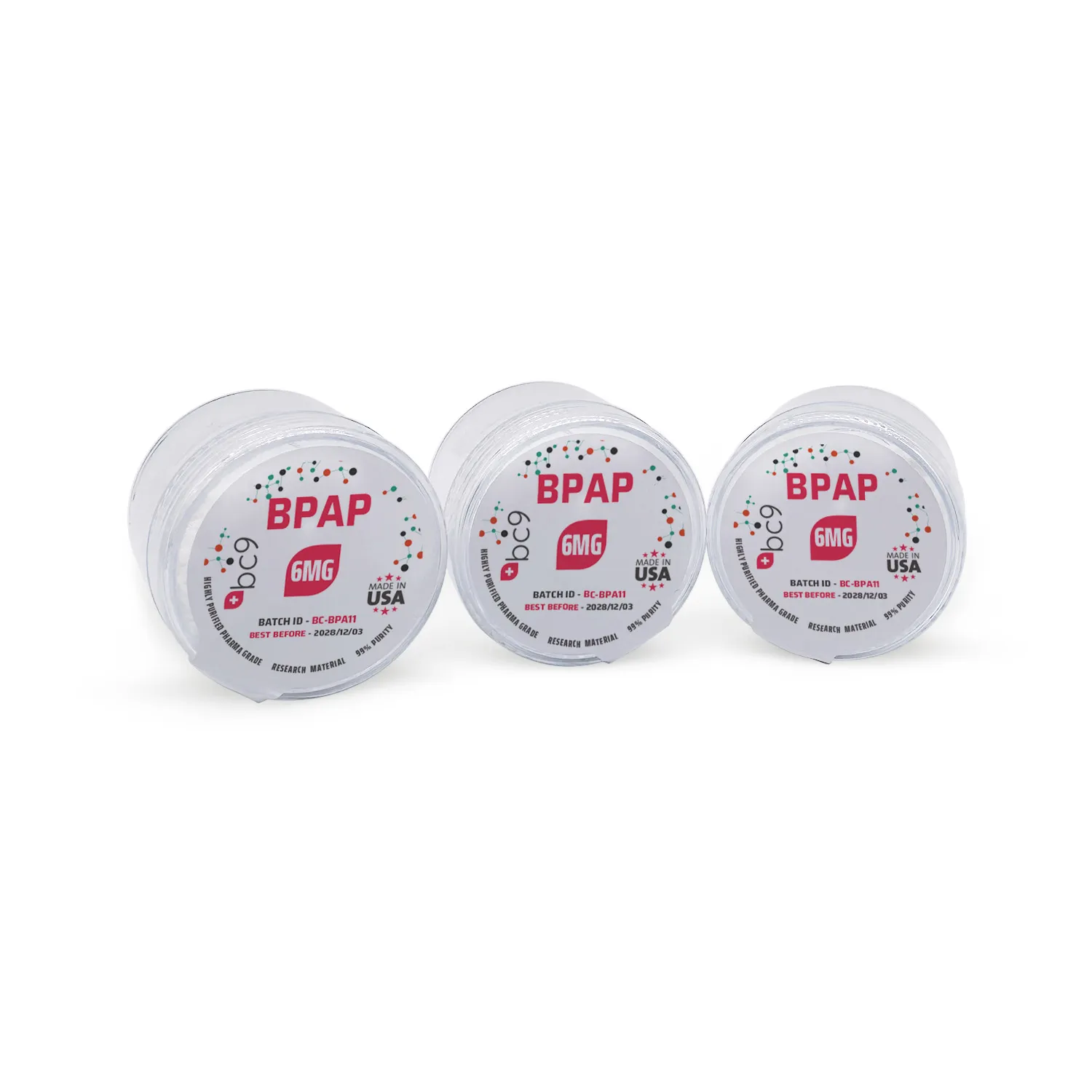
Description
| BPAP | |
| CAS Number | 260550-89-8 |
| Molar Mass | 245.36 g/mol |
| Chemical Formula | C16H23NO |
| IUPAC Name | (R)-1-(1-Benzofuran-2-yl)-N-propylpentan-2-amine |
Introduction
BPAP is a benzofuran derivative and small molecule nootropic compound supplied strictly for laboratory and in vitro research use. It is studied by researchers investigating monoaminergic signaling, neuronal impulse propagation, and neuroprotective cell mechanisms. BPAP is not intended for human consumption, veterinary use, or any application outside of a controlled research setting.
Key Characteristics
BPAP is manufactured to a high standard of chemical purity to support reproducible research outcomes. Each batch is formulated with attention to structural precision and lot-to-lot consistency, allowing researchers to rely on stable results across independent experiments.
Research Applications
BPAP is used in neuropharmacology and cell biology research to investigate monoamine neurotransmitter dynamics, receptor-mediated signaling pathways, and neuronal cell survival mechanisms. It serves as a mechanistic tool for probing impulse-dependent transmitter release and downstream intracellular signaling cascades in model systems.
Research Benefits
BPAP and Catecholamine Release Modulation
Research suggests BPAP acts on trace amine-associated receptors to selectively enhance the impulse-propagation-mediated release of noradrenaline, dopamine, and serotonin from neuronal tissue, rather than causing a bulk, non-selective release of stored transmitter. Studies have investigated this bell-shaped, concentration-dependent effect in isolated brain tissue, offering researchers a tool to explore how trace amine receptor activity shapes monoaminergic output.
BPAP and Mitochondrial Neuroprotection
Studies propose that BPAP stabilizes mitochondrial membrane potential and upregulates the anti-apoptotic protein Bcl-2, which may contribute to protecting dopaminergic cells from apoptosis triggered by neurotoxic compounds. Researchers use this model to investigate stereochemistry-dependent neuroprotective mechanisms relevant to Parkinson’s disease cell biology research.
BPAP and Drug-Seeking Behavior Modulation
Research indicates that repeated and acute administration of BPAP may attenuate the reinstatement of methamphetamine-seeking behavior in animal models, an effect linked to downstream dopamine D1-like receptor signaling. This offers researchers a framework for investigating the neurochemical basis of relapse-related behavior in addiction studies.
Summary
BPAP is a benzofuran-derived small molecule nootropic supplied exclusively for laboratory research. It supports investigation into three distinct areas: monoaminergic release modulation, mitochondrial neuroprotection, and drug-seeking behavior in preclinical models. As with all research compounds in this catalog, BPAP is intended strictly for research use and not for human or veterinary application.
Disclaimer
This content is presented exclusively for educational purposes and should not be construed as medical advice. THE MATERIALS REFERENCED HEREIN ARE EXCLUSIVELY INTENDED FOR LABORATORY AND RESEARCH USE.
Any clinical research initiatives must be conducted under the guidance of the relevant Institutional Review Board (IRB). Similarly, preclinical research involving animals must comply with the directives of the Institutional Animal Care and Use Committee (IACUC), adhering to the standards delineated by the Animal Welfare Act (AWA).
Our informational content is meticulously designed for research-oriented insights and is not a substitute for individual analysis and verification from credible sources before any purchasing decisions are made.
Upon finalizing your order and payment, you explicitly acknowledge and agree to adhere to our Terms and Conditions. Customer contentment stands as our paramount concern. If you are dissatisfied with the product received, kindly contact us at 419-707-5450 or email our support team at support@bc9.co.
IMPORTANT NOTICE: All products showcased on our platform are EXCLUSIVELY INTENDED FOR LABORATORY AND RESEARCH APPLICATIONS. They are expressly not intended for veterinary or human utilization.
References
- Knoll J, Miklya I, Knoll B. Stimulation of the catecholaminergic and serotoninergic neurons in the rat brain by R-(-)-1-(benzofuran-2-yl)-2-propylaminopentane, (-)-BPAP. Life Sci. 2002 Sep 20;71(18):2137-44. doi: 10.1016/s0024-3205(02)01969-0. PMID: 12204771. Read More
- Maruyama W, Yi H, Takahashi T, Shimazu S, Ohde H, Yoneda F, Iwasa K, Naoi M. Neuroprotective function of R-(-)-1-(benzofuran-2-yl)-2-propylaminopentane, [R-(-)-BPAP], against apoptosis induced by N-methyl(R)salsolinol, an endogenous dopaminergic neurotoxin, in human dopaminergic neuroblastoma SH-SY5Y cells. Life Sci. 2004 May 21;75(1):107-17. doi: 10.1016/j.lfs.2003.12.001. PMID: 15102525. Read More
- Hiranita T, Yamamoto T, Nawata Y. A tryptamine-derived catecholaminergic enhancer, (-)-1-(benzofuran-2-yl)-2-propylaminopentane [(-)-BPAP], attenuates reinstatement of methamphetamine-seeking behavior in rats. Neuroscience. 2010 Jan 20;165(2):300-12. doi: 10.1016/j.neuroscience.2009.10.055. PMID: 19883738. Read More

Reviews
There are no reviews yet