
Description
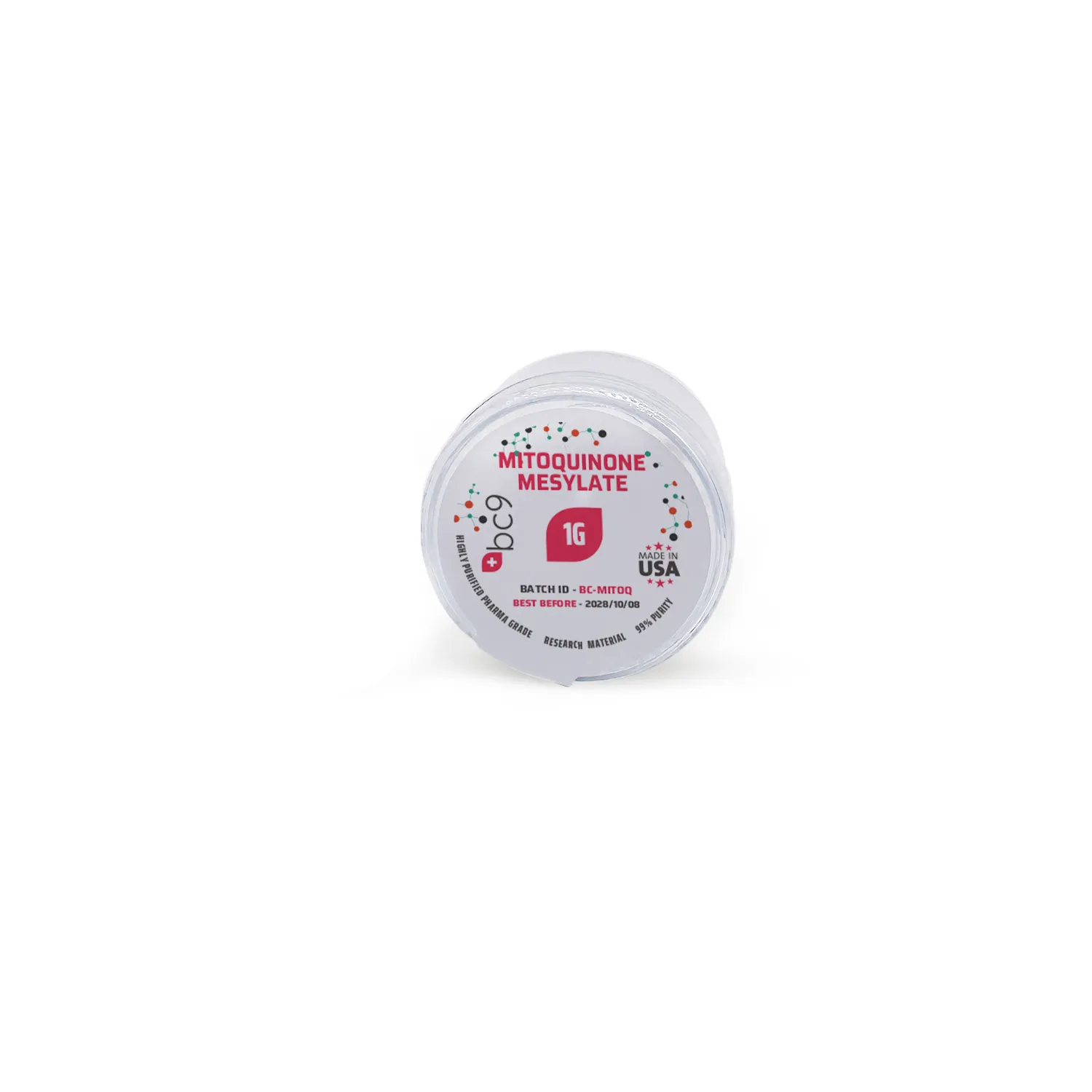
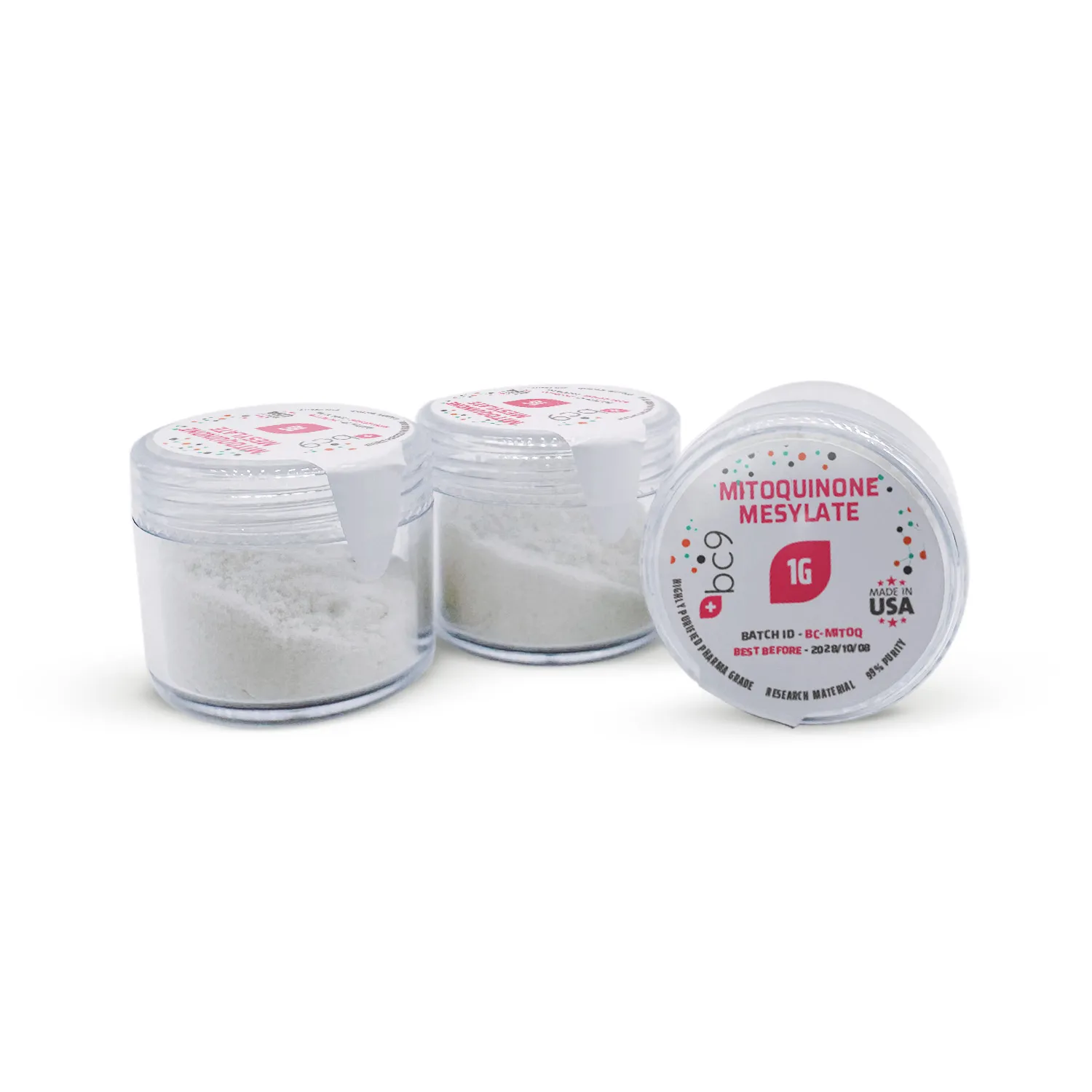
| Mitoquinone Mesylate (MitoQ) | |
| CAS Number | 845959-50-4 |
| Molar Mass | 678.82 g/mol |
| Chemical Formula | C38H47O7PS |
| IUPAC Name | 10-(4,5-dimethoxy-2-methyl-3,6-dioxocyclohexa-1,4-dien-1-yl)decyl-triphenylphosphanium methanesulfonate |
Introduction
Mitoquinone Mesylate (MitoQ) is a ubiquinone-triphenylphosphonium conjugate and small molecule research compound supplied strictly for laboratory and in vitro research use. It is studied by researchers investigating mitochondrial oxidative stress, membrane potential-driven antioxidant targeting, and downstream effects on vascular and hepatic cell function. MitoQ is not intended for human consumption, veterinary use, or any application outside of a controlled research setting.
Key Characteristics
Mitoquinone Mesylate is manufactured to a high standard of chemical purity to support reproducible research outcomes. Each batch is formulated with attention to structural precision and lot-to-lot consistency, allowing researchers to rely on stable results across independent experiments.
Research Applications
MitoQ is used in mitochondrial biology, vascular physiology, and hepatology research to investigate how covalent attachment of ubiquinone to a lipophilic triphenylphosphonium cation drives selective accumulation within the mitochondrial matrix. It serves as a mechanistic tool for probing how this targeted antioxidant delivery relates to oxidative damage, endothelial function, and liver enzyme markers in model systems and research participants.
Research Benefits
MitoQ and Mitochondrial Antioxidant Mechanism
Research indicates that MitoQ accumulates within mitochondria due to the large mitochondrial membrane potential, where the ubiquinone moiety is reduced by the respiratory chain into an active antioxidant form that prevents lipid peroxidation and is continuously regenerated. Studies have investigated this mechanism in cultured mammalian cells, finding that mitochondrially localized MitoQ protected cells from hydrogen peroxide-induced apoptosis, while untargeted ubiquinone analogs lacking the triphenylphosphonium cation were ineffective.
MitoQ and Vascular Endothelial Function
Studies propose that MitoQ supplementation reduces mitochondria-related suppression of vascular endothelial function and arterial stiffening associated with aging. Researchers use this model to explore how mitochondrial reactive oxygen species relate to vascular aging, with a randomized, placebo-controlled, double-blind crossover trial in healthy older research participants finding significantly higher brachial artery flow-mediated dilation and lower aortic stiffness following six weeks of oral MitoQ supplementation compared to placebo.
MitoQ and Liver Enzyme Markers
Research suggests that oral MitoQ administration is associated with significant decreases in serum alanine transaminase and aspartate aminotransferase, markers of hepatic cell damage linked to mitochondrial oxidative stress. Studies have investigated this outcome in a phase II, randomized, double-blind trial among research participants with chronic viral hepatic infection, finding measurable reductions in these liver enzyme markers over a 28-day dosing period compared to placebo.
Summary
Mitoquinone Mesylate (MitoQ) is a ubiquinone-triphenylphosphonium conjugate supplied exclusively for laboratory research. It supports investigation into three distinct areas: mitochondrial antioxidant mechanisms, vascular endothelial function, and liver enzyme markers. As with all research compounds in this catalog, MitoQ is intended strictly for research use and not for human or veterinary application.
Disclaimer
This content is presented exclusively for educational purposes and should not be construed as medical advice. THE MATERIALS REFERENCED HEREIN ARE EXCLUSIVELY INTENDED FOR LABORATORY AND RESEARCH USE.
Any clinical research initiatives must be conducted under the guidance of the relevant Institutional Review Board (IRB). Similarly, preclinical research involving animals must comply with the directives of the Institutional Animal Care and Use Committee (IACUC), adhering to the standards delineated by the Animal Welfare Act (AWA).
Our informational content is meticulously designed for research-oriented insights and is not a substitute for individual analysis and verification from credible sources before any purchasing decisions are made.
Upon finalizing your order and payment, you explicitly acknowledge and agree to adhere to our Terms and Conditions. Customer contentment stands as our paramount concern. If you are dissatisfied with the product received, kindly contact us at 419-707-5450 or email our support team at support@bc9.co.
IMPORTANT NOTICE: All products showcased on our platform are EXCLUSIVELY INTENDED FOR LABORATORY AND RESEARCH APPLICATIONS. They are expressly not intended for veterinary or human utilization.
References
- Kelso GF, Porteous CM, Coulter CV, Hughes G, Porteous WK, Ledgerwood EC, Smith RA, Murphy MP. Selective targeting of a redox-active ubiquinone to mitochondria within cells: antioxidant and antiapoptotic properties. J Biol Chem. 2001 Feb 16;276(7):4588-96. doi: 10.1074/jbc.M009093200. PMID: 11092892. Read More
- Rossman MJ, Santos-Parker JR, Steward CAC, Bispham NZ, Cuevas LM, Rosenberg HL, Woodward KA, Chonchol M, Gioscia-Ryan RA, Murphy MP, Seals DR. Chronic Supplementation With a Mitochondrial Antioxidant (MitoQ) Improves Vascular Function in Healthy Older Adults. Hypertension. 2018 Jun;71(6):1056-1063. doi: 10.1161/HYPERTENSIONAHA.117.10787. PMID: 29661838. Read More
- Gane EJ, Weilert F, Orr DW, Keogh GF, Gibson M, Lockhart MM, Frampton CM, Taylor KM, Smith RAJ, Murphy MP. The mitochondria-targeted anti-oxidant mitoquinone decreases liver damage in a phase II study of hepatitis C patients. Liver Int. 2010 Aug;30(7):1019-26. doi: 10.1111/j.1478-3231.2010.02250.x. PMID: 20492579 Read More

Reviews
There are no reviews yet