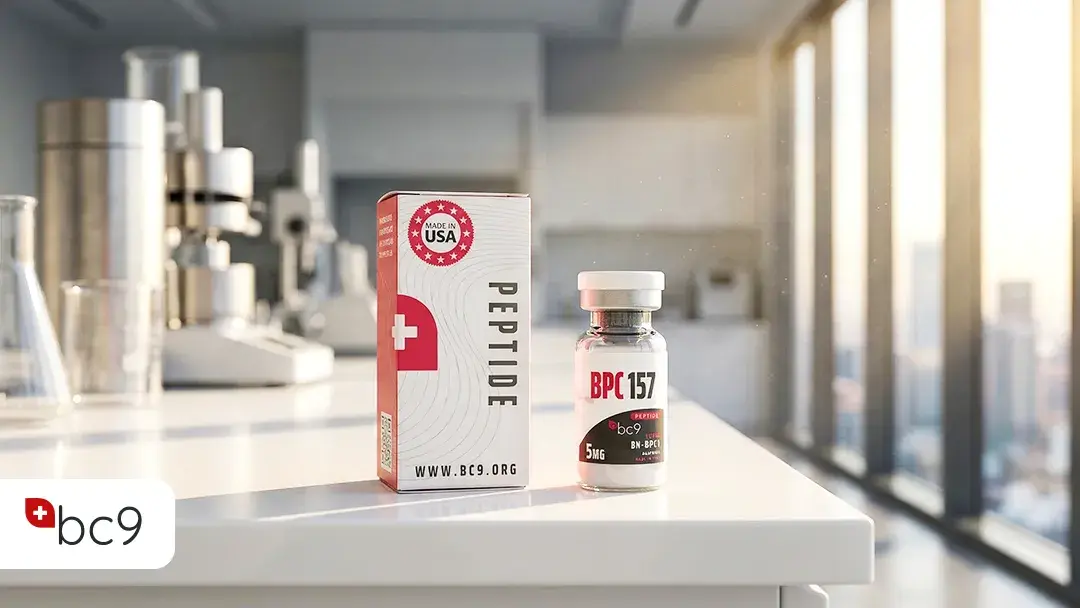

Peptides have been widely used in laboratory and research environments. Despite their functionality, peptide stability has its own limit. This is because peptides are composed of short amino acids, making them highly sensitive to environmental conditions.
This article will explain how peptides should be stored. The goal is to help you preserve stability and prevent degradation. As always, the information here applies to synthetic peptides, classified as research-only compounds.
Understanding Peptide Stability
Peptides are formed by amino acids linked through peptide bonds. The latter can be chemically stable under ideal conditions. However, these bonds may also be vulnerable to environmental stress.
Factors such as temperature fluctuations, humidity, oxygen exposure, and light can alter peptide structure. When structural changes occur, peptide performance in assays and analytical studies may be compromised.
Stability also depends on peptide composition. Certain amino acids are more prone to oxidation or hydrolysis. Length and sequence complexity can further influence degradation rates. Due to these variables, peptides require standardized storage practices instead of casual handling.
Why Proper Storage Is Critical in Research
Improper storage does not always cause immediate failure. Degradation can still happen gradually. This may lead to inconsistent experimental data that is difficult to trace back to storage errors.
Over time, degraded peptides could show reduced purity. Some may demonstrate altered binding properties or unexpected behavior in assays.
In research environments, reproducibility is vital. This means even slight changes in peptide structure can introduce variability. Thus, proper storage helps maintain consistency across experiments and between research batches. This practice also reduces unnecessary costs associated with replacing compromised materials.
Environmental Factors That Affect Peptide Integrity
Temperature Sensitivity
Temperature can be considered to be the most significant factor affecting peptide stability. Elevated temperatures can accelerate chemical reactions, leading to degradation. This explains why peptides are typically stored under refrigerated or frozen conditions.
Frequent temperature changes are particularly damaging. Repeated warming and cooling are known for placing stress on peptide structure. This condition may result in aggregation or bond cleavage. Stable, consistent temperatures are far more protective than intermittent cold storage.
Moisture and Humidity
Moisture can also be a major reason for peptide degradation. Water promotes hydrolysis, and this can break peptide bonds. Lyophilized peptides are especially vulnerable here. The reason for this is that they readily absorb moisture from the air.
Exposure does not need to be prolonged. Brief contact with the surrounding air during handling is enough for degradation to begin. For this reason, peptides should always be handled quickly and stored in tightly sealed containers.
Light Exposure
Light, specifically ultraviolet light, can cause damage to peptides. Specific amino acids absorb UV radiation. Such a situation can lead to bond disruption. Yes, degradation from light is slower, yet it becomes significant over time.
It is not recommended that peptides be stored in clear containers. This is especially applicable if the products are exposed to strong laboratory lighting. Thus, protection from direct and indirect lighting helps preserve long-term stability.
Oxygen Exposure
Oxygen can be a cause of oxidation for sensitive amino acids. Perfect examples are methionine, cysteine, and tryptophan. Due to oxidation, peptide mass and structure alteration could result. This can negatively affect experimental outcomes.
Limiting air exposure during storage and handling could reduce oxidation risk. Airtight containers are an effective measure in this case.
Storing Lyophilized Peptides
Lyophilization can improve stability since the process removes water. Even so, lyophilized peptides remain sensitive to their environment. This means they must be stored correctly.
Temperature Recommendations
Long-term storage life for lyophilized peptides is best achieved at frozen temperatures. Freezers help slow chemical degradation. They are also instrumental in extending shelf life. Now, refrigerated storage may be acceptable for short durations. It still depends on peptide composition.
Storing peptides at room temperature is discouraged. If it cannot be avoided, it should be brief and controlled.
Protecting Against Moisture
Store lyophilized peptides with moisture protection in mind. Dessicants help absorb residual humidity inside storage containers. Vials should be opened only when necessary. Plus, handling should occur in low-humidity settings.
Container Selection
Glass vials are commonly preferred for peptide storage. The reason for this is that glass is chemically inert. Moreover, this material is less likely to interact with peptide material. Plastic containers, on the other hand, may introduce contaminants or absorb peptides.
It is important to emphasize that peptide containers should be airtight. They should also be designed for laboratory use. Secure seals effectively reduce exposure to air and moisture.
Storing Reconstituted Peptides
Remember: Reconstituted peptide experiences decreased stability. Water increases the risk of hydrolysis and microbial contamination. Thus, peptides that have undergone reconstitution require stricter storage controls.
Reduced Stability After Reconstitution
Reconstituted peptides have a shorter lifespan than lyophilized ones. Cold storage is vital to slow degradation processes. Freezing is often useful to extend peptide stability. Yet, care must be taken during handling.
Avoiding Freeze-Thaw Damage
Repeated freeze-thaw cycles can be a typical cause of peptide degradation. Each cycle places stress on the molecular structure. Eventually, it may lead to aggregation or precipitation.
Now, to minimize damage, reconstituted peptides should be divided into small aliquots. This practice allows individual portions to be thawed without repeatedly exposing the entire sample to temperature alterations.
Maintaining Sterile Conditions
Reconstituted peptides are also vulnerable to contamination. Thus, sterile solvents and tools should always be used. Contamination may alter peptide behavior. It can even interfere with experiential.
We recommend that peptide solutions be inspected before use. Changes in clarity or color could be indicators of degradation or contamination.
Common Storage Errors to Avoid
Many peptide storage failures result from simple mistakes. These could refer to the following:
- Storing peptides at inconsistent temperatures
- Allowing moisture exposure
- Using inappropriate containers
- Failing to label samples correctly
Another frequent issue is when researchers assume that lyophilized peptides are immune to degradation. Indeed, they are more stable, yet they are not exempt from the degradation processes. Careful storage applies to every peptide.
Frequently Asked Questions
How long do peptides remain stable when stored properly?
Stability varies by sequence and conditions, but proper, cold, dry, and airtight storage can significantly extend peptide usability.
Should peptides always be stored in a freezer?
Freezer storage is generally preferred for long-term preservation. Although refrigeration may be suitable for short-term storage, it will still depend on peptide properties.
Are lyophilized peptides more stable than reconstituted compounds?
Lyophilized peptides are generally more stable than reconstituted compounds. The absence of water helps slow hydrolysis and degradation.
Conclusion
Peptides are valuable research tools. However, they will require careful storage. Their sensitivity to environmental conditions makes proper handling of primary importance. Temperature control, moisture prevention, light protection, and oxygen limitation all contribute to stability.
Thoughtful storage practices can aid in reducing degradation. They are also helpful in preserving material quality and supporting reproducible research outcomes.