
Description
Disclaimer: This compound is provided strictly for laboratory and scientific research purposes only. It is not approved by the U.S. Food and Drug Administration (FDA) for human or veterinary use, including ingestion, injection, or any form of administration.
Regulatory Notice — Tirzepatide: Tirzepatide (Mounjaro® / Zepbound®) is an FDA-approved prescription drug. BehemothLabz does not sell Tirzepatide. This article is a mechanistic research comparison only and does not imply substitutability or therapeutic equivalence.
Chemical Properties of the Compound
| Property | Details |
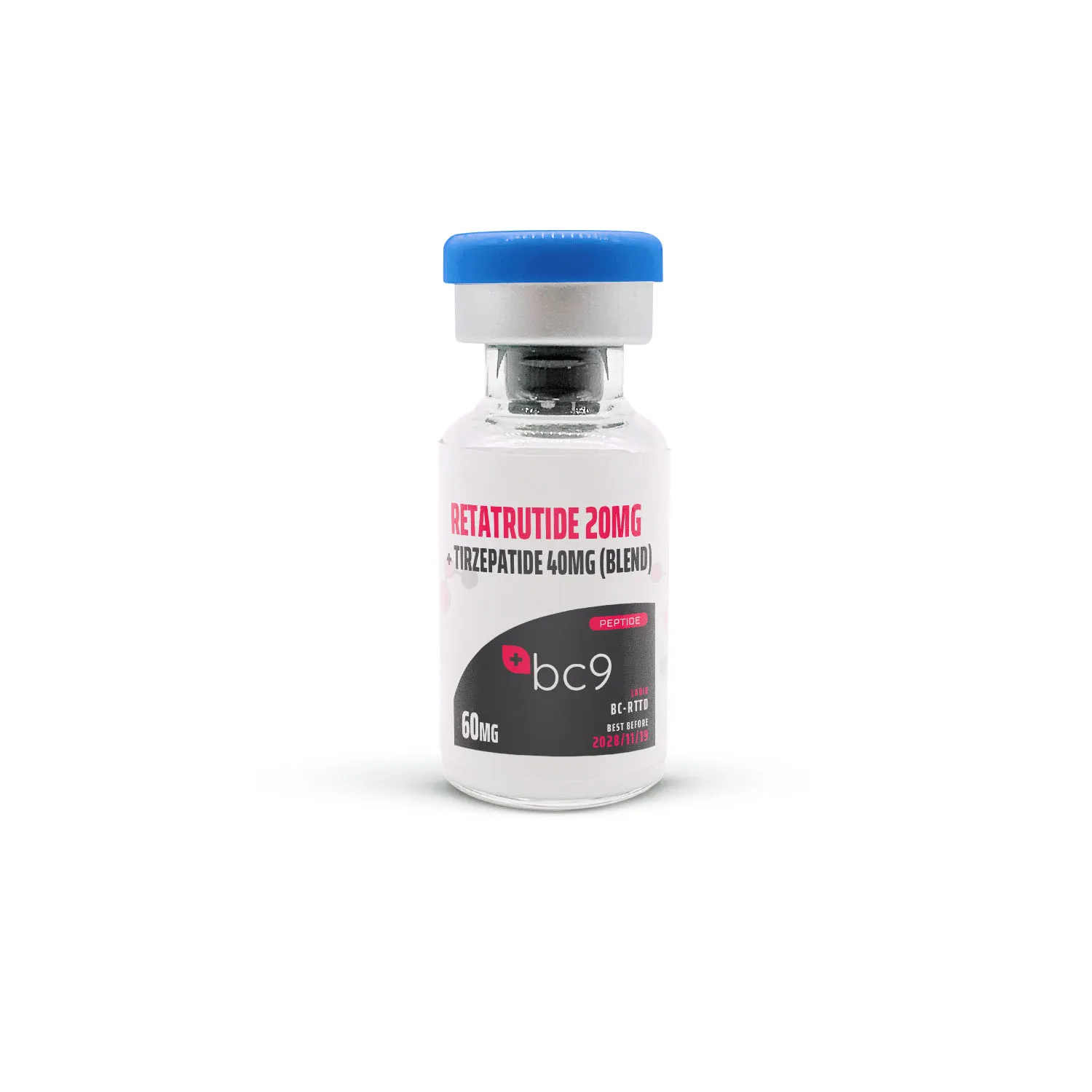
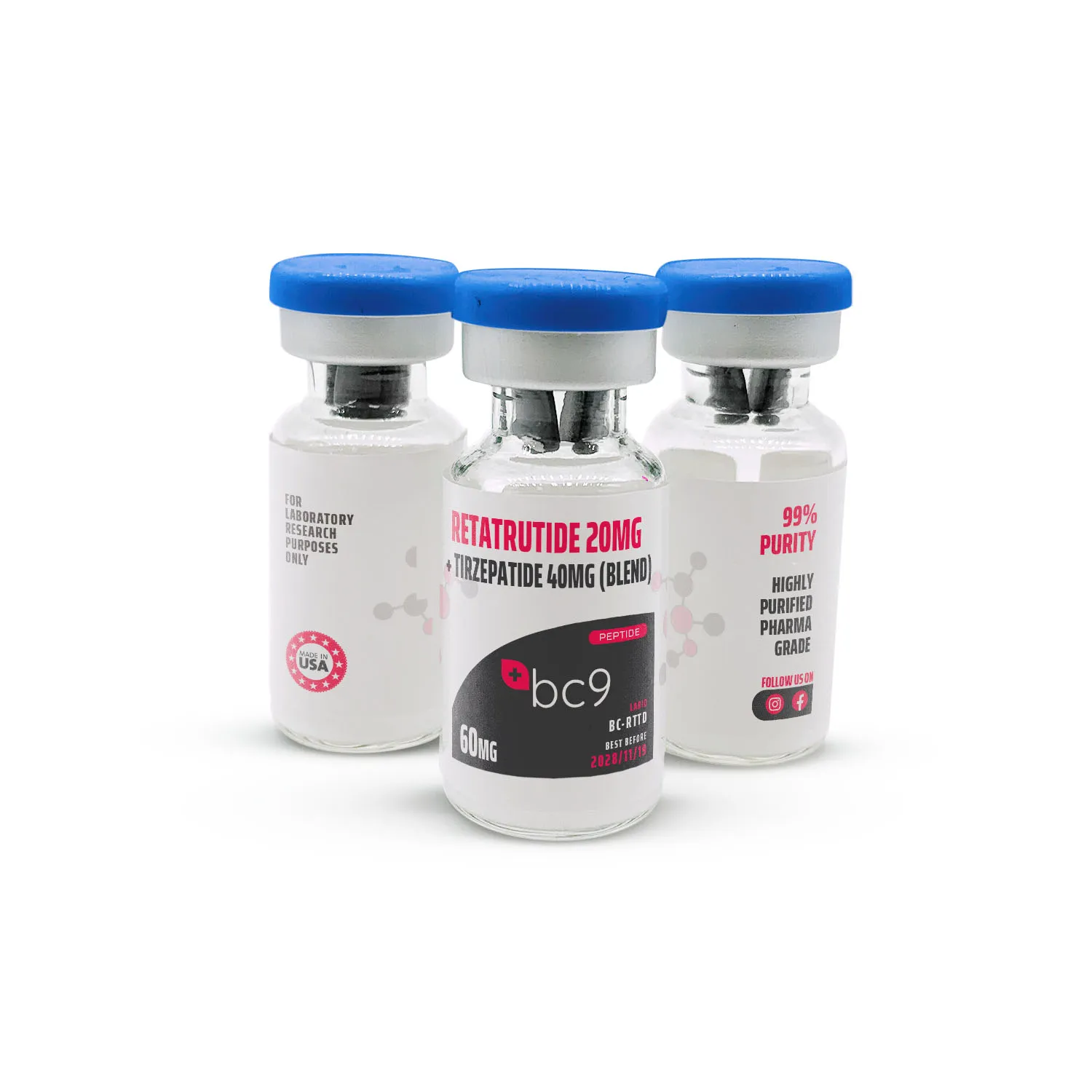
| Product Format | Dual-peptide co-formulation: Retatrutide 20mg + Tirzepatide 40mg per vial |
| Total Vial Dose | 60mg per vial |
| Compound 1 | Retatrutide (LY3437943) — 39-amino acid synthetic triple agonist peptide |
| Compound 2 | Tirzepatide (LY3298176) — 39-amino acid synthetic dual agonist peptide |
| CAS — Retatrutide | 2381089-83-2 |
| CAS — Tirzepatide | 2023788-19-2 |
| Molar Mass — Retatrutide | ~4731.33 Da (with fatty acid modification) |
| Molar Mass — Tirzepatide | ~4813.5 Da |
| Chemical Formula — Retatrutide | C₁₈₆H₂₉₉N₅₅O₅₂S (approximate; acylated) |
| Chemical Formula — Tirzepatide | C₁₈₆H₂ₙ₈N₅₄O₅₁S (approximate; acylated) |
| Peptide Class | GLP-1 / Metabolic — incretin multi-agonist class |
| Receptor Targets | GLP-1R + GIPR + GCGR (Retatrutide) | GLP-1R + GIPR (Tirzepatide) |
| Physical Form | Lyophilized powder |
| Stability / Shelf Life | Stable ≥24 months when stored per instructions |
| Storage Instructions | Store at −20°C, sealed, protected from light and moisture. Reconstitute with bacteriostatic water. |
| Synonyms — Retatrutide | LY3437943, GLP-3RT |
| Synonyms — Tirzepatide | LY3298176, Mounjaro, Zepbound |
| Purity Percentage | ≥98% |
| IUPAC (Retatrutide) | [Aib2,Arg34]GLP-1(7–36)-Lys37-OH fatty-acid conjugate (simplified; see primary literature for full sequence) |
| IUPAC (Tirzepatide) | C20-fatty-diacid-modified GIP/GLP-1 hybrid (39 AA; see Coskun et al. 2022 for full sequence) |
Overview
Retatrutide + Tirzepatide Blend is a dual-peptide research formulation co-formulating two distinct synthetic metabolic peptides in a single lyophilized vial. Retatrutide (LY3437943) is an investigational triple agonist targeting GLP-1R, GIPR, and GCGR — the first research-grade compound to simultaneously activate all three receptor systems implicated in energy homeostasis, glycemic regulation, and hepatic lipid metabolism. Tirzepatide (LY3298176) is a dual agonist targeting GLP-1R and GIPR, representing the preceding generation of incretin multi-agonism. Together, this blend provides a pharmacological tool for comparative incretin receptor signaling research, receptor crosstalk investigation, and multi-pathway metabolic research at the bench level.
This compound is not FDA-approved for human or veterinary use, including ingestion, injection, or any form of administration. It is not a dietary supplement or consumer product. Availability is restricted to qualified researchers and licensed laboratory institutions. Any clinical research initiatives must be conducted under IRB guidance. IACUC compliance is required for preclinical animal research. Note: Tirzepatide is an FDA-approved prescription drug (Mounjaro® / Zepbound®). BehemothLabz does not sell tirzepatide as a pharmaceutical drug. This vial is a research reagent formulation only.
Working Mechanism of Retatrutide + Tirzepatide Blend
Each peptide in this blend operates through distinct but overlapping receptor systems, producing a composite incretin signaling profile that cannot be replicated with a single-receptor or dual-receptor agonist alone:
Retatrutide (GLP-1R + GIPR + GCGR): Retatrutide docks at the extracellular domain of all three Class B GPCRs. At GLP-1R, it initiates Gs-protein coupling → adenylyl cyclase activation → cAMP elevation → protein kinase A activation → insulin secretion and appetite suppression via hypothalamic circuitry. At GIPR, it activates the incretin amplification pathway in pancreatic β-cells and adipose tissue, where GIPR expression mediates lipid trafficking and storage. At GCGR, it activates a Gs-mediated hepatic cAMP cascade driving glycogenolysis, gluconeogenesis modulation, and, critically, a documented increase in energy expenditure in preclinical models that is not observed with GLP-1R/GIPR agonism alone. Cryo-EM structural analysis (2024) confirmed that retatrutide adopts distinct helical conformations at each receptor binding pocket, engaging each via a combination of N-terminal residue insertion into the transmembrane bundle and C-terminal extracellular domain contacts.
Tirzepatide (GLP-1R + GIPR): Tirzepatide adopts an alpha-helical conformation that closely resembles native GIP at the GIPR binding interface — achieving near-native GIPR potency (EC50 ~0.0224 nM vs native GIP EC50 ~0.0334 nM). At GLP-1R, it shows biased cAMP signaling with reduced receptor desensitization, a pharmacological distinction from native GLP-1 that contributes to sustained receptor engagement. The GIPR component drives direct adipocyte engagement — GIPR is expressed in adipose tissue (unlike GLP-1R) — modulating nutrient clearance and lipid partitioning via GIPR-mediated cAMP in adipocytes.
Blend rationale for receptor crosstalk research: The 20:40 (Retatrutide: Tirzepatide) ratio in this formulation provides a research tool for investigating receptor system dominance, downstream pathway integration, and comparative receptor crosstalk between a triple-agonist and a dual-agonist platform within the same experimental system. The shared GLP-1R and GIPR targets mean both peptides will compete for receptor occupancy in cell-based systems, making this formulation appropriate for binding competition and signaling selectivity research designs.
Research Findings / Research Applications
Preclinical investigations have examined this peptide class in relation to:
- Triple vs dual incretin receptor signaling crosstalk: Preclinical pharmacology studies (Coskun et al. 2022, Cell Metab) characterized LY3437943 (retatrutide) as a balanced GCGR/GLP-1R agonist with greater GIPR activity in vitro. In obese rodent models, triple agonism produced greater energy expenditure and body weight reduction than dual agonism, attributed to additive GCGR-driven thermogenic signaling layered on incretin-class appetite suppression.
- Hepatic lipid metabolism pathway investigation: GCGR activation within the retatrutide agonism profile has been investigated for hepatic fat oxidation pathway modulation in preclinical metabolic disease models. Rodent obesity models documented greater hepatic fat reduction with triple agonism relative to dual agonism controls, attributed to GCGR-mediated increases in hepatic fatty acid beta-oxidation gene expression.
- Receptor binding competition and occupancy modeling: As both compounds share GLP-1R and GIPR targets, this blend is a tool for competitive receptor occupancy studies in cell-free and cell-based systems — allowing investigation of how receptor binding affinity differences between retatrutide and tirzepatide manifest in downstream cAMP signaling hierarchy.
- Comparative incretin receptor desensitization kinetics: Tirzepatide’s biased cAMP signaling at GLP-1R (reduced receptor internalization relative to native GLP-1) and retatrutide’s multi-receptor profile provide comparative endpoints for receptor desensitization and resensitization kinetics research in GLP-1R-expressing cell models.
Note: These findings are based on early-stage and preclinical research. Results are not consistent across all models, and data remain limited without validation in human clinical settings.
Risks & Handling Information
- The use of appropriate personal protective equipment (PPE) is essential in conducting experiments involving these peptides. Gloves, eye protection, and a laboratory coat are required at a minimum.
- Handling should occur within controlled laboratory environments designed for research activities. Maintain aseptic conditions during reconstitution.
- Do not inhale, ingest, or make direct skin contact with the compound. Both peptides are GLP-1 pathway active and carry systemic metabolic signaling potential in biological systems.
- The toxicological profile of this specific blend is not fully established. Exposure risks remain uncertain due to limited long-term safety data for co-formulated peptide mixtures at this concentration.
- Improper storage conditions, including exposure to heat, light, or moisture, may result in compound degradation and compromised sample integrity. Store lyophilized product at −20°C until use.
- GLP-1R and GCGR pathway activation in biological research models may modulate gastrointestinal motility, insulin secretion pathways, and energy expenditure parameters — researchers should account for these off-target metabolic pathway interactions in experimental design.
FAQs
What receptor systems does each peptide in this blend target?
Retatrutide targets three receptors: GLP-1R (glucagon-like peptide-1 receptor), GIPR (glucose-dependent insulinotropic polypeptide receptor), and GCGR (glucagon receptor). Tirzepatide targets two: GLP-1R and GIPR. Both share GLP-1R and GIPR as common targets, while retatrutide uniquely adds GCGR activation.
Why is a 20mg retatrutide + 40mg tirzepatide ratio used in this formulation?
The 1:2 molar ratio provides a research platform for investigating receptor system dominance when triple-agonist and dual-agonist peptides compete for shared GLP-1R and GIPR receptors within the same assay system. The higher tirzepatide mass is consistent with its use as the comparator backbone against which the additional GCGR agonism of retatrutide is investigated.
How does GCGR activation differentiate retatrutide from tirzepatide in preclinical models?
GCGR activation by retatrutide in preclinical models drives hepatic cAMP elevation, increasing energy expenditure via thermogenic pathways and augmenting hepatic lipid oxidation. These effects are absent in tirzepatide’s dual GLP-1R/GIPR profile. In obese rodent models, this additional GCGR signaling produced greater body weight reduction than dual agonism alone (Coskun et al. 2022).
Is tirzepatide in this blend FDA-approved?
Tirzepatide is FDA-approved as Mounjaro® (type 2 diabetes) and Zepbound® (obesity/weight management). This research vial is a research reagent formulation only — it is not a pharmaceutical drug and is not approved for any use. BehemothLabz does not sell pharmaceutical-grade tirzepatide.
What storage conditions are required for this blend?
Store lyophilized vials at −20°C in a sealed container, protected from light and moisture. Reconstitute with bacteriostatic water under aseptic conditions. Use reconstituted solution within the manufacturer’s recommended stability window and do not refreeze.
How does this blend compare to a single GLP-1R agonist in receptor research?
A selective GLP-1R agonist (e.g., semaglutide) activates one receptor pathway. This blend provides simultaneous access to GLP-1R, GIPR, and GCGR pathway signaling within a single experimental system, enabling comparative receptor crosstalk, downstream cAMP hierarchy, and receptor desensitization research that cannot be conducted with monoagonist compounds.
References
- Jastreboff AM, Kaplan LM, Frías JP, et al. Triple-Hormone-Receptor Agonist Retatrutide for Obesity — A Phase 2 Trial. New England Journal of Medicine. 2023;389(6):514–526. https://pubmed.ncbi.nlm.nih.gov/37366315/ [PMID 37366315]
- Murphy MG, Plunkett LM, Gertz BJ, et al. MK-677, an orally active growth hormone secretagogue, reverses diet-induced catabolism. J Clin Endocrinol Metab. 1998;83(2):320–325. https://pubmed.ncbi.nlm.nih.gov/9467542/ [PMID 9467542]
This content is presented exclusively for educational purposes and should not be construed as medical advice. THE MATERIALS REFERENCED HEREIN ARE EXCLUSIVELY INTENDED FOR LABORATORY AND RESEARCH USE.
Any clinical research initiatives must be conducted under the guidance of the relevant Institutional Review Board (IRB). Similarly, preclinical research involving animals must comply with the directives of the Institutional Animal Care and Use Committee (IACUC), adhering to the standards delineated by the Animal Welfare Act (AWA).
Our informational content is meticulously designed for research-oriented insights and is not a substitute for individual analysis and verification from credible sources before any purchasing decisions are made.
Upon finalizing your order and payment, you explicitly acknowledge and agree to adhere to our Terms and Conditions. Customer satisfaction stands as our paramount concern. If you are dissatisfied with the product received, kindly contact us at 419-707-5450 or email our support team at support@bc9.co.
IMPORTANT NOTICE: All products showcased on our platform are EXCLUSIVELY INTENDED FOR LABORATORY AND RESEARCH APPLICATIONS. They are expressly not intended for veterinary or human utilization.

Reviews
There are no reviews yet