
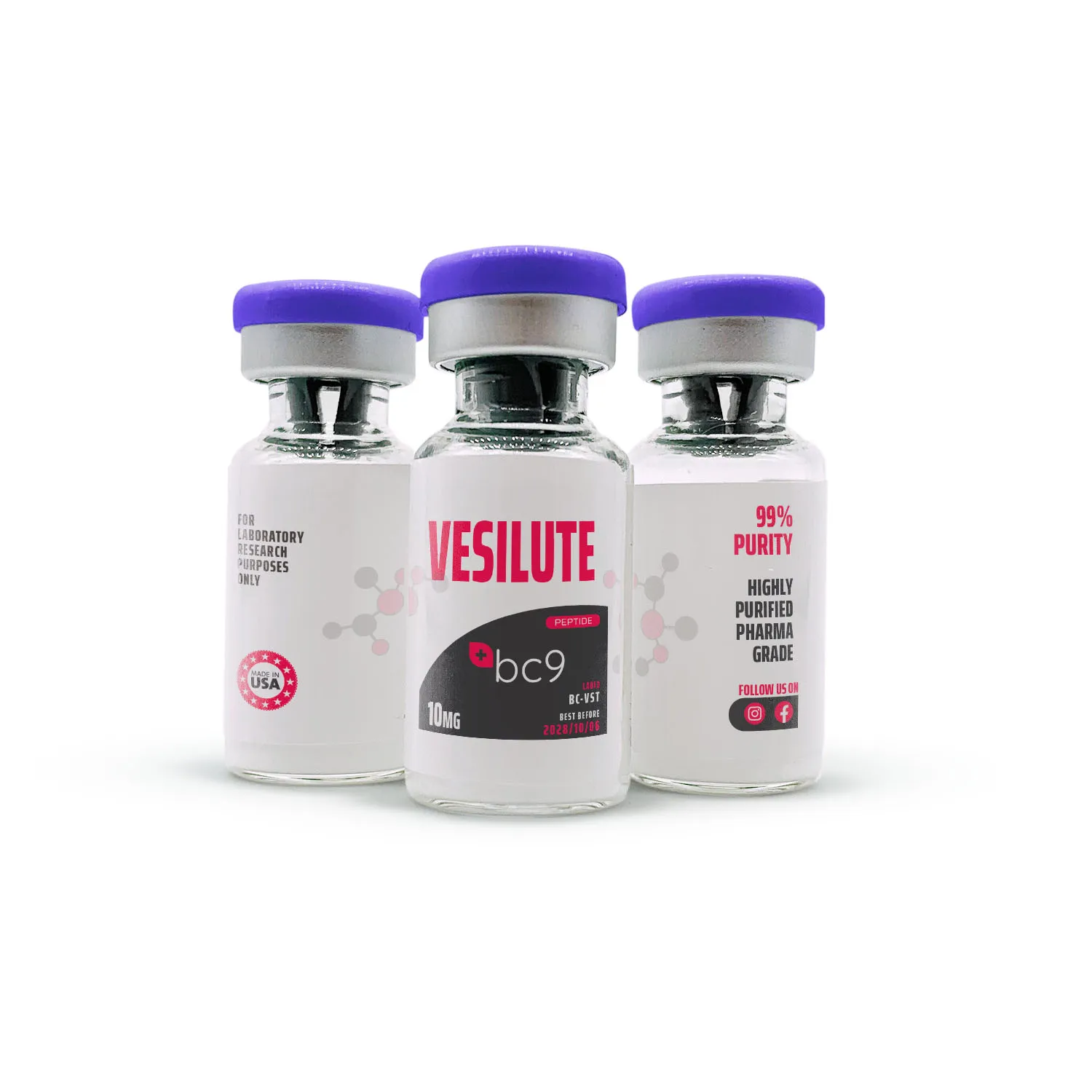
Description
Disclaimer: This compound is provided strictly for laboratory and scientific research purposes only. It is not approved by the U.S. Food and Drug Administration (FDA) for human or veterinary use, including ingestion, injection, or any form of administration.
Chemical Properties of Vesilute
| Property | Details |
| CAS Number | 3918-84-1 |
| Molar Mass | 262.22 g/mol |
| PubChem CID | 99716 |
| Chemical Formula | C9H14N2O7 |
| Stability/ Shelf life | Stable for up to 24 months when stored lyophilized under appropriate conditions |
| Synonyms | H-Glu-Asp-OH; Glu-Asp; ED dipeptide; alpha-glutamylaspartic acid; L-α-Glutamyl-L-aspartic acid |
| Purity | ≥98% (HPLC) |
| Storage Instructions | Store lyophilized Vesilute at −20°C, protected from light and moisture. Following reconstitution, store at 2–8°C and use within 30 days. Avoid repeated freeze-thaw cycles |
| IUPAC Name | (2S)-2-[[(2S)-2-amino-4-carboxybutanoyl]amino]butanedioic acid |
| Solubility | Soluble in water and aqueous buffers |
| Peptide Class | Synthetic dipeptide; short-sequence bioregulator peptide |
| Physical Form | Lyophilized white to off-white powder |
| Wada Status | Vesilute is not currently listed as a prohibited substance under the WADA Prohibited List; verify via GlobalDRO.com before sport science research use |
Overview
Vesilute (H-Glu-Asp-OH) is a synthetic dipeptide composed of glutamic acid (Glu) and aspartic acid (Asp), designated by the single-letter sequence ED. It belongs to the class of short bioregulator peptides studied by researchers at the St. Petersburg Institute of Bioregulation and Gerontology. Based on articles retrieved from PubMed, short peptides of this class are proposed to interact with nucleosomal structures, histone proteins, and DNA sequences to modulate gene expression in experimental models. Short bioregulator peptides of the ED-sequence class, including Vesilute, are studied within this research framework in relation to epigenetic regulation and short peptide DNA-binding activity. Vesilute is not specifically named in this source. These findings apply to the broader class of short bioregulator dipeptides. [Khavinson et al., 2021]
The FDA has not approved Vesilute for human or veterinary use, including ingestion, injection, or any form of administration. It is not a dietary supplement or consumer product. Availability is restricted to qualified researchers at licensed institutions. Clinical research initiatives require guidance from the relevant Institutional Review Board (IRB). Preclinical animal studies must comply with IACUC directives under the Animal Welfare Act (AWA).
Working Mechanism of Vesilute
Short dipeptides of the bioregulator class, including ED-sequence peptides, are proposed to penetrate cell nuclei and interact with nucleosomal structures, histone proteins, and both single- and double-stranded DNA. These interactions are proposed to stimulate gene transcription and replication by reducing the strength of proton bonds in the DNA double helix structure in experimental models. [Khavinson et al., 2012]
Based on articles retrieved from PubMed, age-related decreases in genome methylation are proposed to increase site-specific binding of short peptides to DNA in experimental systems. Short peptide binding is further proposed to inhibit endonuclease hydrolysis of demethylated DNA regions. This suggests a potential role for ED-class dipeptides in epigenetic gene expression regulation. Vesilute has not been independently studied in indexed peer-reviewed literature as a named compound. All mechanistic findings are derived from the broader short peptide bioregulator class only. Human pharmacology data are absent. Findings are not generalizable to human therapeutic outcomes. [Khavinson et al., 2012]
Research Findings / Research Applications
Preclinical investigations have examined short bioregulator peptides of the ED-sequence class in relation to:
Epigenetic Aspects of Short Peptides in DNA Interaction and Gene Expression Modulation
Based on articles retrieved from PubMed, endogenous short peptides in the cyto- and nucleoplasm are products of specific proteolysis of nuclear proteins. These peptides are characterized by charged side groups and complementarily bind to specific short nucleotide sequences in DNA strands. This binding is proposed to reduce proton bond strength in the DNA double helix and stimulate chain separation required for transcription and replication. Age-related decreases in genome methylation are associated with increased site-specific short peptide binding to DNA, with peptide binding further proposed to inhibit endonuclease hydrolysis of demethylated regions. Findings are from molecular and cell-based experimental models only and do not constitute clinical evidence.
[Khavinson et al., 2012 — https://pubmed.ncbi.nlm.nih.gov/22708439/]
Short Peptide Bioregulator Activity in Chromatin Remodeling and Gene Expression Research
Based on articles retrieved from PubMed, short peptides consisting of 2–7 amino acid residues are capable of penetrating cell nuclei and nucleoli and interacting with nucleosomes, histone proteins, and both single- and double-stranded DNA. DNA-peptide interactions in gene promoter regions have been studied in relation to template-directed synthetic reactions, replication, and transcription. Short peptides have been proposed to regulate the status of DNA methylation as an epigenetic mechanism for gene activation or repression in normal conditions and in senescence. These findings are from a systematic review of preclinical literature and do not constitute clinical evidence. Vesilute (Glu-Asp) is not specifically named in this source; findings apply to the broader class of short bioregulator dipeptides.
[Khavinson et al., 2021 — https://pubmed.ncbi.nlm.nih.gov/34834147/]
Note: No PubMed-indexed studies specific to Vesilute (H-Glu-Asp-OH) as a named compound were identified. All findings above are from preclinical research on the broader class of short ED-sequence bioregulator peptides. Results are not consistent across all experimental models, and data remain limited without compound-specific validation or human clinical evidence.
Risks & Handling Information
Risk Tier: LOW-MODERATE. Vesilute is a synthetic dipeptide composed of two endogenous amino acids (glutamic acid and aspartic acid). Its biological activity profile in experimental systems remains incompletely characterized. The full toxicological profile in human biological systems has not been established. Any unintentional exposure should be treated as requiring immediate decontamination and medical consultation.
PPE Requirement: Nitrile gloves, lab coat, and eye protection are required at all times during all handling and reconstitution procedures involving this compound.
Controlled Environment: Handling must occur exclusively within controlled laboratory environments with adequate ventilation, appropriate containment, and institutional biosafety oversight. This compound must not be handled in non-laboratory settings under any circumstances.
Exposure Prohibition: Do not inhale, ingest, or make direct skin contact with this compound. This material is not intended for any form of self-administration or non-laboratory exposure under any circumstances.
Toxicological Status: The full toxicological profile of Vesilute in human biological systems is not established. As a short bioregulator dipeptide proposed to interact with DNA and chromatin structures, researchers must adhere to institutional biosafety protocols applicable to nucleic acid-interacting research compounds.
Storage and Degradation Risk: Maintain lyophilized vials at −20°C until use. Following reconstitution, store at 2–8°C and use within 30 days. Avoid repeated freeze-thaw cycles and exposure to heat, light, or moisture to preserve research-grade peptide integrity.
FAQs
Q: What is the regulatory status of Vesilute in the United States?
Vesilute (H-Glu-Asp-OH) has not been approved by the FDA for human or veterinary use, including ingestion, injection, or any form of administration. It is available exclusively for qualified laboratory and scientific research purposes at licensed institutions.
Q: What is the amino acid composition of Vesilute?
Vesilute is a dipeptide composed of two amino acid residues: L-glutamic acid (Glu, E) and L-aspartic acid (Asp, D). Its single-letter sequence designation is ED. It is identified by CAS number 3918-84-1 and PubChem CID 99716.
Q: What class of compounds does Vesilute belong to?
Based on articles retrieved from PubMed, Vesilute belongs to the class of short bioregulator peptides studied by researchers at the St. Petersburg Institute of Bioregulation and Gerontology. Short peptides of this class are proposed to interact with chromatin structures and regulate gene expression in experimental models. [Khavinson et al., 2021]
Q: Has Vesilute been evaluated in human clinical research?
No peer-reviewed human clinical trials specific to Vesilute (H-Glu-Asp-OH) have been published in indexed literature as of June 2026. Available research is derived from preclinical and in vitro models examining the broader class of short bioregulator dipeptides. Compound-specific findings have not been validated in human clinical settings.
Q: What storage conditions are required to maintain Vesilute integrity for research use?
Lyophilized Vesilute should be stored at −20°C, protected from light and moisture. Following reconstitution in an appropriate aqueous buffer, store at 2–8°C and use within 30 days. Avoid repeated freeze-thaw cycles to preserve peptide integrity.
Q: What distinguishes Vesilute from other short bioregulator dipeptides in the same class?
Vesilute carries the ED (Glu-Asp) dipeptide sequence, distinguishing it from related bioregulator peptides such as Vilon (Lys-Glu) and the tetrapeptides Epitalon (Ala-Glu-Asp-Gly) and Cortagen (Ala-Glu-Asp-Pro). Based on articles retrieved from PubMed, each short peptide bioregulator has been proposed to exert selective effects on specific chromosome regions in experimental models. [Lezhava et al., 2023]
References
Khavinson, V. Kh., Solov’ev, A. Yu., Zhilinskiy, D. V., Shataeva, L. K., & Vaniushin, B. F. (2012). Epigenetic aspects of peptide regulation of aging. Advances in Gerontology, 25(1), 11–22. (No DOI registered; Russian-language publication with English abstract.) https://pubmed.ncbi.nlm.nih.gov/22708439/
Khavinson, V. K., Popovich, I. G., Linkova, N. S., Mironova, E. S., & Ilina, A. R. (2021). Peptide Regulation of Gene Expression: A Systematic Review. Molecules, 26(22), 7053. https://pubmed.ncbi.nlm.nih.gov/34834147/
Lezhava, T., Jokhadze, T., Monaselidze, J., Buadze, T., Gaiozishvili, M., Sigua, T., Khujadze, I., Gogidze, K., Mikaia, N., & Chigvinadze, N. (2023). Epigenetic Modification Under the Influence of Peptide Bioregulators on the “Old” Chromatin. Georgian Medical News, 335, 79–83. https://pubmed.ncbi.nlm.nih.gov/37042594/
BC9 Disclaimer
This content is presented exclusively for educational purposes and should not be construed as medical advice. THE MATERIALS REFERENCED HEREIN ARE EXCLUSIVELY INTENDED FOR LABORATORY AND RESEARCH USE.
Any clinical research initiatives must be conducted under the guidance of the relevant Institutional Review Board (IRB). Similarly, preclinical research involving animals must comply with the directives of the Institutional Animal Care and Use Committee (IACUC), adhering to the standards delineated by the Animal Welfare Act (AWA).
Our informational content is meticulously designed for research-oriented insights and is not a substitute for individual analysis and verification from credible sources before any purchasing decisions are made.Upon finalizing your order and payment, you explicitly acknowledge and agree to adhere to our Terms and Conditions. Customer satisfaction stands as our paramount concern. If you are dissatisfied with the product received, kindly contact us at 419-707-5450 or email our support team at support@bc9.co.
IMPORTANT NOTICE: All products showcased on our platform are EXCLUSIVELY INTENDED FOR LABORATORY AND RESEARCH APPLICATIONS. They are expressly not intended for veterinary or human utilization.

Reviews
There are no reviews yet