
Description
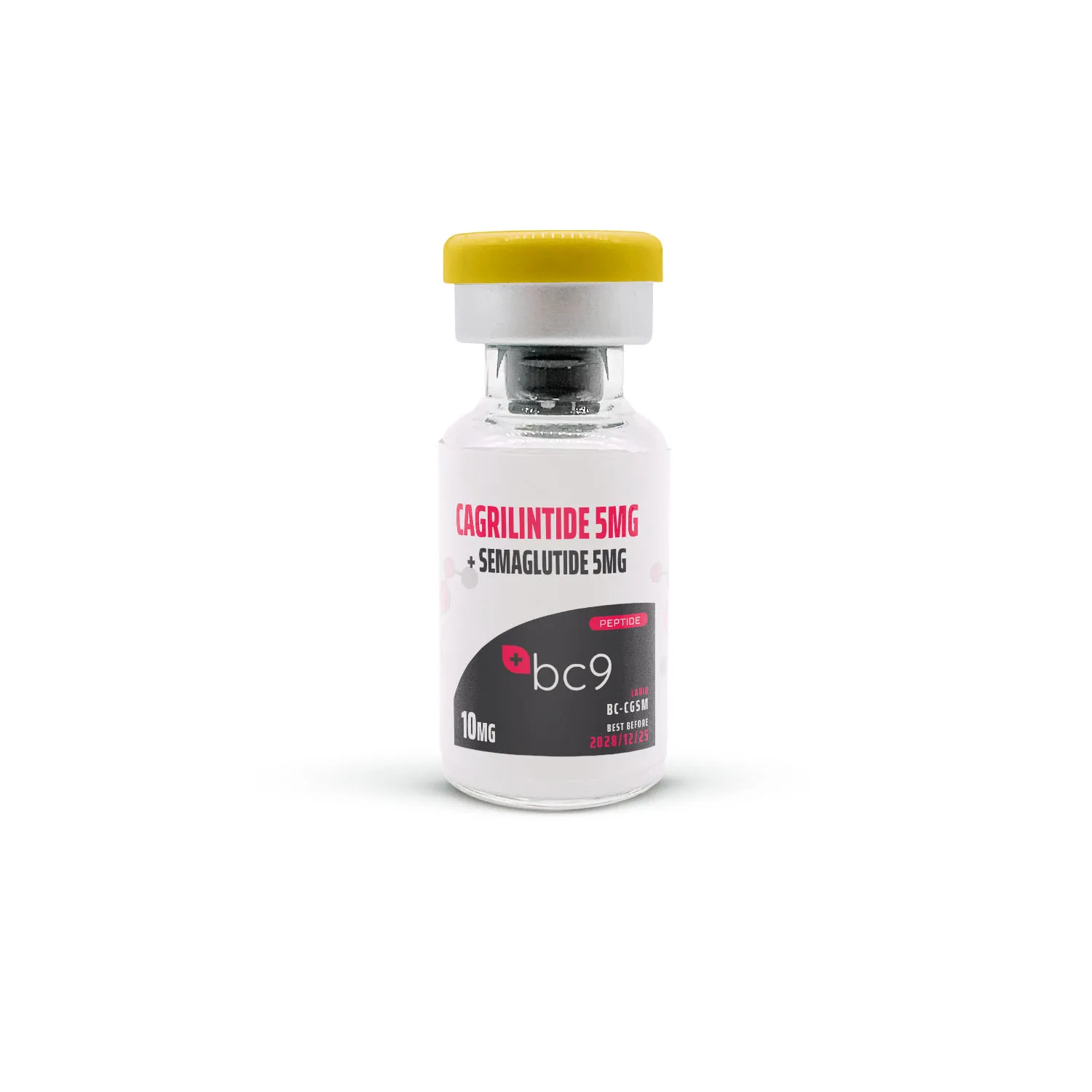
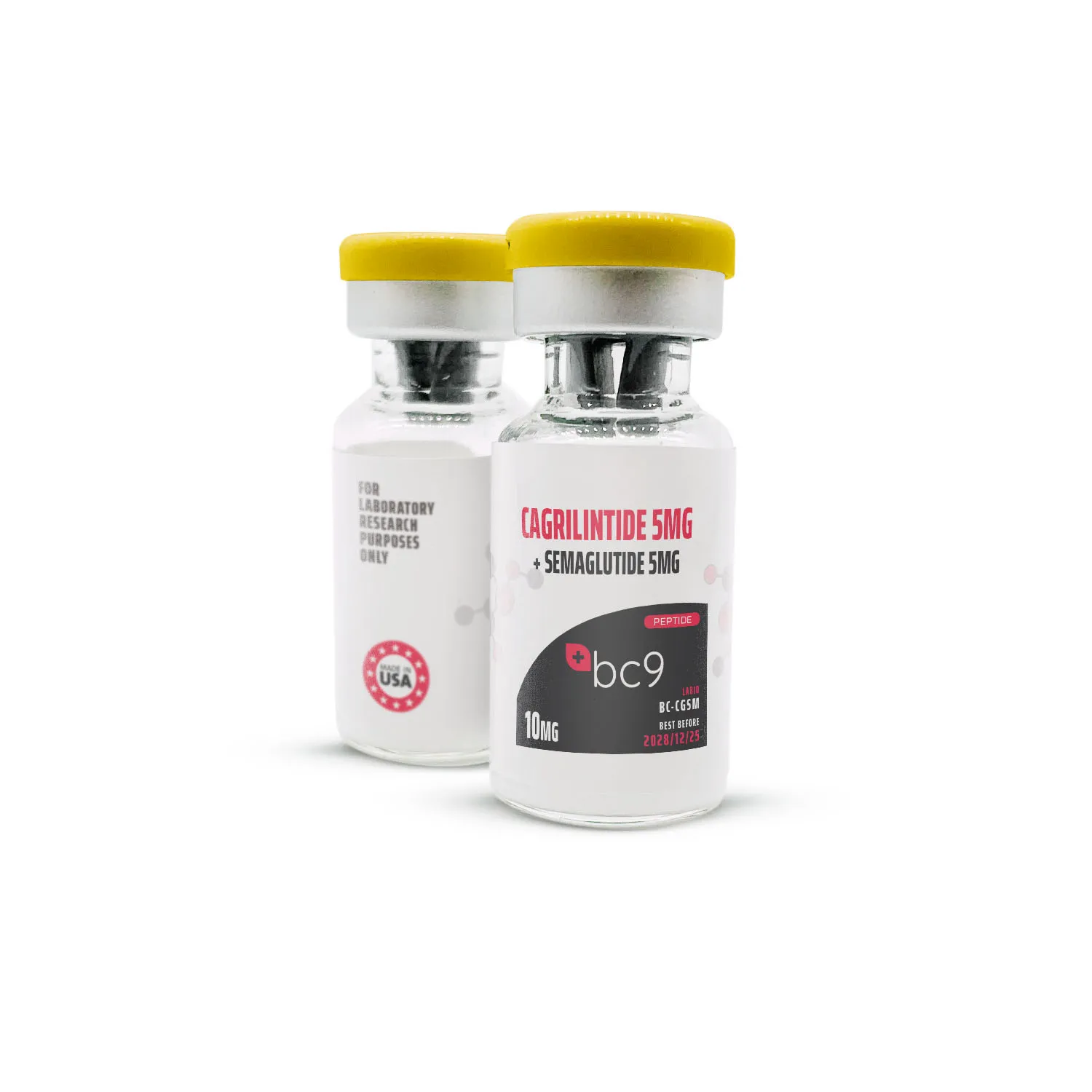
Cagrilintide + Semaglutide (CagriSema) — Research Compound | CS5 | CS10 | CS20
Disclaimer: This compound is provided strictly for laboratory and scientific research purposes only. It is not approved by the U.S. Food and Drug Administration (FDA) for human or veterinary use, including ingestion, injection, or any form of administration.
Regulatory Notice — Semaglutide: Semaglutide (Ozempic® / Wegovy® / Rybelsus®) is an FDA-approved prescription drug. BC9 does not sell semaglutide as a pharmaceutical product. This kit is a research reagent only and does not imply substitutability or therapeutic equivalence.
Available SKUs — 3 Kit Sizes: CS5 — 2.5mg + 2.5mg per vial (5mg total) · CS10 — 5mg + 5mg per vial, 10 vials (100mg total) · CS20 — 10mg + 10mg per vial, 10 vials (200mg total). Same compound, same 1:1 ratio, same mechanism across all three. Differentiated by vial mass and kit volume for different research programme scales. See “Research Applications” for SKU selection guidance.
Correction Notice: All three SKUs list Receptor Targets for cagrilintide as AMY1R / AMY2R / AMY3R / CTR. An earlier version of the CS5 (2.5mg) product page omitted AMY2R from the receptor targets row. This was a documentation error — cagrilintide is a DACRA engaging all four amylin/calcitonin receptor subtypes (AMY1R, AMY2R, AMY3R, and CTR) as confirmed by cryo-EM structural characterization. Corrected throughout this document.
Chemical Properties of the Compound
Shared Properties — All Three Variants
| Property | Details |
| Compound 1 | Cagrilintide (AM833, NN0174-0833) — amylin analog DACRA | CAS 1415456-99-3 |
| Compound 2 | Semaglutide (NN9535) — GLP-1 receptor agonist | CAS 910463–68–2 |
| Molar Mass — Cagrilintide | ~4500 Da (C16 fatty-diacid lipidated) |
| Molar Mass — Semaglutide | ~4113.6 Da |
| Compound Class — Cagrilintide | Amylin/Calcitonin receptor agonist (DACRA) — 37-AA lipidated disulfide-bridged peptide analog |
| Compound Class — Semaglutide | GLP-1 receptor agonist — fatty-acid modified 31-AA peptide |
| Receptor Targets — Cagrilintide | AMY1R / AMY2R / AMY3R / CTR (all four amylin/calcitonin receptor subtypes) |
| Receptor Targets — Semaglutide | GLP-1R |
| Peptide Ratio | 1:1 (equimolar) — maintained across all three SKUs |
| Physical Form | Lyophilized powder |
| Purity | ≥98% |
| Storage | −20°C, sealed, protected from light and moisture |
| IUPAC — Cagrilintide | Lipidated disulfide-bridged 37-AA amylin analog; C16 fatty-diacid at optimized acylation site (full sequence: Kruse et al. 2021, J Med Chem) |
| IUPAC — Semaglutide | GLP-1(7–37) with Aib8, C18 fatty-diacid modification at Lys34 via OEG linker |
| Synonyms | CagriSema | AM833 + NN9535 |
SKU-Specific Format Details
| SKU | Vial Dose | Kit Format | Total Content | Synonym |
| CS5 — Cagrilintide 2.5mg + Semaglutide 2.5mg | 5mg per vial | Single vial | 5mg | CagriSema CS5 |
| CS10 — Cagrilintide 5mg + Semaglutide 5mg | 10mg per vial | 10-vial kit | 100mg total | CagriSema CS10 |
| CS20 — Cagrilintide 10mg + Semaglutide 10mg | 20mg per vial | 10-vial kit | 200mg total | CagriSema CS20 |
Overview
Cagrilintide + Semaglutide (CagriSema) is a dual-peptide research blend co-formulating two mechanistically complementary synthetic peptides targeting distinct, non-overlapping neuroendocrine receptor systems. Cagrilintide (AM833) is a long-acting amylin analog functioning as a dual amylin and calcitonin receptor agonist (DACRA) — engaging all four amylin/calcitonin receptor subtypes (AMY1R, AMY2R, AMY3R, and CTR) with a sustained half-life of approximately 159–195 hours via C16 fatty-diacid albumin binding. Semaglutide is a GLP-1 receptor agonist with an approximately 160-hour half-life via C18 fatty-diacid/OEG albumin binding, activating GLP-1R through Gs-protein coupling. This combination, investigated under the clinical name CagriSema in Novo Nordisk’s REDEFINE Phase 3 programme, exploits mechanistically non-overlapping receptor systems for complementary neuroendocrine appetite circuit and energy homeostasis pathway investigation.
BC9 supplies CagriSema in three research kit sizes — CS5 (5mg/vial), CS10 (10mg/vial, 10-vial kit), and CS20 (20mg/vial, 10-vial kit) — to serve research programmes of different scale and duration. Mechanism, compound ratio, and purity are identical across all three SKUs.
This compound is not FDA-approved for human or veterinary use. Not a dietary supplement or consumer product. Semaglutide is an FDA-approved prescription drug — this kit is a research reagent only. IRB guidance required for clinical research. IACUC compliance required for preclinical animal research.
Working Mechanism of Cagrilintide + Semaglutide Blend
Cagrilintide → Pan-Amylin/Calcitonin Receptor Agonism (AMY1R/AMY2R/AMY3R/CTR — DACRA): Cagrilintide is a 37-amino acid disulfide-bridged amylin analog engineered with a C16 fatty-diacid side chain at an optimized acylation site, enabling reversible albumin binding and a half-life of approximately 159–195 hours. Upon receptor engagement, the peptide adopts an alpha-helical conformation. Cryo-EM structural data (Cao et al. 2025, Nat Commun) revealed a ‘bypass’ binding mode: the F23Cagri residue anchors the peptide at the receptor transmembrane bundle level (distinct from the N-terminal insertion mechanism of most peptide ligands); an intramolecular E14–R17 salt bridge stabilizes the alpha-helical conformation; and C-terminal P37 engages the receptor extracellular domain. This structural basis enables non-selective, pan-receptor engagement of all four amylin/calcitonin receptor subtypes — AMY1R, AMY2R, and AMY3R (heterodimers of the calcitonin receptor with RAMP1, RAMP2, or RAMP3, respectively) and the calcitonin receptor (CTR) itself. Receptor activation initiates Gs-coupled cAMP signaling in the area postrema and nucleus tractus solitarius (NTS) of the hindbrain, projecting appetite-suppressive signals to hypothalamic feeding circuits via an amylin-specific neural pathway mechanistically distinct from GLP-1R signaling.
Semaglutide → GLP-1 Receptor (GLP-1R): Semaglutide is a 31-residue GLP-1 analog with an Aib8 substitution conferring DPP-4 resistance and a C18 fatty-diacid modification at Lys34 via a hydrophilic OEG linker enabling albumin binding and approximately 160-hour half-life. It docks at the GLP-1R extracellular domain, triggering Gs-coupled adenylyl cyclase activation → cAMP elevation → PKA activation. In vagal afferents and hypothalamic GLP-1R circuits, this drives appetite-suppressive signaling; in pancreatic β-cells, it drives glucose-dependent insulin secretion; and it mediates gastric emptying delay via vagal GLP-1R. GLP-1R is anatomically and mechanistically distinct from cagrilintide’s amylin receptor targets — GLP-1R is not expressed on the amylin receptor-bearing area postrema neurons that are cagrilintide’s primary site of action.
Complementary Dual-Pathway Rationale: Amylin receptors (cagrilintide) and GLP-1R (semaglutide) are co-expressed in the dorsal vagal complex but signal through distinct Gs-coupled cascades with different downstream neural circuit projections. Investigational data (Enebo et al. 2021, Lancet, PMID 33894838) document additive appetite suppression and body weight reduction beyond either agent alone, consistent with receptor system complementarity rather than pathway redundancy. The 1:1 equimolar ratio across all three SKUs provides balanced representation of both mechanistic pathways without one receptor system dominating pharmacological output in standard assay systems.
Research Findings / Research Applications
Preclinical investigations have examined this peptide class in relation to:
- Complementary neuroendocrine appetite pathway research: Phase 1b investigational data (Enebo et al. 2021, Lancet, PMID 33894838) documented co-administration of multiple cagrilintide doses with semaglutide 2.4mg over 20 weeks. Additive body weight reductions were documented at 1.2mg and 2.4mg cagrilintide doses relative to semaglutide alone, supporting mechanistic complementarity of amylin receptor + GLP-1R co-activation.
- Amylin receptor structural biology: Cryo-EM structural studies (Cao et al. 2025) of cagrilintide bound to AMY1R, AMY2R, AMY3R, and CTR characterized the ‘bypass’ binding mode distinguishing cagrilintide from earlier amylin analogs, establishing the structural basis for its pan-DACRA pharmacology.
- Long-acting amylin/GLP-1 pharmacokinetics research: Both peptides achieve ~160-hour half-lives via distinct fatty-acid/albumin-binding modifications, making this blend relevant to once-weekly dosing pharmacokinetic protocol development, plasma protein binding competition studies, and albumin binding kinetics research in animal models.
- Dual vs single receptor pathway comparative research: The non-overlapping receptor systems provide a tool for systematic comparison of CagriSema dual-pathway co-activation vs cagrilintide-only (amylin receptor) or semaglutide-only (GLP-1R) controls in matched assay systems.
Note: These findings are based on early-stage and preclinical research. Results are not consistent across all models, and data remain limited without validation in human clinical settings.
Research Kit Selection Guide
CS5 — 2.5mg + 2.5mg (5mg/vial) — Recommended For
- Standard cell-based receptor assays: cAMP accumulation (HTRF/FRET), β-arrestin recruitment, and receptor binding assays at 4–6 concentration points per vial
- Initial pilot studies and assay development requiring smaller reagent volumes before committing to a multi-vial kit format
- Plasma protein binding competition studies: amylin receptor vs GLP-1R albumin-bound peptide competition at standard assay-scale concentrations
- Short-duration (4–8 week) IACUC-compliant animal model protocols with weekly dosing
CS10 — 5mg + 5mg per vial, 10-vial kit (100mg total) — Recommended For
- Full dose-response curve construction: 8–10 concentration points from subthreshold to saturating concentrations in cAMP and receptor binding assay systems
- Multi-month (3–6-month) IACUC-compliant longitudinal animal model protocols requiring consistent once-weekly reagent supply from a matched lot
- Multi-arm parallel experimental designs across multiple cell lines, timepoints, or co-treatment conditions within a single matched-batch research programme
- Comparative pharmacology panels: CagriSema vs cagrilintide-only vs semaglutide-only across multiple concentration points requiring matched-batch control conditions
CS20 — 10mg + 10mg per vial, 10-vial kit (200mg total) — Recommended For
- Largest-scale research programmes: 6–12-month longitudinal IACUC-compliant animal model protocols requiring maximum matched-lot reagent supply
- Comprehensive 10+ point dose-response curves from picomolar to micromolar concentrations in receptor pharmacology assay systems
- Multi-site or multi-laboratory parallel study replication from a single matched batch, eliminating inter-lot variability as a confounding variable across independent sites
- Extended receptor desensitisation and resensitisation kinetics research requiring frequent compound addition over 2–4-month observation windows
Risks & Handling Information
- The use of appropriate personal protective equipment (PPE) is essential. Gloves, eye protection, and a laboratory coat are required at a minimum.
- Handling should occur within controlled laboratory environments. Maintain aseptic conditions during reconstitution of each vial.
- Do not inhale, ingest, or make direct skin contact with the compound. Both peptides are physiologically active at neuroendocrine receptor systems.
- Risk Tier: MODERATE — both peptides are active at GLP-1R and amylin/calcitonin receptor systems. Higher per-vial mass (CS20: 20mg) increases handling caution requirements relative to CS5 and CS10. No human safety data has been established for this dual-peptide blend formulation at any dose level.
- The toxicological profile of this specific co-formulated dual-peptide blend is not fully established. Exposure risks remain uncertain due to limited long-term safety data.
- GLP-1R and amylin receptor pathway activation in biological systems may modulate gastrointestinal motility, central appetite circuit signaling, and insulin secretion parameters. Account for these pathway interactions in all experimental design controls.
- Store all lyophilized vials at −20°C in sealed, light-protected containers. Do not refreeze reconstituted solution. Maintain unopened vials at −20°C throughout the research programme.
FAQs
What is the difference between CS5, CS10, and CS20?
All three contain identical cagrilintide + semaglutide at a 1:1 equimolar ratio, ≥98% purity, and the same mechanism. CS5 (5mg/vial) is a single vial for standard assay work. CS10 (10mg/vial, 10-vial kit, 100mg total) provides sufficient reagent for full dose-response studies and 3–6-month longitudinal animal protocols. CS20 (20mg/vial, 10-vial kit, 200mg total) is the highest-volume kit, designed for 6–12-month longitudinal studies, comprehensive 10+ point dose-response pharmacology, or multi-site parallel replication from a single matched batch.
Why does Cagrilintide target four receptor subtypes?
Cagrilintide is classified as a DACRA (Dual Amylin and Calcitonin Receptor Agonist) because it activates all three amylin receptor subtypes — AMY1R, AMY2R, and AMY3R (heterodimers of the calcitonin receptor with RAMP1, RAMP2, or RAMP3, respectively) — and the calcitonin receptor (CTR) itself. Its unique ‘bypass’ binding mode, characterized by cryo-EM structural studies, enables this pan-receptor engagement without requiring the N-terminal interactions used by most amylin receptor peptides. AMY2R was erroneously omitted from an earlier version of the CS5 product page — all four receptor subtypes are confirmed targets of cagrilintide.
What makes cagrilintide and semaglutide mechanistically complementary?
Cagrilintide targets amylin/calcitonin receptors (AMY1R/2R/3R/CTR) in the hindbrain area postrema and NTS via Gs/cAMP. Semaglutide targets GLP-1R in vagal afferents and hypothalamic circuits via Gs/cAMP. The two receptor families are different; their signaling cascades have distinct downstream circuit projections, and their anatomical sites of action in the brainstem are adjacent but separate. Additive appetite circuit co-activation documented in investigational data (Enebo et al. 2021) reflects this receptor system complementarity.
What is the half-life of each peptide?
Cagrilintide: approximately 159–195 hours (Enebo et al. 2021, Lancet). Semaglutide: approximately 160 hours. Both support once-weekly dosing interval protocols in IACUC-compliant animal model study designs.
Is semaglutide in this kit FDA-approved?
Semaglutide is FDA-approved as Ozempic® (type 2 diabetes) and Wegovy® (obesity). This research kit is a research reagent only — not a pharmaceutical drug product. BC9 does not sell pharmaceutical-grade semaglutide.
What storage conditions are required?
Store all lyophilized vials (CS5, CS10, CS20) at −20°C in sealed, light-protected conditions. Reconstitute individual vials with bacteriostatic water under aseptic conditions as needed. Do not refreeze reconstituted solution. Stable ≥24 months, lyophilized under recommended storage conditions.
References
- Lau DCW, Erichsen L, Francisco AM, et al. Once-weekly cagrilintide for weight management in people with overweight and obesity: a multicentre, randomised, double-blind, placebo-controlled and active-controlled, dose-finding phase 2 trial. The Lancet. 2021;398(10317):2160–2172. https://pubmed.ncbi.nlm.nih.gov/34798060/
- Enebo LB, Berthelsen KK, Kankam M, et al. Safety, tolerability, pharmacokinetics, and pharmacodynamics of concomitant administration of multiple doses of cagrilintide with semaglutide 2.4 mg for weight management: a randomised, controlled, phase 1b trial. The Lancet. 2021;397(10286):1736–1748. https://pubmed.ncbi.nlm.nih.gov/33894838/
- Kruse T, Larsen LK, Blicher T, et al. Development of Cagrilintide, a Long-Acting Amylin Analogue. Journal of Medicinal Chemistry. 2021;64(15):11183–11194. https://pubmed.ncbi.nlm.nih.gov/34288673/
This content is presented exclusively for educational purposes and should not be construed as medical advice. THE MATERIALS REFERENCED HEREIN ARE EXCLUSIVELY INTENDED FOR LABORATORY AND RESEARCH USE.
Any clinical research initiatives must be conducted under the guidance of the relevant Institutional Review Board (IRB). Similarly, preclinical research involving animals must comply with the directives of the Institutional Animal Care and Use Committee (IACUC), adhering to the standards delineated by the Animal Welfare Act (AWA).
Our informational content is meticulously designed for research-oriented insights and is not a substitute for individual analysis and verification from credible sources before any purchasing decisions are made.
Upon finalizing your order and payment, you explicitly acknowledge and agree to adhere to our Terms and Conditions. Customer satisfaction stands as our paramount concern. If you are dissatisfied with the product received, kindly contact us at 419-707-5450 or email our support team at support@bc9.co.
IMPORTANT NOTICE: All products showcased on our platform are EXCLUSIVELY INTENDED FOR LABORATORY AND RESEARCH APPLICATIONS. They are expressly not intended for veterinary or human utilization.

Reviews
There are no reviews yet