
Description
Disclaimer: This compound is provided strictly for laboratory and scientific research purposes only. It is not approved by the U.S. Food and Drug Administration (FDA) for human or veterinary use, including ingestion, injection, or any form of administration.
BPC-157 Regulatory Notice: BPC-157 is currently under FDA Pharmacy Compounding Advisory Committee (PCAC) review for consideration as a bulk substance prohibited from compounding under Section 503A/503B of the FDCA. Researchers should monitor FDA bulk substances list updates. This vial is a research reagent only.
Chemical Properties of the Compound
| Property | Details |
| Product Format | Triple-peptide research blend | Lyophilized powder |
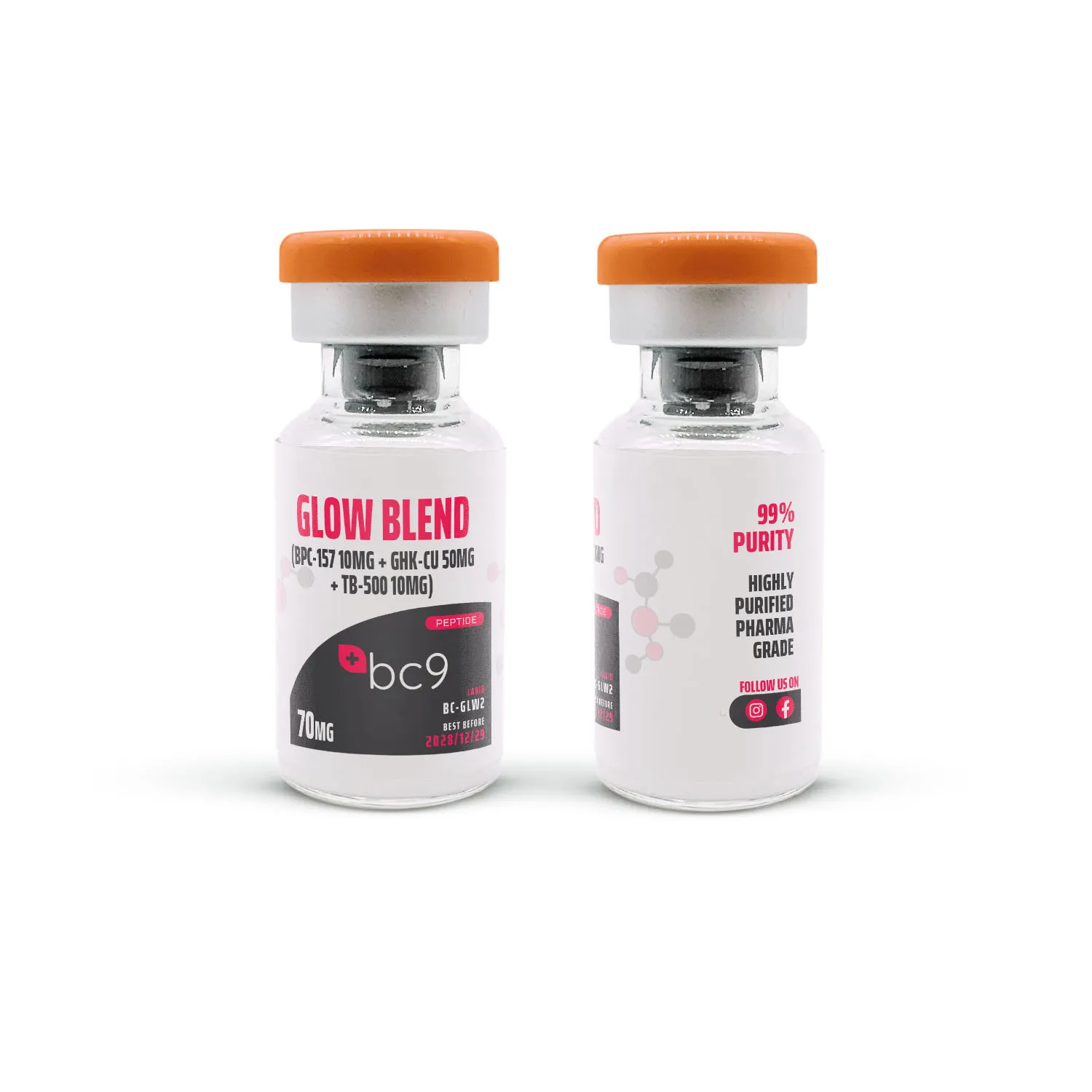
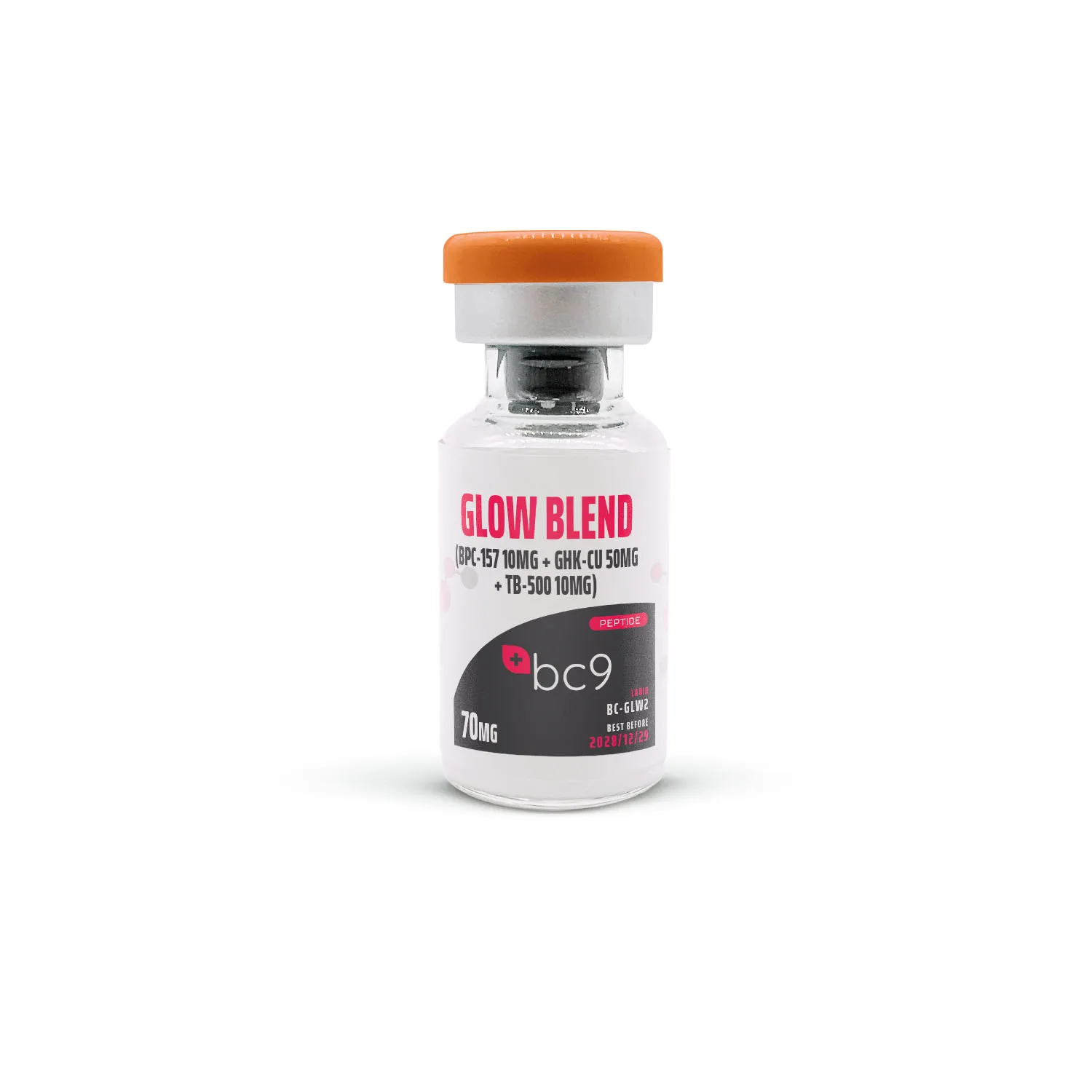
| Total Vial Dose | 70mg (BPC-157 10mg + GHK-Cu 50mg + TB-500 10mg) |
| Compound 1 | BPC-157 (Body Protection Compound 157) – 15-AA synthetic pentadecapeptide | CAS 137525-51-0 |
| Compound 2 | GHK-Cu (Glycyl-L-Histidyl-L-Lysine-Copper) – Tripeptide copper complex | CAS 89030-95-5 |
| Compound 3 | TB-500 (Thymosin β4 fragment 17–23) – Synthetic heptapeptide LKKTETQ | CAS 77591-33-4 |
| Molar Mass – BPC-157 | 1419.5 Da |
| Molar Mass – GHK-Cu | GHK-Cu | ~401.9 Da (copper complex, C14H22CuN6O4, CAS 89030-95-5); free tripeptide GHK: 340.38 Da (CAS 49557-75-7) |
| Molar Mass – TB-500 | 796.9 Da (heptapeptide fragment) |
| Compound Class | Multi-peptide tissue repair blend – NOT a SARM |
| Receptor Targets | VEGFR2/NO pathway (BPC-157) | Integrin receptors/copper-mediated gene regulation (GHK-Cu) | Actin/ILK pathway (TB-500) |
| Physical Form | Lyophilized powder |
| Purity | ≥98% per component |
| Storage | Store at −20°C, sealed, protected from light and moisture |
| Regulatory Status | Research use only. None FDA-approved. BPC-157 under FDA PCAC review. |
Overview
The GLOW Blend is a triple-peptide research formulation co-formulating three mechanistically distinct tissue repair and regenerative research peptides: BPC-157 (10mg), GHK-Cu (50mg), and TB-500 (10mg). Each component investigates a distinct molecular pathway – BPC-157 operates on the VEGFR2/NO/FAK-paxillin angiogenic and cytoprotective axis; GHK-Cu operates through copper-mediated integrin signalling, MMP modulation, and broad gene expression reprogramming; TB-500 operates via G-actin sequestration, ILK activation, and cell migration facilitation. The three non-overlapping mechanisms make this blend relevant to multi-pathway tissue repair biology, angiogenesis research, and extracellular matrix remodelling investigation in cell and animal model systems.
This compound is not FDA-approved for human or veterinary use. Intended for laboratory and research purposes only. BPC-157 is under active FDA PCAC review regarding its status as a bulk compounding substance. This is a research reagent only.
Working Mechanism of GLOW Blend
BPC-157 → VEGFR2 / Nitric Oxide / FAK-Paxillin: BPC-157 (Body Protection Compound 157) is a synthetic 15-amino acid pentadecapeptide (GEPPPGKPADDAGLV) derived from a gastric juice protein sequence. In preclinical cell models it modulates the VEGFR2 (vascular endothelial growth factor receptor 2) signalling axis – upregulating VEGFR2 expression and activating the VEGFR2-Akt-eNOS cascade to increase nitric oxide (NO) production and endothelial cell proliferation. BPC-157 also activates the FAK (focal adhesion kinase)-paxillin pathway, facilitating fibroblast and repair cell migration to injury sites in rodent model research. Its resistance to gastric acid degradation and absence of a defined systemic receptor make it pharmacologically atypical among cytoprotective research peptides.
GHK-Cu → Copper-Mediated Gene Regulation / MMP Modulation / Collagen Synthesis: GHK (Glycyl-L-Histidyl-L-Lysine) is a naturally occurring tripeptide that coordinates Cu²⁺ with high affinity (stability constant Ka ~10¹⁶ ), forming the GHK-Cu complex. Copper coordination is essential for its biological activity. At nanomolar concentrations (1–10 nM), GHK-Cu has been documented to: (1) stimulate fibroblast synthesis of type I and III collagen, dermatan sulfate, chondroitin sulfate, and decorin (Pickart et al. 2015, PMID 26236730); (2) modulate matrix metalloproteinase (MMP-2) expression and TIMP levels, enabling balanced collagen remodelling rather than fibrotic overdeposition (Siméon et al. 2000, PMID 11045606); (3) activate integrin-linked kinase (ILK) on cell membranes, driving downstream PI3K/Akt and MAPK pathway activation. A 2018 gene expression study (Pickart & Margolina) documented GHK-Cu modulating expression of over 4,000 human genes including significant enrichment in collagen synthesis, antioxidant response, DNA repair, and anti-inflammatory pathways.
TB-500 → G-Actin Sequestration / ILK / Cell Migration: TB-500 is the synthetic heptapeptide Ac-LKKTETQ, corresponding to residues 17–23 (the actin-binding domain) of Thymosin Beta-4 (Tβ4). It sequesters G-actin monomers in a 1:1 complex, maintaining the cytoplasmic pool available for rapid F-actin polymerization at cell leading edges. This drives directional cell migration in fibroblasts, keratinocytes, and endothelial cells – critical for wound reepithelialization and angiogenesis research. Bock-Marquette et al. (2004, Nature, PMID 15558062) documented TB-500/Tβ4 activating integrin-linked kinase (ILK) → Akt phosphorylation → anti-apoptotic signalling in cardiac repair models. TB-500 is classified under WADA S2.3.
Research Findings / Research Applications
- Multi-pathway angiogenesis research: BPC-157 activates VEGFR2-Akt-eNOS signalling; GHK-Cu upregulates VEGF and bFGF gene expression in fibroblast models; TB-500 drives endothelial cell chemotaxis via actin dynamics. The three peptides engage angiogenesis through distinct receptor and signalling mechanisms, enabling comparative multi-pathway vascular biology research.
- Extracellular matrix remodelling investigation: GHK-Cu modulates collagen synthesis (types I/III), proteoglycans (decorin, dermatan sulfate), and MMP-2/TIMP balance in fibroblast models. TB-500 promotes organized fibroblast migration and collagen deposition. BPC-157 supports granulation tissue formation in rodent wound models. Together these provide a multi-mechanism ECM remodelling research tool.
- Cell migration and cytoskeletal research: TB-500’s actin sequestration mechanism and GHK-Cu’s ILK pathway activation both facilitate cell migration through distinct cytoskeletal regulatory mechanisms. This blend is investigated in wound closure assay systems and keratinocyte/fibroblast migration models.
- Cytoprotective pathway research: BPC-157’s VEGFR2/NO/FAK cytoprotective profile has been investigated across multiple organ system injury models in rodents including gastrointestinal, hepatic, cardiac, and endothelial cell models. GHK-Cu’s antioxidant gene regulation and anti-inflammatory pathway modulation complement BPC-157’s cytoprotective research profile.
Note: These findings are based on early-stage and preclinical research. Results are not consistent across all models, and data remains limited without validation in human clinical settings.
Risks & Handling Information
- PPE: nitrile gloves, laboratory coat, and eye protection required.
- Reconstitute under aseptic conditions. All three peptides should be reconstituted in sterile or bacteriostatic water.
- Risk Tier: MODERATE – GHK-Cu contains Cu²⁺; excess copper exposure may cause oxidative stress in cell models. No acute toxicity data for this specific triple-peptide blend formulation. No human safety data established.
- BPC-157 is under FDA PCAC review regarding bulk substance compounding status. Regulatory position may evolve. Monitor FDA updates.
- Store at −20°C, sealed, light-protected. Do not re-freeze the reconstituted solution.
FAQs
Are any of the GLOW Blend components SARMs?
No. None of the three peptides (BPC-157, GHK-Cu, TB-500) interact with androgen receptors. BPC-157 operates via VEGFR2/NO/FAK pathways. GHK-Cu operates via copper-mediated integrin/MMP signalling. TB-500 operates via actin sequestration and ILK activation. None is a SARM.
What is GHK-Cu and how does copper affect its activity?
GHK-Cu is the copper(II) chelate of the tripeptide glycyl-L-histidyl-L-lysine. The Cu²⁺ coordination is essential for its biological activity at nanomolar concentrations. GHK alone has reduced activity compared to the copper complex in fibroblast and wound model assay systems. The copper ion is coordinated via the imidazole nitrogen of histidine and the terminal amino groups of glycine.
What is TB-500’s relationship to Thymosin Beta-4?
TB-500 is the synthetic heptapeptide Ac-LKKTETQ corresponding to residues 17–23 of the full 43-amino acid Thymosin Beta-4 protein. It retains the actin-binding and cell migration activity of the parent molecule. Most published primary data are for full-length Tβ4 – the LKKTETQ fragment data base is narrower, and researchers should distinguish between fragment and full-length data in study design.
What is the BPC-157 regulatory status?
BPC-157 is under FDA PCAC review for consideration as a bulk substance prohibited from compounding under Section 503A/503B. It is not FDA-approved for any indication. This vial is a research reagent only. Regulatory status may change; monitor FDA announcements.
Storage and stability?
Store lyophilized at −20°C, sealed, light-protected. Reconstitute with sterile or bacteriostatic water under aseptic conditions. Use within manufacturer-specified stability window. Do not re-freeze.
References
- Pickart L, Vasquez-Soltero JM, Margolina A. GHK Peptide as a Natural Modulator of Multiple Cellular Pathways in Skin Regeneration. BioMed Research International. 2015;2015:648108. https://pubmed.ncbi.nlm.nih.gov/26236730/ [PMID 26236730]
- Bock-Marquette I, Saxena A, White MD, DiMaio JM, Srivastava D. Thymosin beta4 activates integrin-linked kinase and promotes cardiac cell migration, survival and cardiac repair. Nature. 2004;432(7016):466–472. https://pubmed.ncbi.nlm.nih.gov/15558062/ [PMID 15558062]
Sikiric P, Seiwerth S, Rucman R, et al. Toxicity by NSAIDs. Counteraction by stable gastric pentadecapeptide BPC 157. Curr Pharm Des. 2013;19(1):76–83. PMID: 22950504. https://pubmed.ncbi.nlm.nih.gov/22950504/
This content is presented exclusively for educational purposes and should not be construed as medical advice. THE MATERIALS REFERENCED HEREIN ARE EXCLUSIVELY INTENDED FOR LABORATORY AND RESEARCH USE.
Any clinical research initiatives must be conducted under the guidance of the relevant Institutional Review Board (IRB). Similarly, preclinical research involving animals must comply with the directives of the Institutional Animal Care and Use Committee (IACUC), adhering to the standards delineated by the Animal Welfare Act (AWA).
Our informational content is meticulously designed for research-oriented insights and is not a substitute for individual analysis and verification from credible sources before any purchasing decisions are made.
Upon finalizing your order and payment, you explicitly acknowledge and agree to adhere to our Terms and Conditions. Customer satisfaction stands as our paramount concern. If you are dissatisfied with the product received, kindly contact us at 419-707-5450 or email our support team at support@bc9.co.
IMPORTANT NOTICE: All products showcased on our platform are EXCLUSIVELY INTENDED FOR LABORATORY AND RESEARCH APPLICATIONS. They are expressly not intended for veterinary or human utilization.

Reviews
There are no reviews yet