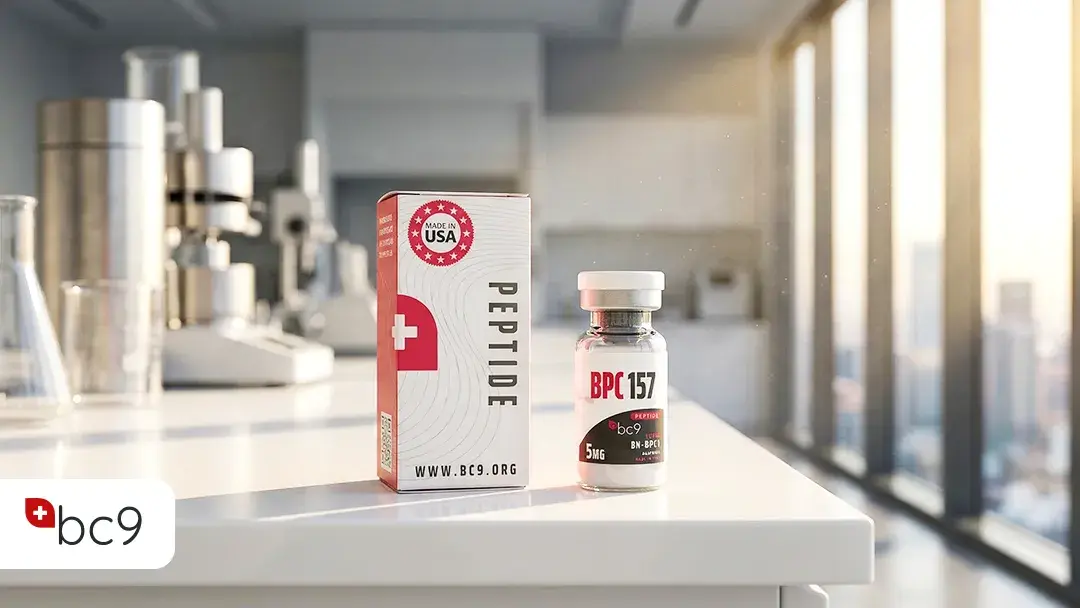
Peptides have been a common laboratory staple in discovering how certain pathways behave. Interestingly, questions about how they should be stored always come up. This is quite understandable.
Peptides are biologically active molecules. However, they are also chemical materials. This suggests that their stability depends on several variables. Refrigeration is one common way to store peptides. But do they really need to be refrigerated at all times? This post will give you a definitive answer.
Understanding Peptide Stability at a Molecular Level
Peptides are chains of amino acids linked together by peptide bonds. These bonds are considered to be relatively stable. However, they are not immune to environmental stress. Over time, peptides can degrade through several well-characterized chemical pathways. These may include hydrolysis, oxidation, deamidation, and aggregation.
Temperature plays a crucial role in all of the mentioned processes. When the temperature increases, molecular motion accelerates, too. In turn, it also increases the rate of chemical reactions. This only means that degradation reactions can occur faster at higher temperatures. This applies even if the peptide appears unchanged on a visual level.
Moisture is another critical variable. Water enables hydrolysis and facilitates other chemical changes. Thus, water can make peptides far more vulnerable once exposed to humid conditions or dissolved in a solvent. Oxygen and light are also known variables that contribute to oxidation. Such an effect can happen to peptides containing these amino acids: methionine, cysteine, or tryptophan.
Since peptides are sensitive to a combination of the mentioned factors, storage conditions should minimize unnecessary exposure to heat, moisture, air, and light. Refrigeration is one effective way to achieve this, yet it is not always a requirement.
Lyophilized Peptides and Refrigeration
Many peptides are supplied in a lyophilized or freeze-dried form. Lyophilized peptides undergo a process that removes water from the peptide under low temperature and pressure. The stated process can significantly slow degradation pathways that depend on moisture. In this way, lyophilized peptides often have a long shelf life when stored correctly.
In several cases, lyophilized peptides remain stable at controlled room temperature. Such stability is achieved provided the compounds are kept in airtight containers, protected from humidity and direct light. For short- to medium-term storage, refrigeration may not be strictly necessary.
However, refrigeration can still be beneficial in certain situations. Remember that lower temperatures further slow chemical reactions. This effect can be helpful for long-term storage. It can also benefit peptides that are known to be temperature-sensitive.
Some research facilities often choose refrigerated storage as an added precaution. They do this especially when working with high-value or low-quantity materials.
The key here is moisture control. A refrigerated environment only works if the peptide container is well-sealed. For such a reason, lyophilized peptides are typically stored in desiccated airtight packaging.
Reconstituted Peptides: Why Temperature Control Matters More
Reconstituted peptides are those dissolved in a solvent. Once this happens, peptide stability significantly changes. Since liquid has been introduced into the system, it will now increase molecular mobility. The latter enables degradation reactions within the peptide solution.
In solution, peptides are more susceptible to hydrolysis, oxidation, and aggregation. Even subtle temperature changes can lead to accelerated degradation. Therefore, temperature control becomes far more important after reconstitution.
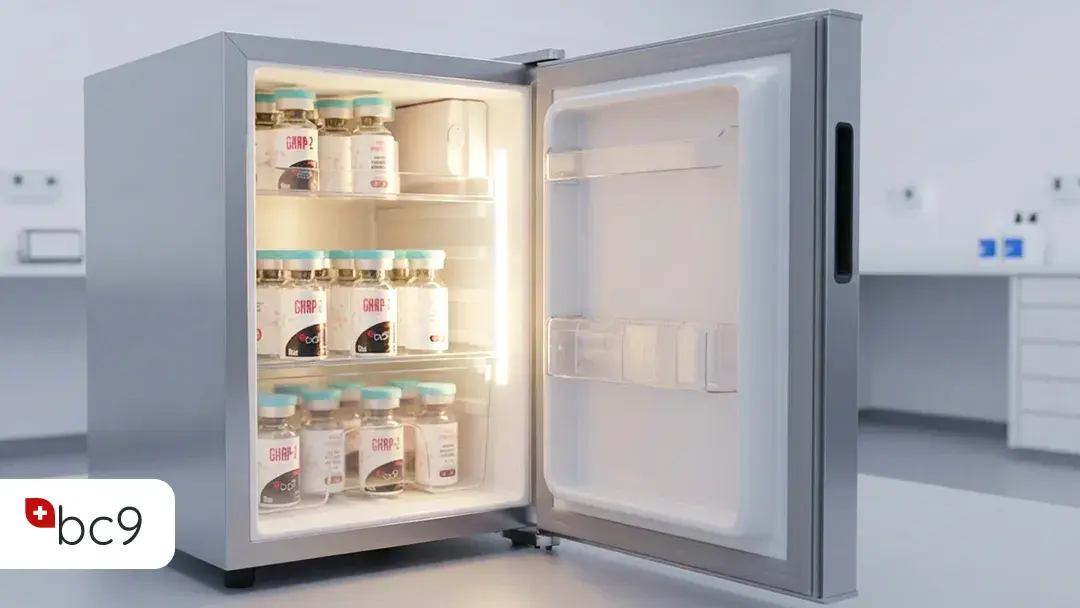
Refrigeration is the most commonly used means to slow down degradation among peptide solutions. Lower temperatures reduce reaction rates. Plus, they can help preserve structural integrity over a long period.
It’s important to emphasize that refrigeration does not halt degradation entirely. However, it can meaningfully extend the lifespan of reconstituted peptides. That said, refrigeration should be paired with good handling practices.
Do All Peptides Require Refrigeration?
Another salient point here is this: Not all peptides behave the same way. Storage requirements vary widely depending on the peptide’s characteristics.
Factors that influence stability are the following:
- Amino acid sequence
- Chain length
- Molecular weight
- Presence of reactive residues
Short peptides consist of relatively inert amino acids. They may tolerate room temperature storage better than longer, complex sequences. Conversely, peptides containing oxidation-prone residues may degrade more quickly. This group can experience a longer shelf life when stored at lower temperatures.
Purity and formulation matter, as well. Some peptide compounds have no stabilizing agents. They will require stricter storage conditions than those with protective excipients. Here, manufacturer documentation, certificate of analysis, and stability data are vital resources. They provide guidance based on empirical testing rather than assumptions.
What Happens When Peptides Are Stored Improperly?
Improper storage does not automatically lead to immediate or visible chemical changes. A peptide can appear unchanged while its chemical integrity slowly declines. This is one good reason storage guidelines are vital in research settings.
Over time, inadequate temperature control can lead to reduced structural stability. Sometimes it can also result in loss of functional activity. What could happen is that degradation byproducts may form. They are known for altering the peptide’s behavior among experimental systems. Such changes can compromise reproducibility among research outcomes.
Refrigeration vs Freezing
Among online and casual discussions, refrigeration and freezing are mentioned together. In several cases, they are used interchangeably. But this should not be.
Refrigeration typically refers to storage just above freezing. On the other hand, freezing involves much lower temperatures.
Freezing can further slow degradation reactions. However, it introduces its own challenges. Repeated freeze-thaw cycles can stress peptides. This is particularly expected in peptide solutions. For this reason, freezing is usually reserved for specific long-term storage strategies.
When freezing is preferred, peptides are often aliquoted. The goal is to avoid repeated thawing of the same peptide. In many cases, stable refrigeration combined with good handling practices provides a balance between preservation and practicality.
Best Practices for Peptide Storage in Research Settings
Consistent handling practices are needed to ensure peptide stability. These apply whether a peptide is stored at room temperature, under refrigeration, or frozen. Storage conditions are most effective when they can reduce unnecessary environmental stress. Essentially, peptide storage should focus on minimizing exposure to primarily instability drivers. These may include heat, oxygen, moisture, and light.
Common best practices may involve:
- Storing peptides away from direct sunlight, specifically UV exposure
- Using airtight, well-sealed containers to limit oxygen and humidity
- Keeping storage temperatures consistent
- Avoiding frequent opening of containers, since this introduces air and moisture
Final Thoughts: Refrigeration Is a Tool, Not a Rule
So, do peptides need to be refrigerated? The most accurate answer that we can provide is this: Refrigeration is a useful tool, but it cannot be a universal rule.
Lyophilized peptides may remain stable at room temperature when properly protected. Reconstituted peptides could benefit from cooler storage, slowing degradation.
Ultimately, peptide storage decisions should be guided by chemical principles and supplier recommendations. Remember: Thoughtful storage practices help preserve peptide potency, protect research quality, and ensure reliable results.