
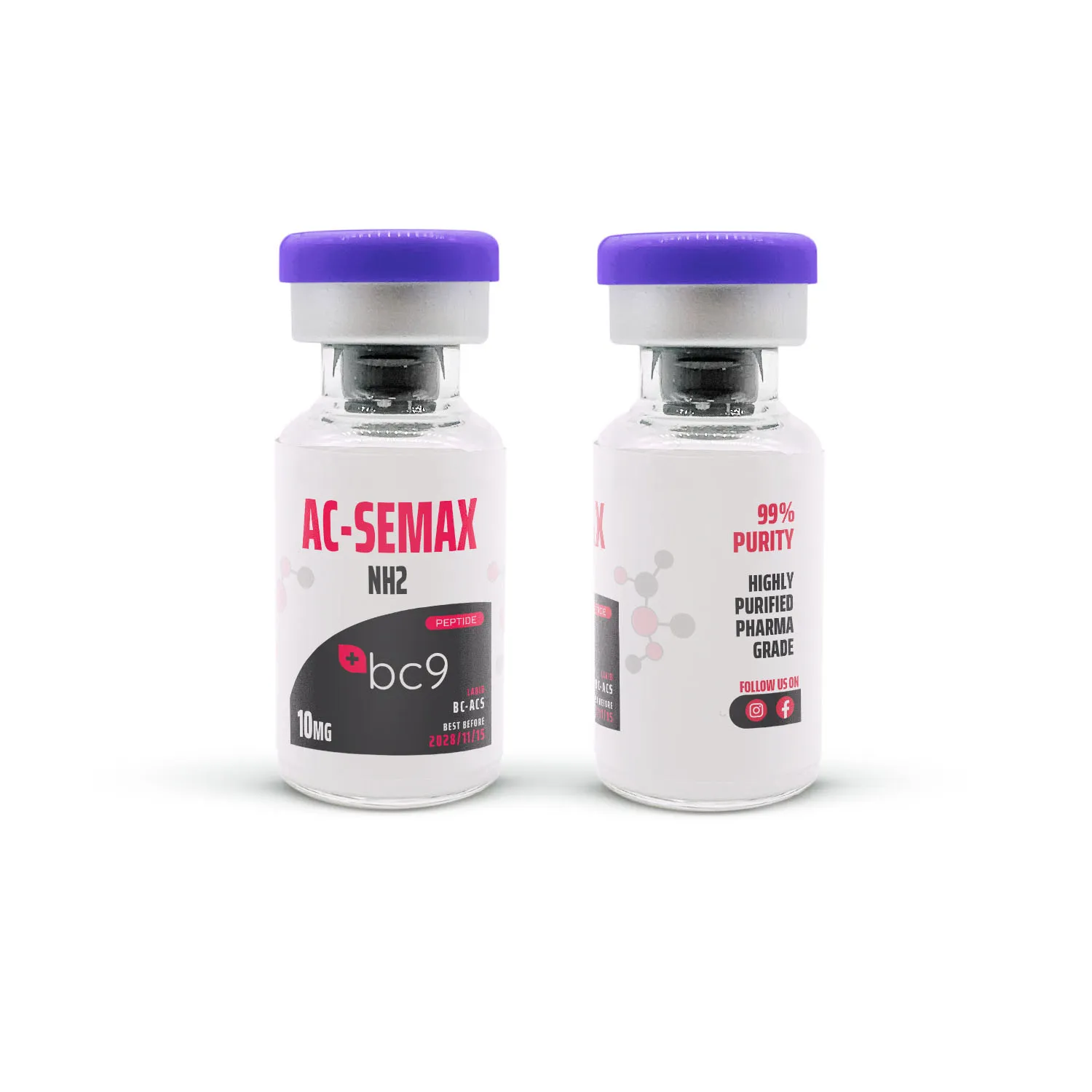
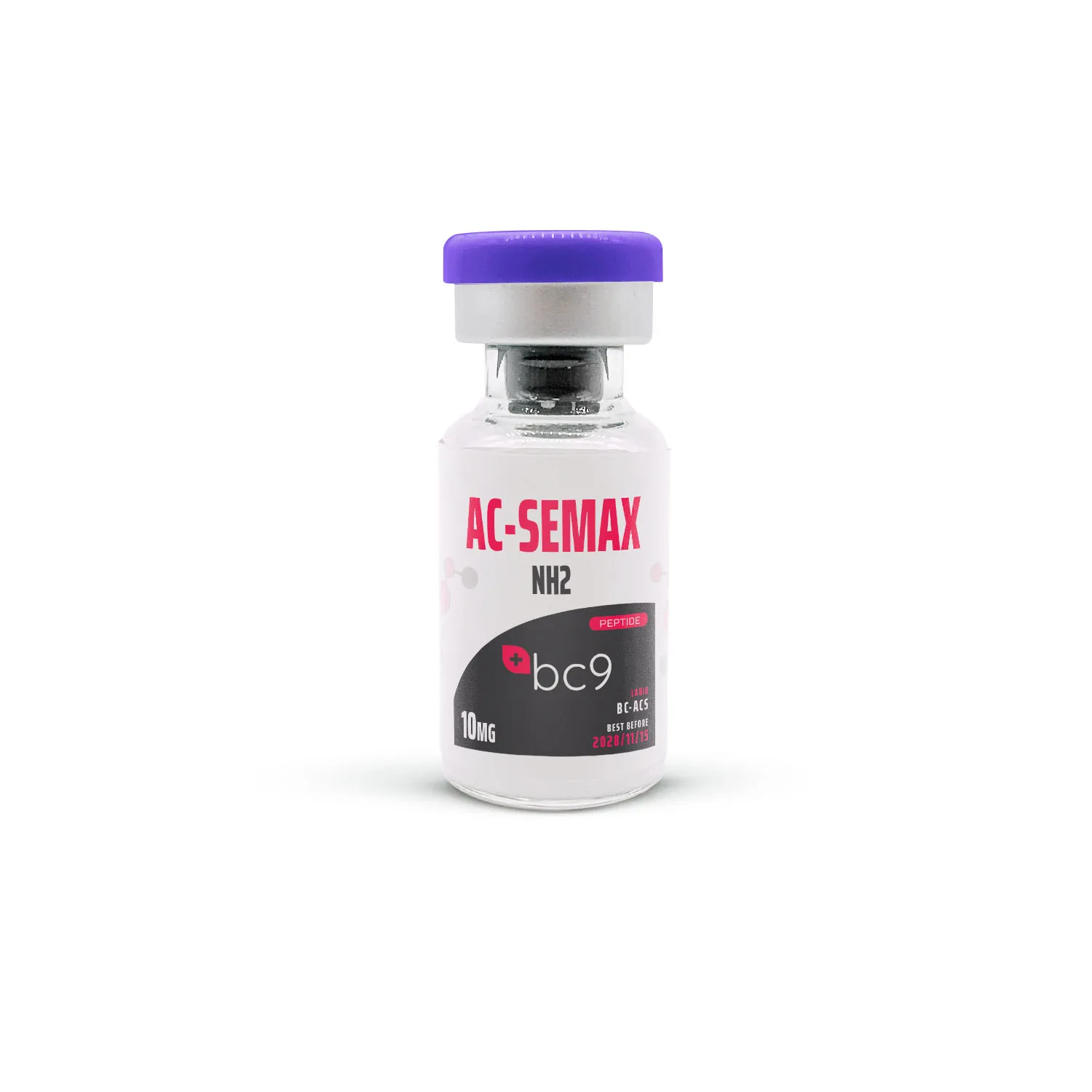
Description
Disclaimer: This compound is provided strictly for laboratory and scientific research purposes only. It is not approved by the U.S. Food and Drug Administration (FDA) for human or veterinary use, including ingestion, injection, or any form of administration.
Chemical Properties of AC-Semax NH2
| Property | Details |
| CAS Number | 2920938-90-3 | Note: Parent compound Semax CAS is 80714-61-0. | CAS 2920938-90-3 is specific to the N-acetylated, | C-terminally amidated form (AC-Semax NH2), confirmed | via MedChemExpress and PubChem CID 172638603 | (formula C₃₉H₅₄N₁₀O₁₀S, MW 854.97 g/mol). | Researchers should verify against the supplied | batch COA prior to experimental use. |
| Molar Mass | 854.97 g/mol |
| PubChem CID | 172638603 |
| Chemical Formula | C39H54N10O10S |
| Stability/ Shelf life | Stable for up to 24 months when stored lyophilized under appropriate conditions |
| Synonyms | N-Acetyl Semax Amidate; Ac-Semax-NH2; Ac-MEHFPGP-NH2; N-Acetyl-Met-Glu-His-Phe-Pro-Gly-Pro-NH₂ |
| Purity | ≥98% |
| Storage Instructions | Store lyophilized AC-Semax NH2 at −20°C, protected from light and moisture. Following reconstitution, store at 2–8°C and use within 30 days. Avoid repeated freeze-thaw cycles. |
| IUPAC Name | N-acetyl-L-methionyl-L-α-glutamyl-L-histidyl-L-phenylalanyl-L-prolylglycyl-L-prolinamide |
| Solubility | Soluble in water and aqueous buffers |
| Peptide Class | Synthetic heptapeptide; N-terminally acetylated, C-terminally amidated ACTH(4-10) analog |
| Physical Form | Lyophilized white powder |
| Wada Status | AC-Semax NH2 is not currently listed as a prohibited substance under the WADA Prohibited List; verify via GlobalDRO.com before sport science research use |
Overview
AC-Semax NH2 (N-Acetyl Semax Amidate) is a synthetically modified analog of Semax, a heptapeptide developed at the Institute of Molecular Genetics of the Russian Academy of Sciences. Semax is itself a synthetic analog of the N-terminal fragment (4-10) of adrenocorticotropic hormone (ACTH). AC-Semax NH2 incorporates two terminal modifications relative to parent Semax: N-terminal acetylation and C-terminal amidation. These modifications are associated with enhanced resistance to enzymatic degradation in experimental settings.
Based on articles retrieved from PubMed, parent Semax has been studied in preclinical models for its effects on brain-derived neurotrophic factor (BDNF) regulation, neurotrophin receptor expression, and neuroprotective signaling following cerebral ischemia. It is studied in research models in the context of neurotrophic factor modulation, hippocampal gene expression, and ischemia-related transcriptional responses. [Dolotov et al., 2006] The FDA has not approved AC-Semax NH2 for human or veterinary use. Availability is restricted to qualified researchers at licensed institutions. Clinical research initiatives require guidance from the relevant Institutional Review Board (IRB). Preclinical animal studies must comply with IACUC directives under the Animal Welfare Act (AWA).
Working Mechanism of AC-Semax NH2
Parent Semax has been investigated in preclinical models for its interactions with specific binding sites in rat basal forebrain and hippocampus. Specific binding of tritium-labelled Semax was found to be time-dependent, reversible, and calcium-dependent, with a dissociation constant (KD) of 2.4 ± 1.0 nM and a BMAX of 33.5 ± 7.9 fmol/mg protein in rat basal forebrain membranes. These observations suggest the existence of specific receptor-like binding sites for the Semax peptide family in rat brain tissue. [Dolotov et al., 2006, J Neurochem]
Semax is proposed to modulate BDNF/trkB signaling in the hippocampus, with observed increases in BDNF protein levels, trkB phosphorylation, and BDNF mRNA expression following intranasal administration in rat experimental models. AC-Semax NH2 has not been independently studied in indexed peer-reviewed literature. All mechanistic findings are from the parent Semax compound only. Human pharmacology data are absent, and findings are not generalizable to human therapeutic outcomes. [Dolotov et al., 2006, Brain Res]
Research Findings / Research Applications
Preclinical investigations have examined Semax and its analogs in relation to:
BDNF and trkB Regulation in Rat Hippocampus Following Semax Administration
Based on articles retrieved from PubMed, a single intranasal application of Semax (50 µg/kg) in rats resulted in a 1.4-fold increase in BDNF protein levels, a 1.6-fold increase in trkB tyrosine phosphorylation, and a 3-fold increase in exon III BDNF mRNA in the hippocampus. Semax-treated animals also showed a distinct increase in conditioned avoidance reactions. These findings suggest Semax affects cognitive-related brain functions by modulating hippocampal BDNF/trkB expression and activation. Findings are from a rat experimental model only and have not been validated in human clinical settings.
[Dolotov et al., 2006 — https://pubmed.ncbi.nlm.nih.gov/16996037/]
Specific Binding Sites for Semax in Rat Basal Forebrain and BDNF Protein Modulation
Based on articles retrieved from PubMed, tritium-labelled Semax was found to bind specifically to cell membranes isolated from rat basal forebrain in a time-dependent, reversible, and calcium-dependent manner (KD = 2.4 ± 1.0 nM). Intranasal Semax application at 50 and 250 µg/kg resulted in a rapid increase in BDNF protein levels in the basal forebrain at 3 hours post-administration, with no corresponding change observed in the cerebellum. These findings point to the presence of specific binding sites for Semax and a region-selective modulation of BDNF levels. Findings are from in vitro membrane binding assays and in vivo rat models only.
[Dolotov et al., 2006 — https://pubmed.ncbi.nlm.nih.gov/16635254/]
Neurotrophin and Receptor Transcription Activation in Cerebral Ischemia Models
Based on articles retrieved from PubMed, both Semax and its C-terminal Pro-Gly-Pro (PGP) tripeptide were studied in rats subjected to permanent middle cerebral artery occlusion (pMCAO). Semax treatment selectively enhanced transcription of BDNF, TrkC, and TrkA at 3 hours post-occlusion, and Ngf at 24 and 72 hours post-occlusion in the ischemic cortex. The transcriptional response was observed selectively in ischemic animals, with minimal effects in non-surgical controls, suggesting ischemia-specific modulation of neurotrophin gene expression by Semax. Findings are from a rat pMCAO experimental model only and require further validation.
[Dmitrieva et al., 2009 — https://pubmed.ncbi.nlm.nih.gov/19633950/]
Note: These findings are derived from early-stage preclinical research using the parent compound Semax. AC-Semax NH2 has not been independently studied in PubMed-indexed literature. Results are not consistent across all experimental models, and data remain limited without validation in human clinical settings.
Risks & Handling Information
Risk Tier: MODERATE. AC-Semax NH2 is a synthetic neuropeptide analog studied for interactions with BDNF signaling and neurotrophin regulatory pathways in preclinical models. Its N-terminal acetylation and C-terminal amidation confer enhanced enzymatic stability relative to parent Semax, with receptor interaction duration implications that are not fully characterized. The full toxicological profile in human biological systems has not been established. Any unintentional exposure should be treated as requiring immediate decontamination and medical consultation.
PPE Requirement: Nitrile gloves, lab coat, and eye protection are required at all times during all handling and reconstitution procedures involving AC-Semax NH2.
Controlled Environment: Handling must occur exclusively within controlled laboratory environments with adequate ventilation, appropriate containment, and institutional biosafety oversight.
Exposure Prohibition: Do not inhale, ingest, or make direct skin contact with this compound. This material is not intended for any form of self-administration or non-laboratory exposure under any circumstances.
Toxicological Status: The full toxicological profile of AC-Semax NH2 in human biological systems is not established. As a centrally active neuropeptide analog, researchers must adhere to institutional biosafety protocols applicable to CNS-active peptide research compounds.
Storage and Degradation Risk: Maintain lyophilized vials at −20°C until use. Following reconstitution, store at 2–8°C and use within 30 days. Avoid repeated freeze-thaw cycles and exposure to heat, light, or moisture to preserve research-grade peptide integrity.
FAQs
Q: What is the regulatory status of AC-Semax NH2 in the United States?
AC-Semax NH2 has not been approved by the FDA for human or veterinary use, including ingestion, injection, or any form of administration. It is available exclusively for qualified laboratory and scientific research purposes at licensed institutions operating under applicable institutional oversight frameworks.
Q: How does AC-Semax NH2 differ structurally from parent Semax?
Parent Semax carries a free N-terminus and a free C-terminal carboxylic acid. AC-Semax NH2 incorporates N-terminal acetylation (Ac-) and C-terminal amidation (-NH2). These modifications are associated with enhanced resistance to aminopeptidase and carboxypeptidase degradation, respectively, potentially extending enzymatic stability in experimental systems relative to the unmodified parent sequence.
Q: What receptor systems has Semax been investigated for in preclinical research?
Based on articles retrieved from PubMed, Semax has been investigated for specific binding interactions in rat basal forebrain and hippocampal membrane preparations, with observed calcium-dependent, reversible, high-affinity binding (KD = 2.4 nM). Downstream modulation of BDNF/trkB signaling has been studied in relation to these binding interactions. All findings are from preclinical rat models only. [Dolotov et al., 2006]
Q: Has AC-Semax NH2 specifically been evaluated in human clinical research?
No peer-reviewed human clinical trials specific to AC-Semax NH2 have been published in indexed literature as of June 2026. Available research is derived from in vitro binding assays and preclinical rodent models using parent Semax. Findings have not been validated in human clinical settings.
Q: What storage conditions are required to maintain AC-Semax NH2 integrity for research use?
Lyophilized AC-Semax NH2 should be stored at −20°C, protected from light and moisture. Following reconstitution in an appropriate aqueous buffer, store at 2–8°C and use within 30 days. Avoid repeated freeze-thaw cycles to preserve peptide integrity.
Q: Why is there a CAS number discrepancy for AC-Semax NH2 across databases?
Multiple CAS numbers are associated with N-Acetyl Semax Amidate across supplier databases, reflecting different salt forms, registration variants, or supplier-assigned identifiers. PubChem CID 172638603 confirms the molecular formula C₃₉H₅₄N₁₀O₁₀S. CAS 2920938-90-3 is listed by MedChemExpress. Researchers should verify the CAS number against the supplier’s Certificate of Analysis (COA) before experimental use.
References
Dolotov, O. V., Karpenko, E. A., Seredenina, T. S., Inozemtseva, L. S., Levitskaya, N. G., Zolotarev, Y. A., Kamensky, A. A., Grivennikov, I. A., Engele, J., & Myasoedov, N. F. (2006). Semax, an analogue of adrenocorticotropin (4-10), binds specifically and increases levels of brain-derived neurotrophic factor protein in rat basal forebrain. Journal of Neurochemistry, 97 Suppl 1, 82–86. https://pubmed.ncbi.nlm.nih.gov/16635254/
Dolotov, O. V., Karpenko, E. A., Inozemtseva, L. S., Seredenina, T. S., Levitskaya, N. G., Rozyczka, J., Dubynina, E. V., Novosadova, E. V., Andreeva, L. A., Alfeeva, L. Y., Kamensky, A. A., Grivennikov, I. A., Myasoedov, N. F., & Engele, J. (2006). Semax, an analog of ACTH(4-10) with cognitive effects, regulates BDNF and trkB expression in the rat hippocampus. Brain Research, 1117(1), 54–60. https://pubmed.ncbi.nlm.nih.gov/16996037/
Dmitrieva, V. G., Povarova, O. V., Skvortsova, V. I., Limborska, S. A., Myasoedov, N. F., & Dergunova, L. V. (2009). Semax and Pro-Gly-Pro activate the transcription of neurotrophins and their receptor genes after cerebral ischemia. Cellular and Molecular Neurobiology, 30(1), 71–79. https://pubmed.ncbi.nlm.nih.gov/19633950/
BC9 Disclaimer
This content is presented exclusively for educational purposes and should not be construed as medical advice. THE MATERIALS REFERENCED HEREIN ARE EXCLUSIVELY INTENDED FOR LABORATORY AND RESEARCH USE.
Any clinical research initiatives must be conducted under the guidance of the relevant Institutional Review Board (IRB). Similarly, preclinical research involving animals must comply with the directives of the Institutional Animal Care and Use Committee (IACUC), adhering to the standards delineated by the Animal Welfare Act (AWA).
Our informational content is meticulously designed for research-oriented insights and is not a substitute for individual analysis and verification from credible sources before any purchasing decisions are made.
Upon finalizing your order and payment, you explicitly acknowledge and agree to adhere to our Terms and Conditions. Customer satisfaction stands as our paramount concern. If you are dissatisfied with the product received, kindly contact us at 419-707-5450 or email our support team at support@bc9.co.
IMPORTANT NOTICE: All products showcased on our platform are EXCLUSIVELY INTENDED FOR LABORATORY AND RESEARCH APPLICATIONS. They are expressly not intended for veterinary or human utilization.
Reviews
There are no reviews yet