
Description
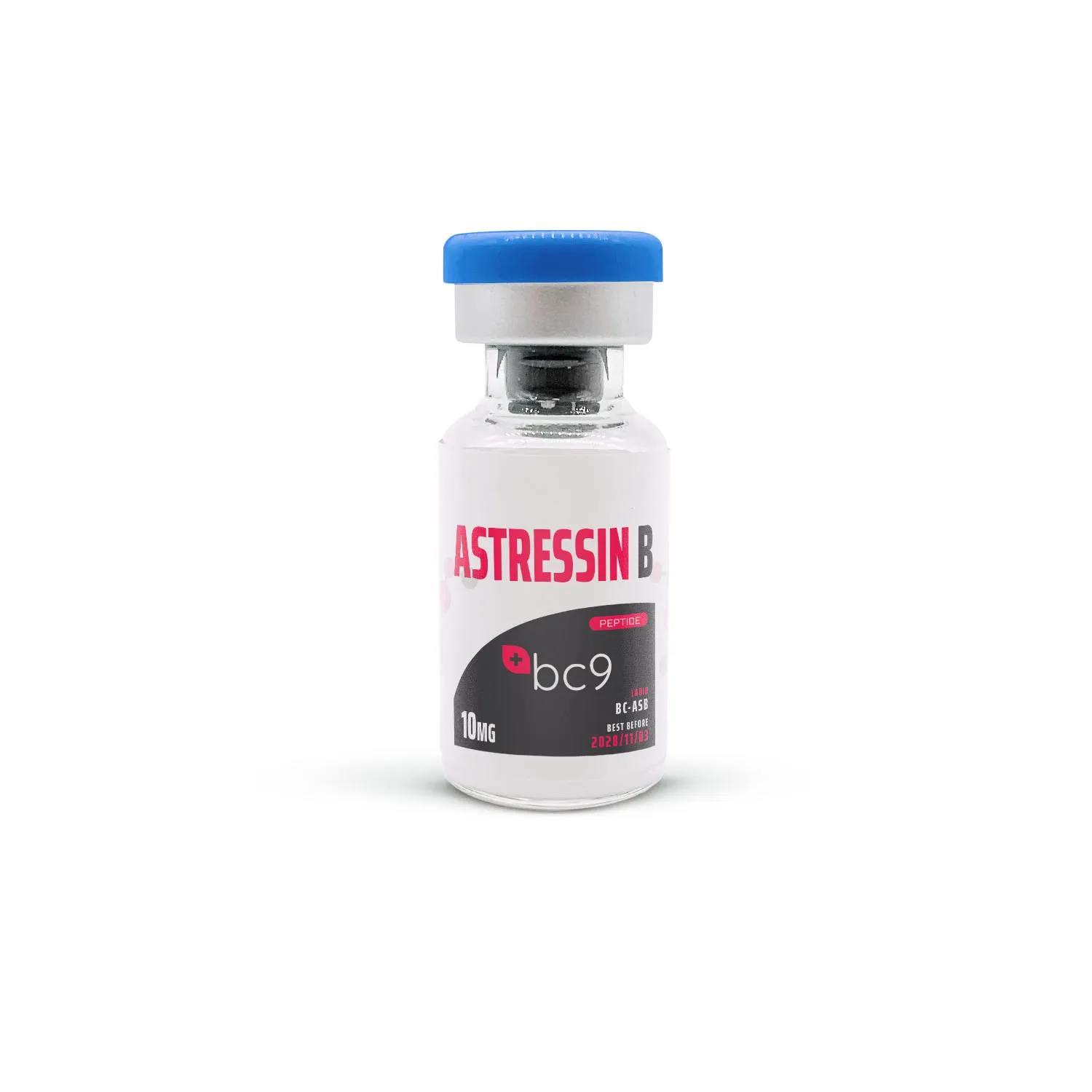
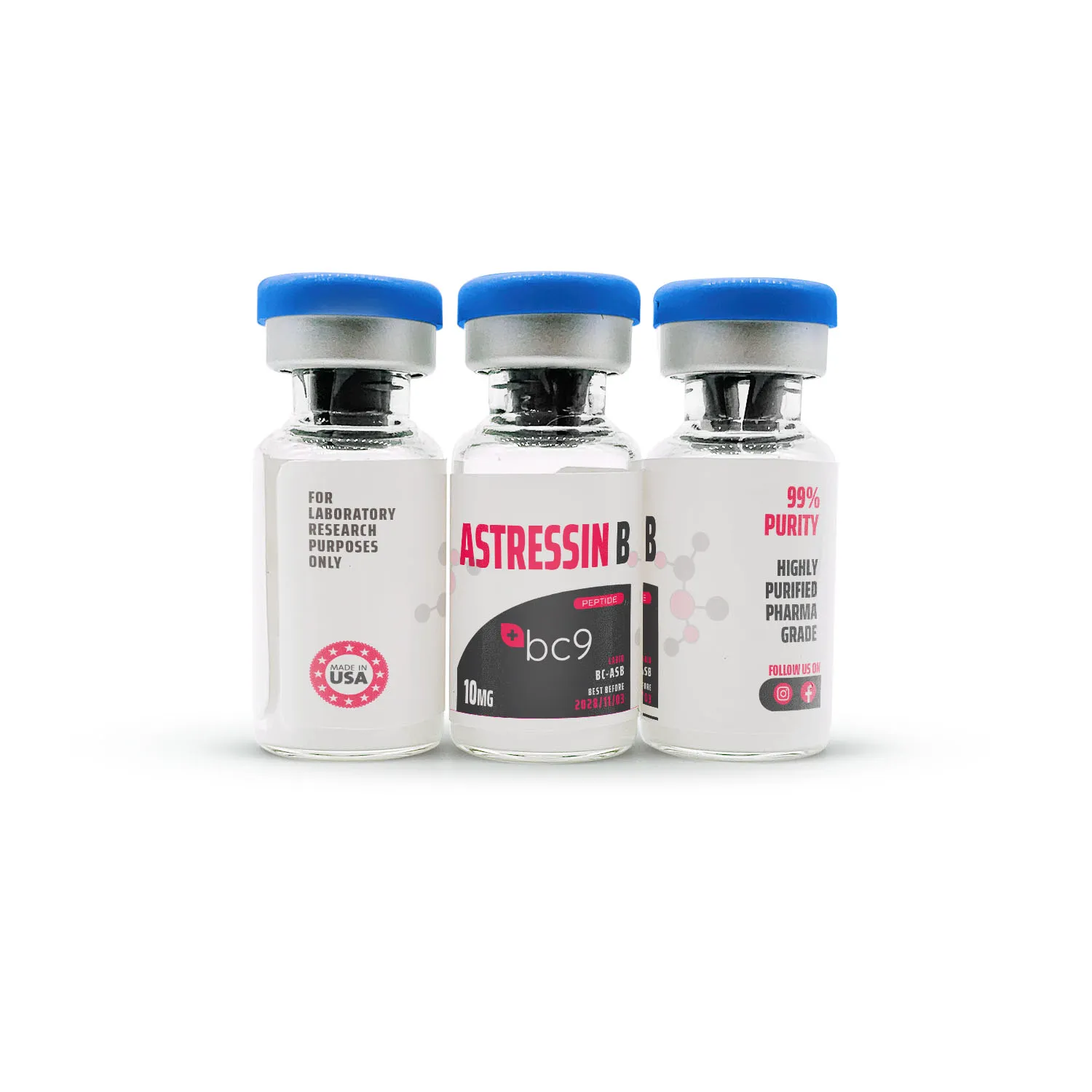
Astressin B (10mg) – Research Compound
Disclaimer: This compound is provided strictly for laboratory and scientific research purposes only. It is not approved by the U.S. Food and Drug Administration (FDA) for human or veterinary use, including ingestion, injection, or any form of administration.
Chemical Properties of Astressin B
| Property | Details |
| CAS Number | Not universally registered in major chemical databases for Astressin B specifically. Compound identity confirmed by PubChem CID 73350132 (C₁₈₃H₃₀₅N₄₇O₅₅, MW 4043.73 Da). Parent Astressin CAS (reference only): 170809-51-5 (MW 3663.20 Da — distinct compound) |
| Molar Mass | 4043.73 g/mol |
| PubChem CID | 73350132 |
| Chemical Formula | C183H305N47O55 |
| Stability/ Shelf life | Stable for up to 24 months when stored lyophilized under appropriate conditions |
| Synonyms | Astressin-B; [D-Phe¹²,Nle²¹·³⁸,Glu³⁰,Lys³³]-hCRF(9-41); cyclic CRF antagonist |
| Purity | ≥98% |
| Storage Instructions | Store lyophilized at −20°C, protected from light and moisture. Following reconstitution, store at 2–8°C and use within 30 days. Avoid repeated freeze-thaw cycles. |
| IUPAC Name | (4S)-4-[[(2S)-2-[[(2S)-2-[[(2S)-2-[[(2S)-2-[[(2S)-2-[[(2S)-2-[[(2S)-2-[[(2S)-2-[[(2S,3S)-2-[[(2S)-2-[[(2S,3S)-2-[[(2S)-2-[[(2S)-2-[[(2S)-2-[[(2S)-2-[[(2R)-2-[[(2S)-2-[[(2R)-2-[[(2S)-2-[[(2S)-2-[[(2S)-2-acetamido-3-carboxypropanoyl]amino]-4-methylpentanoyl]amino]-3-hydroxypropanoyl]amino]-3-phenylpropanoyl]amino]-3-(1H-imidazol-4-yl)propanoyl]amino]-2,4-dimethylpentanoyl]amino]-4-methylpentanoyl]amino]-5-(diaminomethylideneamino)pentanoyl]amino]-6-aminohexanoyl]amino]hexanoyl]amino]-3-methylpentanoyl]amino]-4-carboxybutanoyl]amino]-3-methylpentanoyl]amino]-4-carboxybutanoyl]amino]-6-aminohexanoyl]amino]-5-amino-5-oxopentanoyl]amino]-4-carboxybutanoyl]amino]-6-aminohexanoyl]amino]-4-carboxybutanoyl]amino]-6-aminohexanoyl]amino]-4-carboxybutanoyl]amino]-5-[[(2S)-1-[[(3S,6R,18S)-18-[[(2S)-1-[[(2S)-1-[[(2S)-1-[[(2S)-1-[[(2R)-1-[[(2S,3S)-1-amino-3-methyl-1-oxopentan-2-yl]amino]-2,4-dimethyl-1-oxopentan-2-yl]amino]-3-carboxy-1-oxopropan-2-yl]amino]-4-methyl-1-oxopentan-2-yl]amino]-4-methyl-1-oxopentan-2-yl]amino]-4-methyl-1-oxopentan-2-yl]carbamoyl]-3,6-bis(2-amino-2-oxoethyl)-2,5,8,12-tetraoxo-1,4,7,13-tetrazacyclooctadec-9-yl]amino]-1-oxopropan-2-yl]amino]-5-oxopentanoic acid (verify against PubChem CID 73350132) |
| Solubility | Soluble in water and aqueous buffers |
| Peptide Class | Synthetic cyclic peptide; non-selective CRF₁/CRF₂ receptor antagonist |
| Physical Form | Lyophilized white powder |
| Wada Status | Not currently listed as a prohibited substance under the WADA Prohibited List; verify via GlobalDRO.com before sport science research use |
Overview
Astressin B is a synthetic cyclic peptide designed as a non-selective antagonist of corticotropin-releasing factor (CRF) receptors, targeting both CRF₁ and CRF₂ receptor subtypes. It is a structurally modified analog of human CRF (hCRF 9-41), incorporating specific amino acid substitutions to confer receptor antagonist activity and enhanced metabolic stability relative to endogenous CRF. It is studied in preclinical models in the context of stress-related signaling, gastrointestinal motility, intestinal barrier function, and hair follicle biology.
The FDA has not approved Astressin B for human or veterinary use, including ingestion, injection, or any form of administration. It is not a dietary supplement or consumer product. Availability is restricted to qualified researchers at licensed institutions. Clinical research initiatives require guidance from the relevant Institutional Review Board (IRB). Preclinical animal studies must comply with IACUC directives under the Animal Welfare Act (AWA).
Working Mechanism of Astressin B
Astressin B acts as a competitive antagonist at both CRF₁ and CRF₂ G-protein-coupled receptors in experimental models. These receptors mediate the biological effects of corticotropin-releasing factor (CRF) and related urocortins in the central nervous system and peripheral tissues. Blockade of CRF receptor signaling by Astressin B has been associated with inhibition of CRF-induced downstream effects, including colonic motility alterations and stress-related behavioral responses in preclinical rodent models. [Schwetz et al., 2005]
By blocking both receptor subtypes, Astressin B is proposed to interrupt CRF-mediated signaling cascades at the level of receptor binding, preventing activation of downstream cAMP-dependent and other intracellular pathways in experimental cell and animal systems.
All mechanistic findings are derived from in vitro and preclinical animal models only. Human pharmacology data are absent, and findings are not generalizable to human therapeutic outcomes.
Research Findings / Research Applications
Preclinical investigations have examined Astressin B in relation to:
CRF Receptor Blockade and Hair Follicle Cycling in Alopecia Mouse Models
Based on articles retrieved from PubMed, peripheral injection of Astressin B (5 µg/mouse for 5 consecutive days) in CRF-overexpressing alopecic mice was associated with induction of hair pigmentation and re-growth that was largely retained for over 4 months. Histological examination confirmed that Astressin B revived hair follicles from the telogen to the anagen phase in treated animals. In younger CRF-overexpressing mice, Astressin B prevented the development of alopecia observed in saline-treated controls. The selective CRF₂ antagonist astressin₂-B showed only moderate effects on pigmentation without significant hair re-growth. Findings are from a transgenic mouse model only and have not been validated in human clinical settings.
[Wang et al., 2011 — https://pubmed.ncbi.nlm.nih.gov/21359208/]
CRF Receptor Antagonism and Stress-Induced Visceral Hyperalgesia in Rodent Models
Based on articles retrieved from PubMed, Astressin B was administered as a non-selective CRF receptor antagonist in maternally separated Long-Evans rats exhibiting stress-induced visceral hyperalgesia. Pre-treatment with Astressin B abolished both acute and delayed increases in visceromotor responses to colorectal distension following water avoidance stress. Astressin B also attenuated stress-induced colonic motility and anxiety-like behavior in the same experimental model. These findings position Astressin B as a tool compound for studying CRF/CRF₁ receptor-mediated visceral pain signaling. Findings are from a preclinical rat model only and do not constitute clinical evidence.
[Schwetz et al., 2005 — https://pubmed.ncbi.nlm.nih.gov/15994424/]
CRF-Induced Intestinal Epithelial Barrier Disruption — Astressin B Blockade Observations
Based on articles retrieved from PubMed, Astressin B was studied as a pharmacological blocker in a porcine ex vivo intestinal model examining CRF-mediated epithelial barrier disruption. Pre-treatment with Astressin B inhibited CRF-induced increases in paracellular flux of FITC-dextran across ileal tissue mounted in Ussing chambers, demonstrating receptor-mediated blockade of barrier dysfunction. These findings suggest that CRF-induced intestinal permeability increases are mediated through CRF₁/CRF₂ receptor activation and are reversible by competitive antagonism. Findings are from an ex vivo porcine intestinal model only and require further validation.
[Overman et al., 2012 — https://pubmed.ncbi.nlm.nih.gov/22768175/]
Note: These findings are derived from early-stage preclinical and in vitro research. Results are not consistent across all experimental models, and data remain limited without validation in human clinical settings.
Risks & Handling Information
Risk Tier: MODERATE. Astressin B is a synthetic cyclic CRF receptor antagonist studied for interactions with stress-response signaling pathways in preclinical models. Its non-selective CRF₁/CRF₂ receptor antagonist activity may confer off-target interactions across multiple tissue systems where CRF receptors are expressed. The full toxicological profile in human biological systems has not been established.
PPE Requirement: Nitrile gloves, lab coat, and eye protection are required at all times during all handling and reconstitution procedures involving this compound.
Controlled Environment: Handling must occur exclusively within controlled laboratory environments with adequate ventilation, appropriate containment, and institutional biosafety oversight. This compound must not be handled in non-laboratory settings under any circumstances.
Exposure Prohibition: Do not inhale, ingest, or make direct skin contact with this compound. This material is not intended for any form of self-administration or non-laboratory exposure under any circumstances.
Toxicological Status: The full toxicological profile of Astressin B in human biological systems is not established. As a non-selective CRF receptor antagonist with demonstrated activity across multiple peripheral tissue systems in preclinical models, researchers must adhere to institutional biosafety protocols applicable to centrally and peripherally active neuropeptide research compounds.
Storage and Degradation Risk: Maintain lyophilized vials at −20°C until use. Following reconstitution, store at 2–8°C and use within 30 days. Avoid repeated freeze-thaw cycles and exposure to heat, light, or moisture to preserve research-grade peptide integrity.
FAQs
Q: What is the regulatory status of Astressin B in the United States?
Astressin B has not been approved by the FDA for human or veterinary use, including ingestion, injection, or any form of administration. It is available exclusively for qualified laboratory and scientific research purposes at licensed institutions operating under applicable institutional oversight frameworks.
Q: What receptor subtypes does Astressin B target in preclinical research models?
Based on articles retrieved from PubMed, Astressin B acts as a non-selective antagonist at both CRF₁ and CRF₂ receptor subtypes in experimental models. These are G-protein-coupled receptors mediating the biological effects of corticotropin-releasing factor and related urocortins in central and peripheral tissues. Its non-selective profile distinguishes it from selective CRF₂ antagonists such as astressin₂-B. [Schwetz et al., 2005]
Q: How does Astressin B differ structurally from native CRF?
Astressin B is a structurally modified cyclic analog of human CRF (9-41) incorporating specific amino acid substitutions, including D-Phe¹², Nle²¹·³⁸, Glu³⁰, and Lys³³ relative to the native CRF sequence. The cyclic structure and these substitutions are associated with receptor antagonist activity and enhanced resistance to enzymatic degradation in experimental systems.
Q: Has Astressin B been evaluated in human clinical research?
No peer-reviewed human clinical trials specific to Astressin B have been published in indexed literature as of June 2026. Available research is derived from in vitro cell culture studies, ex vivo tissue models, and preclinical rodent and murine experimental systems only.
Q: What storage conditions are required to maintain Astressin B integrity for research use?
Lyophilized Astressin B should be stored at −20°C, protected from light and moisture. Following reconstitution in an appropriate aqueous buffer, store at 2–8°C and use within 30 days. Avoid repeated freeze-thaw cycles to preserve peptide integrity.
Q: What distinguishes Astressin B from Astressin and Astressin₂-B?
Based on articles retrieved from PubMed, Astressin is a non-selective cyclic CRF receptor antagonist, while Astressin B incorporates additional structural modifications conferring enhanced potency and stability in experimental models. Astressin₂-B is a selective CRF₂ receptor antagonist. In preclinical alopecia models, Astressin B demonstrated full hair re-growth effects while astressin₂-B showed only moderate pigmentation effects without significant follicular response, illustrating the functional distinction between selective and non-selective CRF antagonism in peripheral tissue models. [Wang et al., 2011]
References
Wang, L., Million, M., Rivier, J., Rivier, C., Craft, N., Stenzel-Poore, M. P., & Taché, Y. (2011). CRF receptor antagonist astressin-B reverses and prevents alopecia in CRF overexpressing mice. PLoS One, 6(2), e16377. https://pubmed.ncbi.nlm.nih.gov/21359208/
Schwetz, I., McRoberts, J. A., Coutinho, S. V., Bradesi, S., Gale, G., Fanselow, M., Million, M., Ohning, G., Taché, Y., Plotsky, P. M., & Mayer, E. A. (2005). Corticotropin-releasing factor receptor 1 mediates acute and delayed stress-induced visceral hyperalgesia in maternally separated Long-Evans rats. American Journal of Physiology — Gastrointestinal and Liver Physiology, 289(4), G704–G712. https://pubmed.ncbi.nlm.nih.gov/15994424/
Overman, E. L., Rivier, J. E., & Moeser, A. J. (2012). CRF induces intestinal epithelial barrier injury via the release of mast cell proteases and TNF-α. PLoS One, 7(6), e39935. https://pubmed.ncbi.nlm.nih.gov/22768175/
BC9 Disclaimer
This content is presented exclusively for educational purposes and should not be construed as medical advice. THE MATERIALS REFERENCED HEREIN ARE EXCLUSIVELY INTENDED FOR LABORATORY AND RESEARCH USE.
Any clinical research initiatives must be conducted under the guidance of the relevant Institutional Review Board (IRB). Similarly, preclinical research involving animals must comply with the directives of the Institutional Animal Care and Use Committee (IACUC), adhering to the standards delineated by the Animal Welfare Act (AWA).
Our informational content is meticulously designed for research-oriented insights and is not a substitute for individual analysis and verification from credible sources before any purchasing decisions are made.
Upon finalizing your order and payment, you explicitly acknowledge and agree to adhere to our Terms and Conditions. Customer satisfaction stands as our paramount concern. If you are dissatisfied with the product received, kindly contact us at 419-707-5450 or email our support team at support@bc9.co.
IMPORTANT NOTICE: All products showcased on our platform are EXCLUSIVELY INTENDED FOR LABORATORY AND RESEARCH APPLICATIONS. They are expressly not intended for veterinary or human utilization.
Reviews
There are no reviews yet