
Description
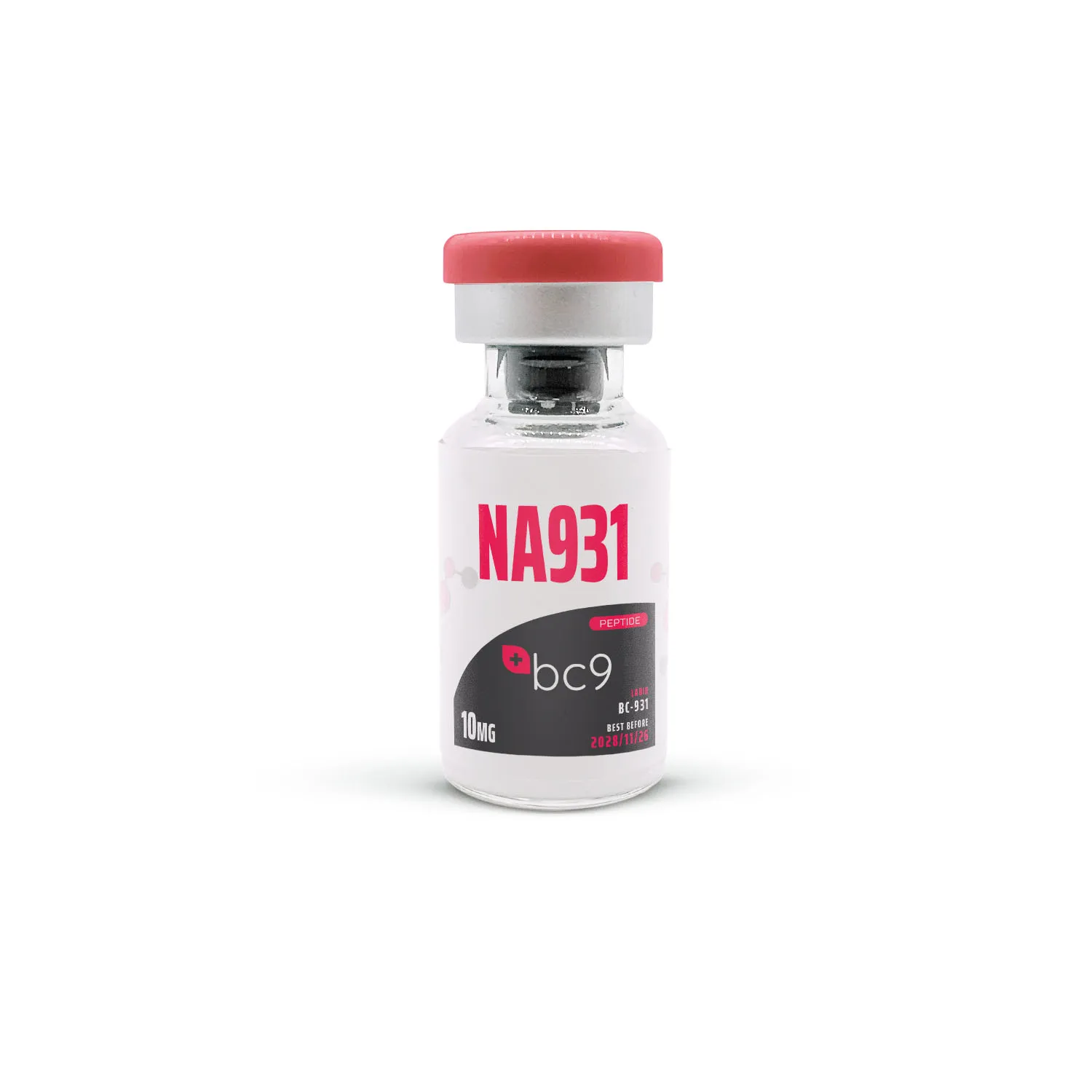
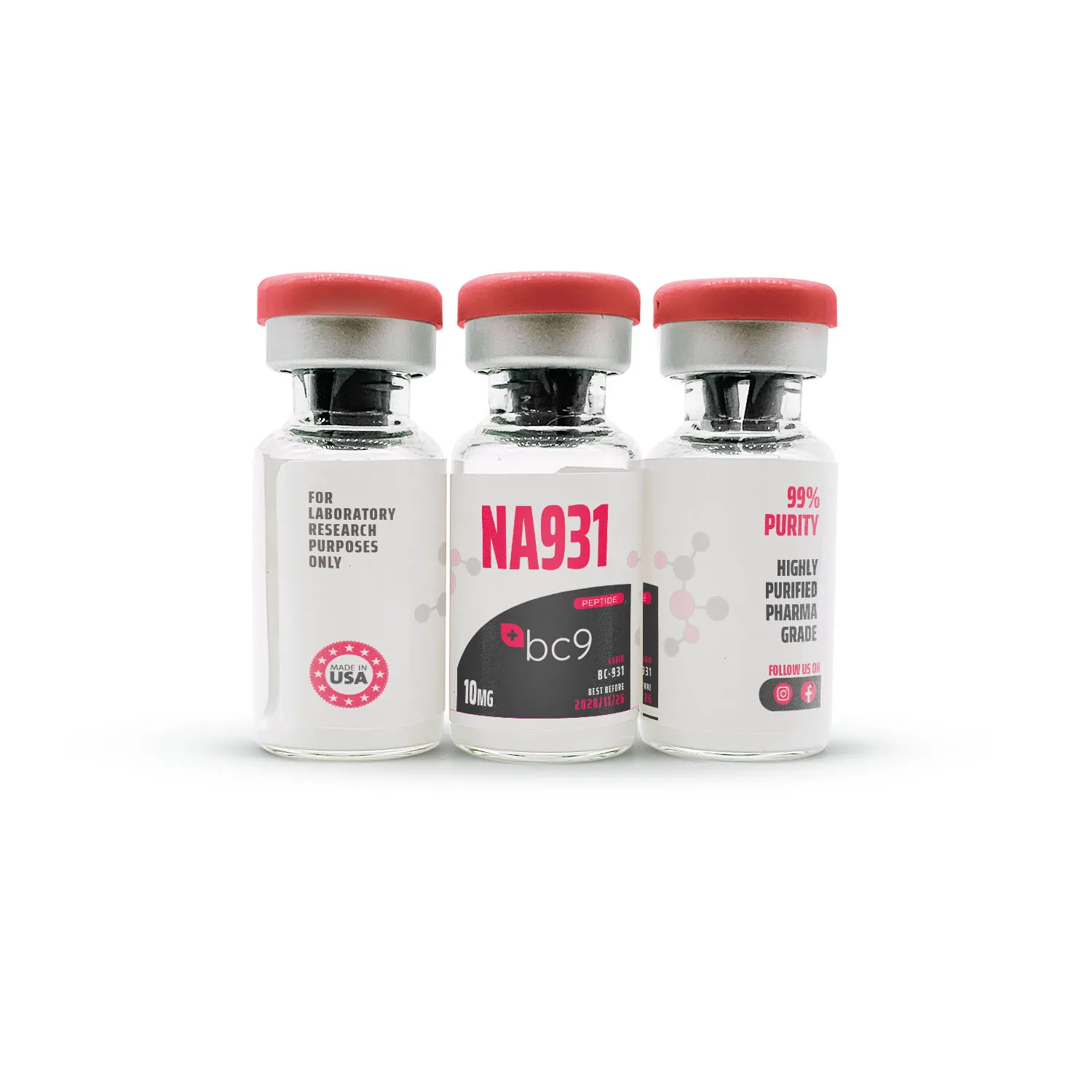
NA-931 (10mg) – Research Compound
Disclaimer: This compound is provided strictly for laboratory and scientific research purposes only. It is not approved by the U.S. Food and Drug Administration (FDA) for human or veterinary use, including ingestion, injection, or any form of administration.
Chemical Properties of the Compound
| Property | Details |
| CAS Number | Not publicly disclosed (proprietary investigational compound) |
| Molar Mass | Not publicly disclosed |
| Chemical Formula | Not publicly disclosed |
| IUPAC Name | Not publicly disclosed; structurally derived from a cyclic IGF-1 metabolite fragment |
| Synonyms | Bioglutide; NA-931 |
| Compound Class | Orally active small-molecule quadruple receptor agonist; cyclic IGF-1 fragment-derived |
| Physical Form | Lyophilized powder |
| Solubility | Lipophilic; reported to be orally bioavailable in preclinical and clinical investigation contexts |
| Stability / Shelf Life | Stable under lyophilized conditions when stored appropriately; exact shelf-life data not publicly established |
| Storage Instructions | Store lyophilized at −20°C, protected from light and moisture. Following reconstitution, store at 2–8°C. Avoid repeated freeze-thaw cycles. |
| Purity Percentage | ≥98% |
| PubChem CID | Not publicly assigned as of available data |
| Vial Format | 10mg lyophilized compound per vial |
Research transparency note: As of June 2026, the full structural identity, molecular formula, and molecular weight of NA-931 are proprietary and have not been independently disclosed in peer-reviewed literature. Chemical properties listed above reflect confirmed class-level and manufacturer-reported characteristics only.
Overview
NA-931, also designated Bioglutide, is a first-in-class orally active small-molecule investigational compound. It is derived from a cyclic fragment of insulin-like growth factor 1 (IGF-1). It has been investigated in preclinical and early-stage clinical settings for its activity as a quadruple receptor agonist, with reported interactions at the insulin-like growth factor 1 receptor (IGF-1R), glucagon-like peptide-1 receptor (GLP-1R), glucose-dependent insulinotropic polypeptide receptor (GIPR), and glucagon receptor (GCGR). Its cyclic structure is understood to confer lipophilicity and enzymatic stability, properties that have been associated with oral bioavailability and blood-brain barrier penetration in investigational models. Regulatory agencies, including the U.S. Food and Drug Administration (FDA), have not approved NA-931 for human or veterinary use, including ingestion, injection, or any form of administration. It is not a dietary supplement or consumer product. Availability is restricted to qualified researchers and licensed laboratory institutions. Clinical research initiatives involving this compound require guidance from the relevant Institutional Review Board (IRB), and preclinical animal studies must comply with IACUC directives under the Animal Welfare Act (AWA).
Working Mechanism of NA-931
In preclinical models, NA-931 has been investigated for its simultaneous agonist activity across four metabolic receptor pathways: IGF-1R, GLP-1R, GIPR, and GCGR. At the receptor level, GLP-1R engagement in rodent and in vitro models has been associated with stimulation of insulin secretion and inhibition of glucagon release. At the same time, GIPR activation has been examined in the context of glucose-dependent insulinotropic signaling in pancreatic beta-cell models. Concurrent GCGR engagement has been investigated in relation to hepatic energy expenditure pathways, and IGF-1R activation has been studied in the context of downstream PI3K/Akt and MAPK signaling cascades associated with protein synthesis regulation and insulin sensitization in skeletal muscle models. [Tran, L.L. et al., 2024]
The compound’s cyclic small-molecule structure is understood to distinguish it mechanistically from conventional peptide-based GLP-1 receptor agonists. Its lipophilic and cyclically stabilized configuration has been associated with resistance to enzymatic degradation in in vitro settings, and its reported capacity to cross the blood-brain barrier has been investigated in the context of central appetite-regulating neuronal pathways in animal models. These properties have been the subject of investigation as potential differentiating factors in comparative metabolic pharmacology research.
These interactions remain under investigation, with variability across experimental models and no fully established mechanism confirmed outside of controlled investigational settings.
Research Findings / Research Applications
Preclinical investigations have examined NA-931 in relation to:
Quadruple Receptor Engagement in Diet-Induced Obese Rodent Models:
NA-931 and its structural analogs (NA-932 and NA-933) have been investigated as IGF-1/GLP-1/GIP receptor agonists in male diet-induced obese (DIO) mouse models. Subcutaneous administration at 10 nmol/kg for 14 days was examined for effects on body weight, plasma glucose, plasma triglycerides, and liver triglycerides in comparison to tirzepatide-treated control cohorts. Observed reductions in body weight of up to 26% and liver triglycerides of up to 46% were reported relative to vehicle-treated animals, with findings noted as statistically significant in the study model. [Tran, L.L. et al., 2024]
Hepatic Lipid Modulation in Preclinical Metabolic Models:
Preclinical data from DIO mouse studies examined NA-931 compound-treated cohorts for changes in hepatic lipid content. Liver triglyceride reductions observed in NA-931-treated animals were reported to be numerically greater than those observed in tirzepatide-treated controls in the same model. These findings have been examined in the context of IGF-1-mediated glucagon suppression and hepatic lipid homeostasis pathways. [Tran, L.L. et al., 2024]
GLP-1R and GIPR Pathway Interactions in Metabolic Research:
In the context of metabolic receptor pharmacology, NA-931 has been investigated for its interactions at GLP-1R and GIPR, two incretin hormone receptors studied in relation to insulin secretion and glucose regulation in rodent and in vitro model systems. The compound’s quadruple receptor profile has been examined as a potential research tool for studying the combined downstream signaling effects of simultaneous incretin and IGF-1 pathway activation. [Tran, L.L. et al., 2025]
Oral Bioavailability and Blood-Brain Barrier Penetration Research:
The pharmacokinetic profile of NA-931 has been examined in investigational settings, with reported oral bioavailability attributed to its cyclic lipophilic small-molecule structure derived from a cyclic IGF-1 metabolite fragment. Blood-brain barrier penetration has been investigated in relation to central appetite-regulatory pathways, including hypothalamic neuronal models. These pharmacokinetic properties have been studied as potential differentiating characteristics relative to injectable peptide GLP-1 receptor agonists. [Tran, L.L. et al., 2025]
Alcohol Use Disorder-Related Behavioral Research in Animal Models:
Preclinical data have been presented examining NA-931 in animal models relevant to alcohol-mediated behavior. These studies examined attenuation of alcohol-induced locomotor stimulation and alcohol intake-related behaviors in rodent models. This research represents an early-stage exploratory application of NA-931’s receptor pharmacology profile outside of metabolic disease contexts. [Tran, L.L. et al., 2024]
Note: These findings are based on early-stage and preclinical research. Results are not consistent across all models, and data remains limited without validation in human clinical settings.
Risks & Handling Information
- Risk Tier: HIGH. NA-931 is an investigational small-molecule quadruple receptor agonist with reported activity across IGF-1R, GLP-1R, GIPR, and GCGR pathways. Given its multi-receptor endocrine activity profile (engaging insulin, glucagon, and growth factor receptor signaling simultaneously), the potential for significant endocrine pathway interference in biological systems is not fully characterized. No long-term toxicological data have been established for this research-grade preparation. Any unintentional exposure should be treated as requiring immediate decontamination and medical consultation.
- PPE Requirement: The use of appropriate personal protective equipment (PPE), including nitrile gloves, a lab coat, and eye protection, is essential in conducting all experiments involving this compound.
- Controlled Environment: Handling should occur within controlled laboratory environments designed for research activities, with adequate ventilation and appropriate containment measures in place at all times.
- Exposure Prohibition: Do not inhale, ingest, or make direct skin contact with the compound. This material is not intended for any form of self-administration or non-laboratory exposure under any circumstances.
- Storage and Degradation Risk: Improper storage conditions, including exposure to heat, light, or moisture, may result in compound degradation and compromised sample integrity. Maintain lyophilized vials at −20°C until use, and adhere to recommended reconstitution protocols to preserve research-grade integrity.
FAQs
Q: What is the regulatory status of NA-931 in the United States?
NA-931 has not been approved by the U.S. Food and Drug Administration (FDA) for human or veterinary use, including ingestion, injection, or any form of administration. It is classified as an investigational compound and is available exclusively for qualified laboratory and scientific research purposes only.
Q: What receptor targets has NA-931 been investigated for in preclinical research?
In preclinical and investigational settings, NA-931 has been examined for its agonist activity at four receptor targets: the insulin-like growth factor 1 receptor (IGF-1R), glucagon-like peptide-1 receptor (GLP-1R), glucose-dependent insulinotropic polypeptide receptor (GIPR), and glucagon receptor (GCGR). These investigations have been conducted in rodent metabolic models and in vitro receptor assay systems under controlled laboratory conditions. [Tran, L.L. et al., 2024]
Q: What makes NA-931 structurally distinct from existing GLP-1 receptor agonists studied in research settings?
NA-931 is a small-molecule compound derived from a cyclic IGF-1 metabolite fragment, structurally distinct from conventional peptide-based GLP-1 receptor agonists such as semaglutide or liraglutide. Its cyclic lipophilic configuration has been associated with oral bioavailability and reported blood-brain barrier penetration in investigational models. These are properties not observed with existing injectable GLP-1 peptide analogs studied in comparable research contexts. [Tran, L.L. et al., 2025]
Q: Has NA-931 been evaluated in human clinical trials?
NA-931 has been studied in Phase 1 and Phase 2 randomized controlled clinical trials registered on ClinicalTrials.gov (NCT06615700; NCT06564753). These are investigational trials and do not constitute FDA approval or established clinical use. The compound remains under clinical investigation, and no regulatory approval for any indication has been granted as of June 2026. BC9 supplies NA-931 strictly for qualified laboratory research purposes only.
Q: Why are certain chemical properties of NA-931 listed as undisclosed in the properties table?
NA-931 is a proprietary investigational compound developed by Biomed Industries, Inc. Its full structural identity, molecular formula, and molecular weight have not been independently published in peer-reviewed literature as of June 2026. Chemical properties not publicly verified through authoritative sources (PubChem, peer-reviewed publications, or regulatory filings) are not listed to maintain scientific accuracy and avoid unverified data representation.
References
Research transparency note: As of June 2026, no standalone peer-reviewed full-text publications specific to NA-931 are indexed on PubMed with individual PMIDs. The following references are peer-reviewed conference abstracts published in Diabetes (American Diabetes Association) and represent the primary published scientific literature currently available for this compound.
Tran, L.L. (2024). NA-931, a Novel Triple IGF-1/GLP-1/GIP Incretin Receptor Agonist Reduces Body Weight and Improves Metabolic Profile in DIO Mice. Diabetes, 73(Supplement_1), 2059–LB. https://diabetesjournals.org/diabetes/article/73/Supplement_1/2059-LB/155764/
Tran, L.L. (2025). NA-931, a Novel Quadruple IGF-1, GLP-1, GIP, and Glucagon Receptor Agonist, Reduces Body Weight without Muscle Loss. Diabetes, 74(Supplement_1), 143–OR. https://diabetesjournals.org/diabetes/article/74/Supplement_1/143-OR/159475/
BC9 Disclaimer
This content is presented exclusively for educational purposes and should not be construed as medical advice. THE MATERIALS REFERENCED HEREIN ARE EXCLUSIVELY INTENDED FOR LABORATORY AND RESEARCH USE.
Any clinical research initiatives must be conducted under the guidance of the relevant Institutional Review Board (IRB). Similarly, preclinical research involving animals must comply with the directives of the Institutional Animal Care and Use Committee (IACUC), adhering to the standards delineated by the Animal Welfare Act (AWA).
Our informational content is meticulously designed for research-oriented insights and is not a substitute for individual analysis and verification from credible sources before any purchasing decisions are made.
Upon finalizing your order and payment, you explicitly acknowledge and agree to adhere to our Terms and Conditions. Customer satisfaction stands as our paramount concern. If you are dissatisfied with the product received, kindly contact us at 419-707-5450 or email our support team at support@bc9.co.
IMPORTANT NOTICE: All products showcased on our platform are EXCLUSIVELY INTENDED FOR LABORATORY AND RESEARCH APPLICATIONS. They are expressly not intended for veterinary or human utilization.

Reviews
There are no reviews yet