
Description
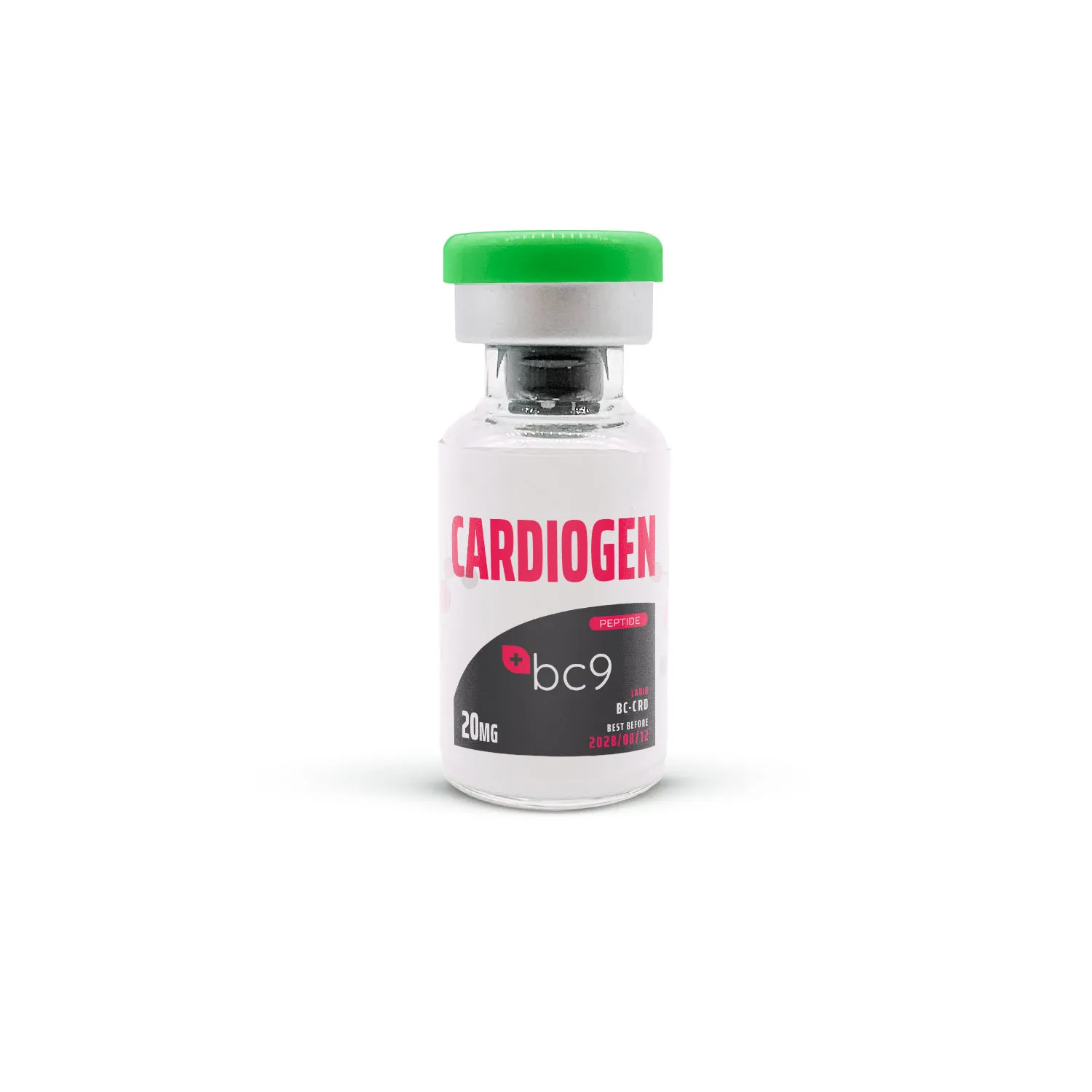
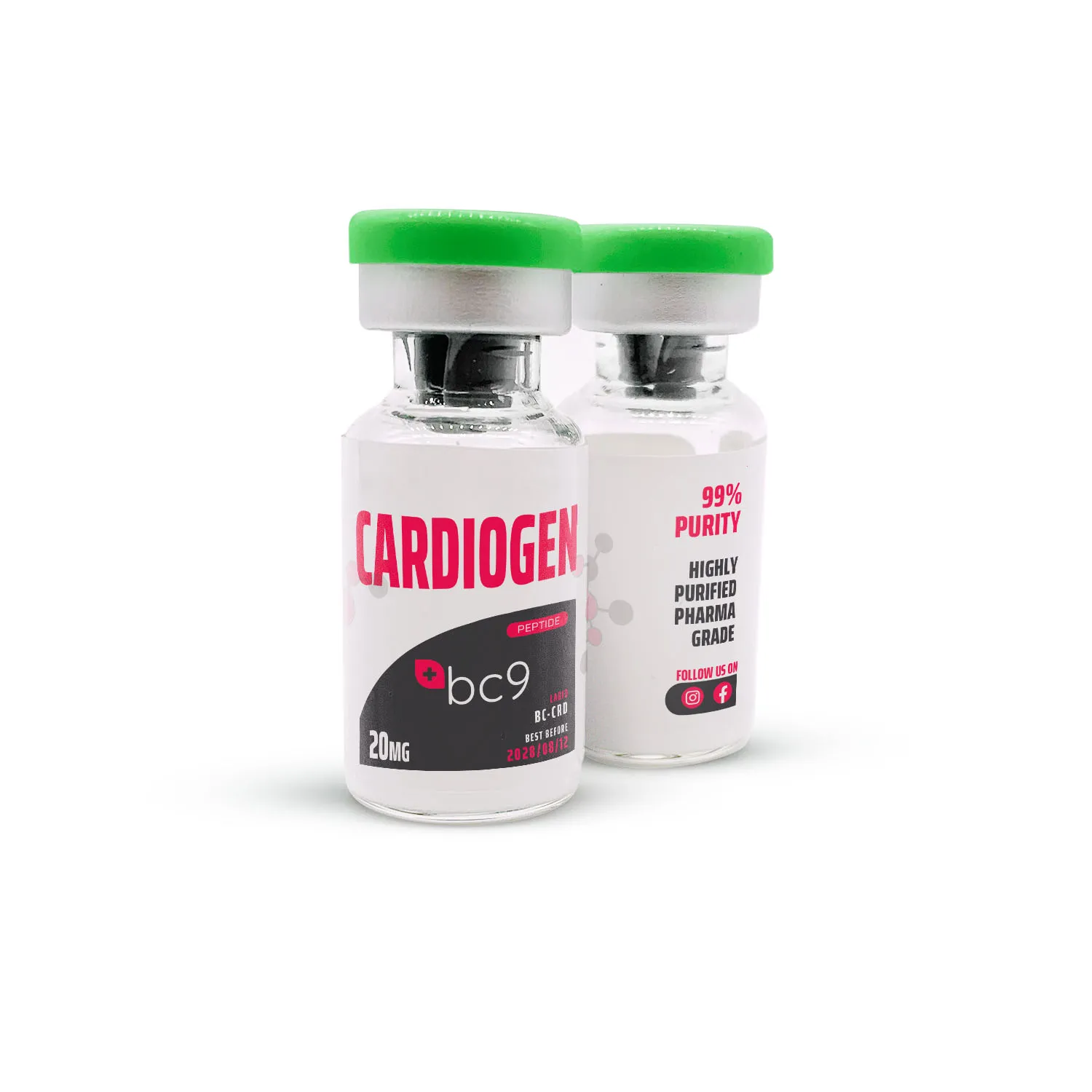
Cardiogen is a synthetic research tetrapeptide that is currently being studied for its potential role in supporting myocardial tissue function and cardiovascular cellular regulation.
Preclinical research suggests that Cardiogen may help modulate apoptotic signaling in cardiac tissue, offering mechanistic insight into pathways that influence cardiomyocyte proliferation, fibroblast activity, and cytoskeletal protein expression in preclinical models.
Key Characteristics
Cardiogen is a synthetic tetrapeptide structurally derived from endogenous cardiac tissue peptide fractions. It is classified as a low-molecular-weight linear bioregulatory peptide with the sequence H-Ala-Glu-Asp-Arg-OH (AEDR).
Investigators propose that Cardiogen interacts with DNA-associated proteins, enzymes, and transcription factors to increase the accessibility of genes encoding cytoskeletal proteins, thereby influencing cellular architecture and survival signaling in cardiac-derived cell systems.
Researchers are exploring how Cardiogen may influence p53-mediated apoptotic pathways and nuclear matrix protein synthesis — key factors in cardiomyocyte integrity and cardiac tissue homeostasis.
| CAS Number | 857267-11-9 |
| Molar Mass | ~489.5 g/mol |
| Chemical Formula | C₁₈H₃₁N₇O₉ |
| IUPAC Name | 2S)-2-[[(2S)-4-amino-2-[[(2S)-2-[[(2S)-2-amino- propanoyl]amino]-4-carboxybutanoyl]amino]-4-oxobutanoyl] amino]-5-(diaminomethylideneamino)pentanoic acid |
| Synonyms | Cardiogen; AEDR peptide; Alanyl-Glutamyl-Aspartyl-Arginine |
| Purity | ≥98% (HPLC verified) |
| Storage | −20°C (lyophilized); protect from light, heat, and moisture |
| Shelf Life | 24 months when stored lyophilized under recommended conditions |
| WADA Status | Not explicitly listed on WADA 2026 Prohibited List. Verify via GlobalDRO.com prior to sport science research use. |
| Classification | Research Use Only (RUO) |
Potential Research Applications of Cardiogen
Cardiogen is being investigated across a variety of research domains. Key areas of interest include:
Cardiomyocyte Proliferation & Apoptosis Regulation
Cardiogen demonstrated notable stimulation of cardiomyocyte proliferation in preclinical models. Immunohistochemical assessments recorded a decrease in p53 protein expression following Cardiogen exposure, which investigators interpret as indicative of reduced apoptotic signaling activity.
Cytoskeletal & Nuclear Matrix Protein Expression Studies
Preclinical assay data indicate that the AEDR tetrapeptide may upregulate cytoskeletal proteins — including actin, tubulin, and vimentin — by 2–5 times. And nuclear matrix proteins lamin A and lamin C by 2–3 times in cultured fibroblast preparations. These findings have been proposed to underpin the cardioprotective activity of Cardiogen at the molecular level.
Cardiac Remodeling & Myocardial Injury Research
Coronary artery ligation research preparations have been used to assess Cardiogen’s potential influence on necrotic zone parameters and myocardial glycogen preservation. Investigators noted observations consistent with reparative process activation and improved cellular energy storage parameters in cardiac tissue systems following AEDR peptide exposure.
Geroprotective Research
Cardiogen demonstrated consistent proliferative activity in myocardial tissue preparations from research models, where conventional amino acid interventions showed markedly diminished activity.
Disclaimer
This content is presented exclusively for educational purposes and should not be construed as medical advice. THE MATERIALS REFERENCED HEREIN ARE EXCLUSIVELY INTENDED FOR LABORATORY AND RESEARCH USE.
Any clinical research initiatives must be conducted under the guidance of the relevant Institutional Review Board (IRB). Similarly, preclinical research involving research models must comply with the directives of the Institutional Animal Care and Use Committee (IACUC), adhering to the standards delineated by the Animal Welfare Act (AWA).
Our informational content is meticulously designed for research-oriented insights and is not a substitute for individual analysis and verification from credible sources before any purchasing decisions are made.
Upon finalizing your order and payment, you explicitly acknowledge and agree to adhere to our Terms and Conditions. Customer satisfaction stands as our paramount concern. If you are dissatisfied with the product received, kindly contact us at 419-707-5450 or email our support team at support@bc9.co.
IMPORTANT NOTICE: All products showcased on our platform are EXCLUSIVELY INTENDED FOR LABORATORY AND RESEARCH APPLICATIONS. They are expressly not intended for veterinary or human utilization.
Reference Links
Chalisova, N. I., Lesniak, V. V., Balykina, N. A., Urt’eva, S. A., Urt’eva, T. A., Sukhonosov, Y. A., & Zhekalov, A. N. (2009). The effect of amino acids and cardiogen on the development of myocard tissue culture from young and old rats. Advances in Gerontology, 22(3), 409–413. https://pubmed.ncbi.nlm.nih.gov/20210190/
Khavinson, V. Kh., Lin’kova, N. S., Polyakova, V. O., Kvetnoy, I. M., Benberin, V. V., D’yakonov, M. M., & Titkov, Y. S. (2012). Tetrapeptide H-Ala-Glu-Asp-Arg-OH stimulates expression of cytoskeletal and nuclear matrix proteins. Bulletin of Experimental Biology and Medicine, 153(4), 559–562. https://pubmed.ncbi.nlm.nih.gov/22977944/
Khavinson, V. Kh., Fedoreyeva, L. I., & Vanyushin, B. F. (2011). Site-specific binding of short peptides with DNA modulated eukaryotic endonuclease activity. Bulletin of Experimental Biology and Medicine, 151(1), 66–70. https://pubmed.ncbi.nlm.nih.gov/21744044/
Levdik, N. V., & Knyazkin, I. V. (2009). Tumor-modifying effect of cardiogen peptide on M-1 sarcoma in senescent rats. Bulletin of Experimental Biology and Medicine, 148(3), 433–436. https://doi.org/10.1007/s10517-010-0730-9

Reviews
There are no reviews yet