
Description
Properties
| CAS Number | 2627-69-2 |
| Molar Mass | 258.23 g/mol |
| Chemical Formula | C9H14N4O5 |
| Synonyms | Acadesine, AIC -Riboside, 5-Aminoimidazole-4-carboxamide riboside |
| Shelf Life | 18 months |
Product Overview of AICAR Peptide
AICAR is a known nucleoside analogue. Aside from this, it is a potent peptide that acts as an activator of AMP-activated protein kinase (AMPK). The latter is often referred to as the “cellular energy sensor.”
As AICAR mimics AMP inside cells, it stimulates AMPK pathways. The action leads to increased glucose uptake, fatty acid oxidation, and mitochondrial biogenesis.
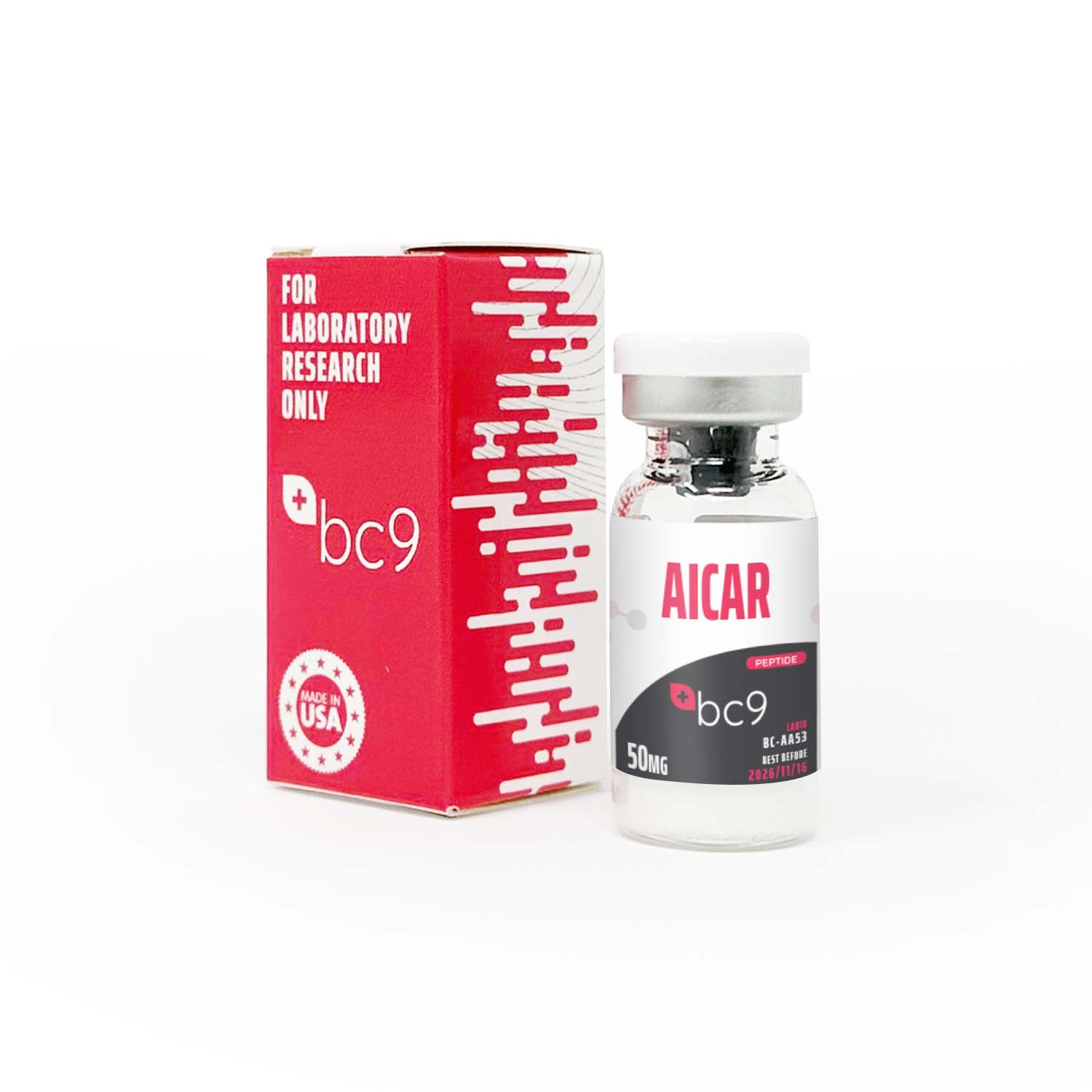
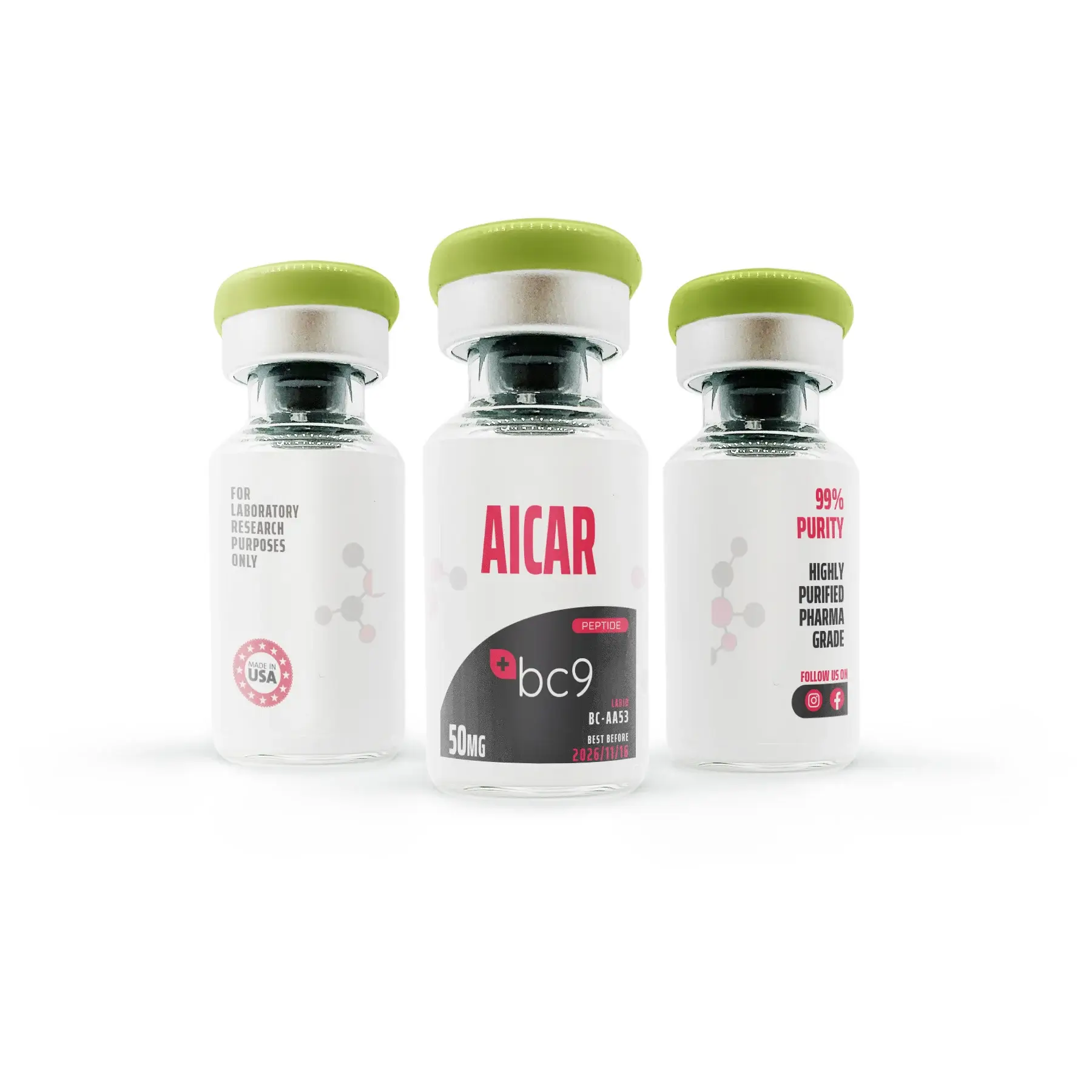
For decades, has been an essential tool in exploring energy metabolism, endurance capacity, obesity, and metabolic disease models. BC9 high-purity AICAR peptide vial for laboratory research purposes only.
Why Choose BC9 to Buy AICAR Peptide Online
At BC9, we understand that researchers need consistent, high-quality compounds. This is why we made sure that our AICAR peptide is manufactured through rigorous standards. Such a practice ensures purity and stability for reliable experimental outcomes.
Whether you are searching for AICAR for sale to study energy metabolism, planning to buy AICAR for preclinical investigations, or looking to purchase AICAR for metabolic and cellular projects, BC9 is your online partner for research-grade materials.
Here are more compelling reasons explaining why BC9 is trusted by researchers:
- Extensive research product catalogue
- Certificates of Analysis (COAs) for every batch
- Knowledgeable and responsive customer care team
- Secure and discreet packaging
- Free shipping for orders above $150
- Clear labeling of “For laboratory research only”
AICAR Peptide: Potential Research Applications
AICAR in Metabolic Syndrome and Obesity Research
AICAR is one of the most widely used compounds for probing the AMP-activated protein kinase (AMPK) pathway. This regulates cellular energy homeostasis. [1]
When phosphorylated, AMPK shifts cellular activity toward energy-generating processes (glucose uptake and fatty acid oxidation). This same effect also leads away from energy-consuming pathways (lipid synthesis). [2]
AICAR in Ischemic Protection and Cardiovascular Research
One of the outcomes of AMPK activation is the preservation and promotion of survival under stress. Through this result, AICAR has also been investigated in models of ischemic injury (cardiac or renal ischemia). [3]
Experimental literature suggests that AICAR may sustain mitochondrial function and limit cellular damage during oxygen deprivation. Such a feature positions AICAR as a useful research compound for studying organ protection pathways. [4]
AICAR and Cancer Metabolism
Cancer cells often exhibit altered energy metabolism. This is a phenomenon known as the Warburg effect. By activating AMPK, AICAR has been shown to inhibit the Warburg effect among cancer cells. [5]
This is achieved when AICAR interferes with anabolic signaling pathways such as mTOR. The action was observed to lead to reduced proliferation in certain cell lines.
Some researchers leverage AICAR to examine how energy stress can impact tumor cell survival, apoptosis, and metabolic flexibility. All of these are critical areas of cancer biology. [6]
AICAR and Exercise-Mimetic Effects
Another particularly interesting potential application of AICAR is its ability to act as an “exercise mimetic” in controlled studies.
In one study, AICAR administration to mice has led to enhanced endurance performance. This could be due to the peptide’s ability to upregulate genes involved in oxidative metabolism and mitochondrial biogenesis. [7]
The mentioned finding makes AICAR a valuable probe for learning the genetic and biochemical responses that are normally induced by exercise. The catch is that this may be done without requiring mechanical activity.
AICAR in Obesity and Insulin Resistance Models
Some preclinical studies employ AICAR to explore how chronic AMPK activation influences glucose tolerance, adipose tissue metabolism, and insulin signaling. [8]
For example, rodent models exposed to AICAR demonstrated lower fasting blood glucose and reduced fat accumulation. The effect may provide valuable insights to researchers regarding the molecular basis of insulin resistance and metabolic syndrome. [9]
IMPORTANT: The potential actions of AICAR mentioned are all derived from experimental settings. This means more studies are needed to confirm their effects on humans. AICAR is classified as an experimental compound, suggesting it is not approved for human use. BC9 sells its AICAR peptide vial for research purposes only.
Frequently Asked Questions
What should I consider before I buy AICAR online?
Before you buy AICAR online, it’s important to ensure the source provides research-grade quality and transparent documentation. Look for suppliers that offer certificates of analysis (COAs), knowledgeable customer support, and discreet packaging. You should also confirm that the product is intended strictly for research and laboratory use only.
What is AICAR being investigated for?
AICAR is widely used in scientific studies. These are focused on energy metabolism, AMPK activation, glucose regulation, obesity models, and cancer metabolism.
What makes BC9 the best place to purchase AICAR online?
BC9 stands out as a trusted supplier for those looking to purchase AICAR online due to our commitment to quality and transparency. Each vial comes with a COA, verifying purity, identity, and batch consistency. We are also a top choice among researchers due to our secure packaging, fast delivery (If you order beyond $150, shipping fees are on us!), and responsive customer support.
Can AICAR help develop muscles among research models?
In laboratory research, AICAR has been shown to activate pathways that mimic some of the molecular effects of exercise. These may include increased mitochondrial activity and enhanced oxidative metabolism. However, more studies are needed to confirm this effect on humans.
AICAR is not a muscle-building compound and should not be considered as an anabolic agent. Its primary value is to help researchers understand metabolic regulation and modulation.
Is AICAR approved for human consumption?
No, AICAR is not approved for human consumption by the FDA or any other regulatory authority. BC9 supplies AICAR exclusively for laboratory research purposes.
References:
- Višnjić, D., Lalić, H., Dembitz, V., Tomić, B., & Smoljo, T. (2021). AICAr, a Widely Used AMPK Activator with Important AMPK-Independent Effects: A Systematic Review. Cells, 10(5), 1095. https://doi.org/10.3390/cells10051095
- Long, Y. C. (2006). AMP-activated protein kinase signaling in metabolic regulation. Journal of Clinical Investigation, 116(7), 1776–1783. https://doi.org/10.1172/jci29044
- Marino, A., Hausenloy, D. J., Andreadou, I., Horman, S., Bertrand, L., & Beauloye, C. (2021). AMP-activated protein kinase: A remarkable contributor to preserving a healthy heart against ROS injury. Free Radical Biology and Medicine, 166, 238–254. https://doi.org/10.1016/j.freeradbiomed.2021.02.047
- Bouhamida, E., Morciano, G., Perrone, M., Kahsay, A. E., Della Sala, M., Wieckowski, M. R., Fiorica, F., Pinton, P., Giorgi, C., & Patergnani, S. (2022). The Interplay of Hypoxia Signaling on Mitochondrial Dysfunction and Inflammation in Cardiovascular Diseases and Cancer: From Molecular Mechanisms to Therapeutic Approaches. Biology, 11(2), 300. https://doi.org/10.3390/biology11020300
- Natarajan, S. R., Ponnusamy, L., & Manoharan, R. (2022). MARK2/4 promotes Warburg effect and cell growth in non-small cell lung carcinoma through the AMPKα1/mTOR/HIF-1α signaling pathway. Biochimica et Biophysica Acta (BBA) – Molecular Cell Research, 1869(7), 119242. https://doi.org/10.1016/j.bbamcr.2022.119242
- Vietri, M., Miranda, M. R., Amodio, G., Ciaglia, T., Alessia Bertamino, Campiglia, P., Paolo Remondelli, Vestuto, V., & Ornella Moltedo. (2025). The Link Between Endoplasmic Reticulum Stress and Lysosomal Dysfunction Under Oxidative Stress in Cancer Cells. Biomolecules, 15(7), 930–930. https://doi.org/10.3390/biom15070930
- Narkar, V. A., Downes, M., Yu, R. T., Embler, E., Wang, Y.-X., Banayo, E., Mihaylova, M. M., Nelson, M. C., Zou, Y., Juguilon, H., Kang, H., Shaw, R. J., & Evans, R. M. (2008). AMPK and PPARδ Agonists Are Exercise Mimetics. Cell, 134(3), 405–415. https://doi.org/10.1016/j.cell.2008.06.051
- Park, S., Kim, D. S., Kang, S., & Shin, B. K. (2014). Chronic activation of central AMPK attenuates glucose-stimulated insulin secretion and exacerbates hepatic insulin resistance in diabetic rats. Brain Research Bulletin, 108, 18–26. https://doi.org/10.1016/j.brainresbull.2014.08.002
- Tukhovskaya, E. A., Shaykhutdinova, E. R., Pakhomova, I. A., Slashcheva, G. A., Goryacheva, N. A., Sadovnikova, E. S., Rasskazova, E. A., Kazakov, V. A., Dyachenko, I. A., Frolova, A. A., Brovkin, A. N., Kaluzhsky, V. E., Mikhail Yu. Beburov, & Murashev, A. N. (2022). AICAR Improves Outcomes of Metabolic Syndrome and Type 2 Diabetes Induced by High-Fat Diet in C57Bl/6 Male Mice. International Journal of Molecular Sciences, 23(24), 15719–15719. https://doi.org/10.3390/ijms232415719


Henry Richardson –
Delivers a steady, sustained energy without any crashes.
Joseph –
This is such an effective product, really happy with it.
Andy –
Reliable product, good results so far.