
Description
FGL (Fibroblast Growth Loop) is a synthetic 15-amino acid peptide derived from the second fibronectin type III module of the neural cell adhesion molecule (NCAM). NCAM belongs to the immunoglobulin (Ig) superfamily and is composed extracellularly of five Ig-like and two fibronectin type III (F3) modules. The FGL peptide is derived specifically from the second F3 module.
Researchers believe that FGL is derived from the FG loop of the second fibronectin type III (F3) module of NCAM, functioning as a synthetic mimetic of NCAM’s endogenous binding site for FGFR1. This investigational compound has attracted considerable interest within preclinical research for its observed interactions with key neuronal signaling pathways.
With a well-characterized molecular profile and a growing body of preclinical literature, FGL represents one of the more studied NCAM-mimetic peptides currently under investigation.
Key Characteristics
Preclinical studies have examined its interactions with fibroblast growth factor receptor 1 (FGFR1). A few research findings have indicated its potential to activate downstream intracellular cascades relevant to neuronal survival, synaptic remodeling, and neuroimmune regulation in investigational models.
Specifically, FGL-mediated FGFR1 activation has been associated with the Ras/MAPK (mitogen-activated protein kinase) and PI3K/Akt signal transduction pathways in preclinical neuronal research models, consistent with NCAM-homophilic binding-associated downstream signaling.
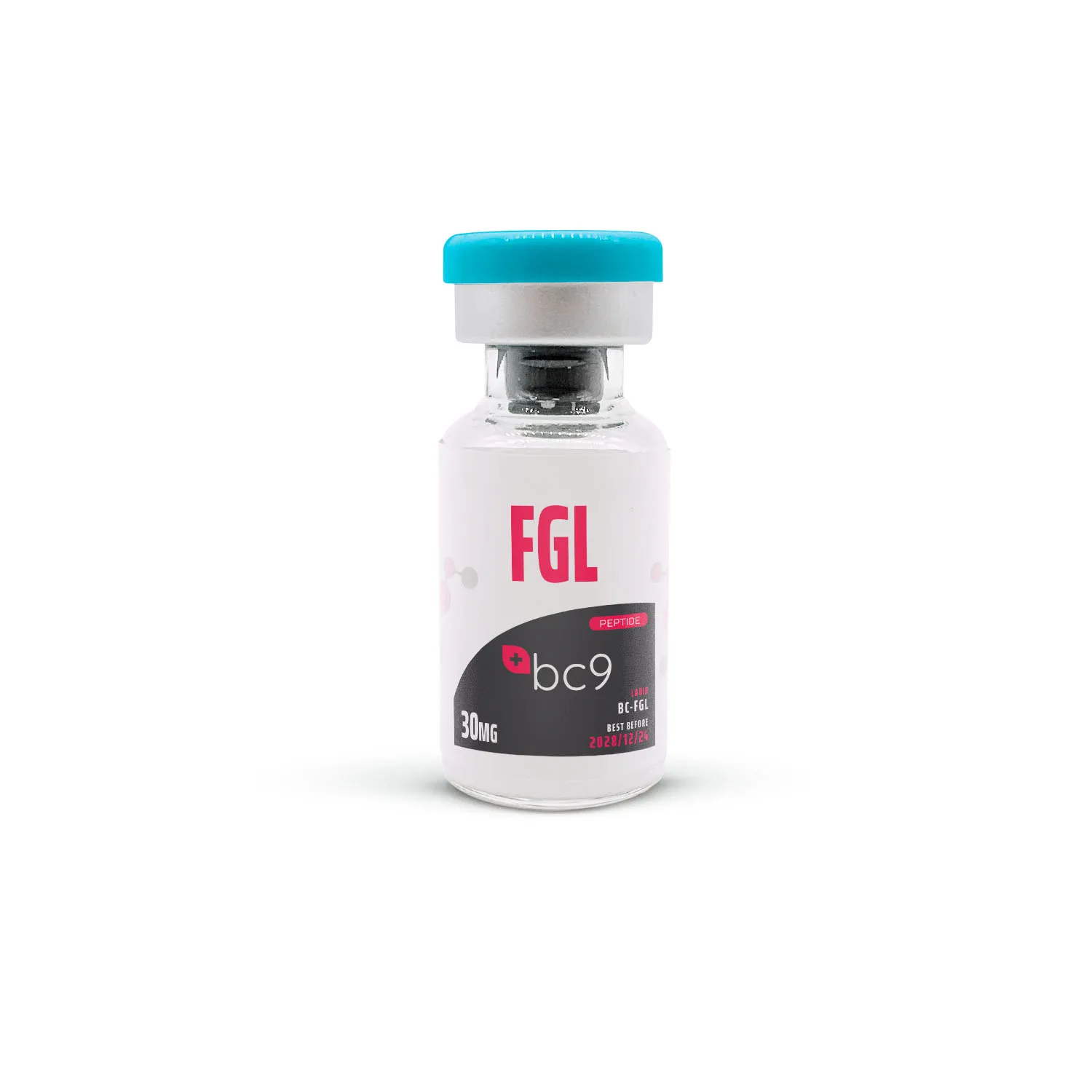
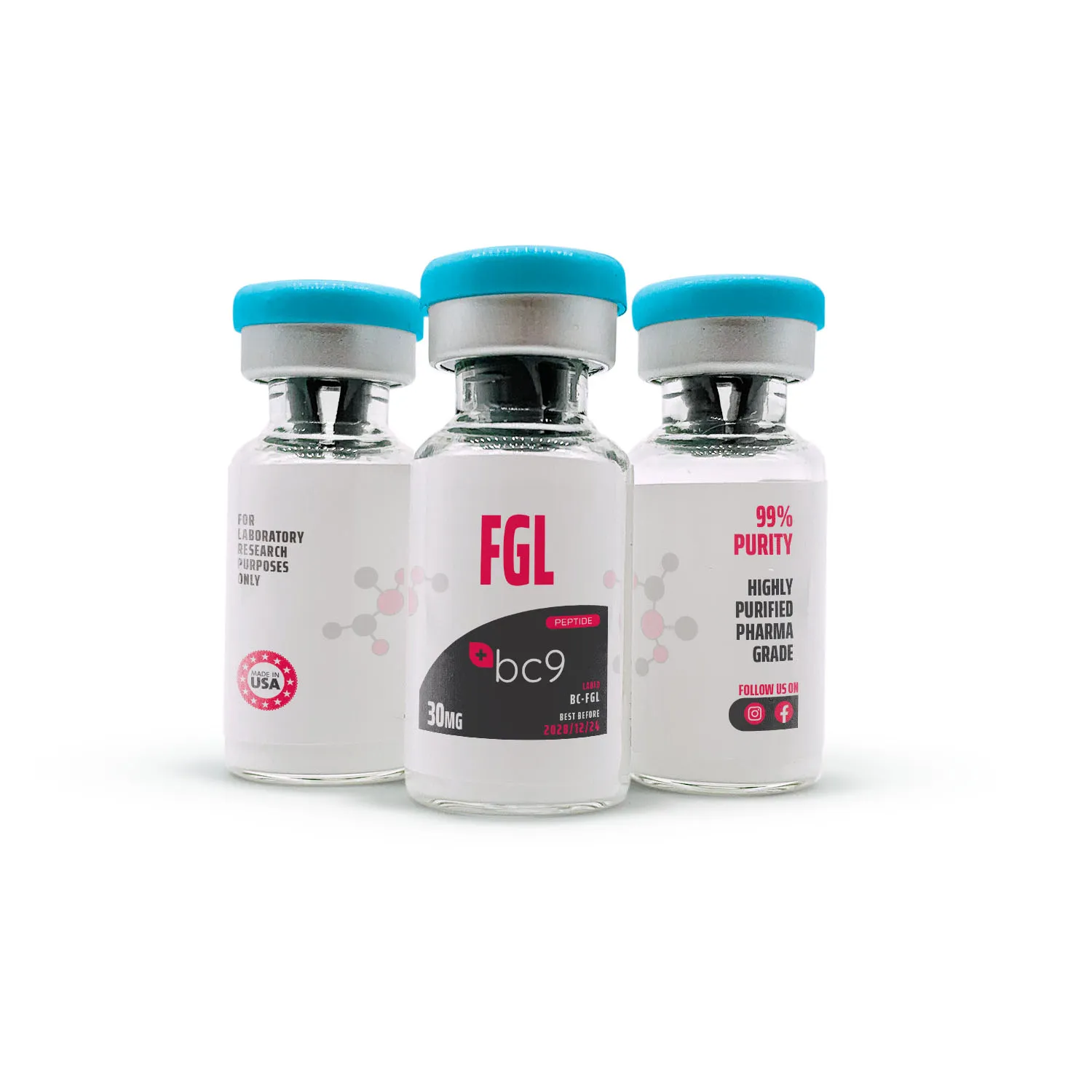
BC9’s FGL is supplied as a lyophilized powder in a 30mg research vial, produced to rigorous purity standards and intended strictly for qualified researchers operating within controlled laboratory environments.
| Pubchem CID | 16200289 |
| Molecular Formula | C71H116N20O25 |
| Molecular Weight | 1649.8 g/mol |
| Synonyms | FGL peptide HY-P3281 DA-53184 CS-0655069 FG Loop Peptide NCAM FGL |
| IUPAC | L-alpha-glutamyl-L-valyl-L-tyrosyl-L-valyl-L-valyl-L-alanyl-L-alpha-glutamyl-L-asparagyl-L-glutaminyl-L-glutaminyl-glycyl-L-lysyl-L-seryl-L-lysyl-L-alanine |
Possible Research Applications
Neuroprotection Research
Preclinical findings suggest FGL may confer protection against neuronal cell death in models of ischemic insult, with data from rodent global ischemia studies pointing to preserved hippocampal neuron viability following FGL administration.
Synaptic Plasticity Investigation
In vivo preclinical studies indicate FGL may influence long-term potentiation in the dentate gyrus, with researchers observing alterations in synaptic structure and synaptogenesis consistent with FGFR1-mediated signaling activity.
Neuroinflammation Modeling
Data from preclinical models suggest FGL may modulate glial inflammatory responses, with findings noting reduced microglial activation and decreased pro-inflammatory cytokine profiles associated with CD200-dependent mechanisms.
Neurodegenerative Disease Models
FGL has been examined in preclinical models, where preliminary data indicate potential influence over amyloid-beta-associated neuronal stress pathways and age-related cognitive decline markers in research subjects.
Traumatic Brain Injury (TBI) Research
Preclinical cryo-induced TBI models have identified FGL-associated modulation of gene expression related to apoptosis regulation, neurogenesis, and cellular differentiation, positioning it as a candidate tool compound for experimental TBI research.
Disclaimer
This content is presented exclusively for educational purposes and should not be construed as medical advice. THE MATERIALS REFERENCED HEREIN ARE EXCLUSIVELY INTENDED FOR LABORATORY AND RESEARCH USE.
Any clinical research initiatives must be conducted under the guidance of the relevant Institutional Review Board (IRB). Similarly, preclinical research involving animals must comply with the directives of the Institutional Animal Care and Use Committee (IACUC), adhering to the standards delineated by the Animal Welfare Act (AWA).
Our informational content is meticulously designed for research-oriented insights and is not a substitute for individual analysis and verification from credible sources before any purchasing decisions are made.
Upon finalizing your order and payment, you explicitly acknowledge and agree to adhere to our Terms and Conditions. Customer contentment stands as our paramount concern. If you are dissatisfied with the product received, kindly contact us at 419-707-5450 or email our support team at support@bc9.co.
IMPORTANT NOTICE: All products showcased on our platform are EXCLUSIVELY INTENDED FOR LABORATORY AND RESEARCH APPLICATIONS. They are expressly not for use in veterinary or human utilization.
Reference Links
Neiiendam JL, Køhler LB, Christensen C, et al. A synthetic NCAM-derived peptide, FGL, protects hippocampal neurons from ischemic insult both in vitro and in vivo. J Neurochem. 2004;91(4):1463–1474. https://pubmed.ncbi.nlm.nih.gov/15584919/
Downer EJ, Cowley TR, Cox F, et al. A synthetic NCAM-derived mimetic peptide, FGL, exerts anti-inflammatory properties via IGF-1 and interferon-gamma modulation. J Neurochem. 2009;109(5):1516–1525. https://pubmed.ncbi.nlm.nih.gov/19457161/
Klementiev B, Novikova T, Novitskaya V, et al. A cell adhesion molecule mimetic, FGL peptide, induces alterations in synapse and dendritic spine structure in the dentate gyrus of aged rats. Eur J Neurosci. 2007;26(5):1235–1244. https://pubmed.ncbi.nlm.nih.gov/18215229/
Bas Orth C, Del Turco D, et al. The synthetic NCAM mimetic peptide FGL mobilizes neural stem cells in vitro and in vivo. PLoS One. 2014;9(5):e97414. https://pubmed.ncbi.nlm.nih.gov/24817672/

Reviews
There are no reviews yet