
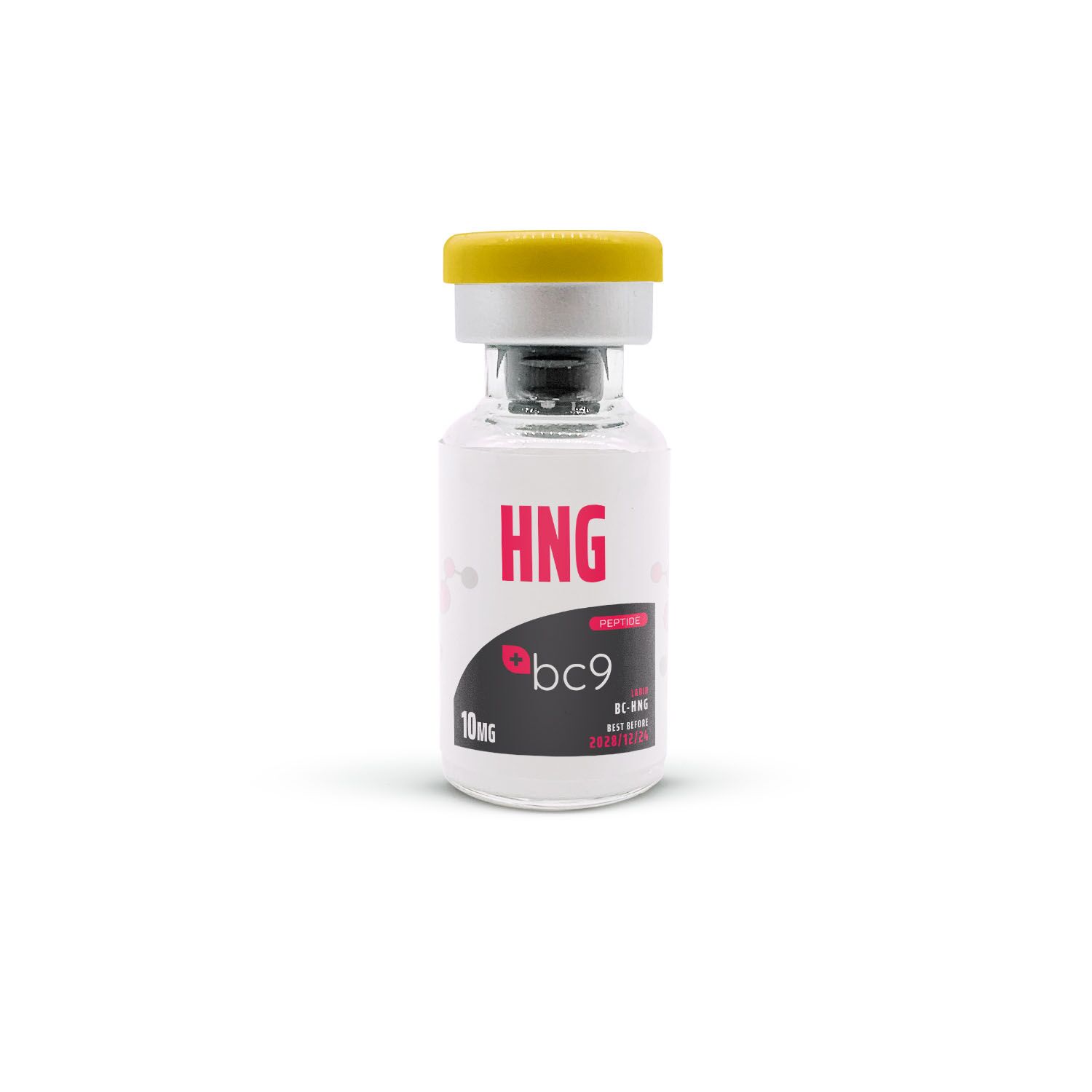
Description
HNG, formally designated [Gly14]-Humanin or S14G-Humanin, is a synthetic analog of Humanin, a mitochondrial-derived peptide (MDP) that exists as either a 21-amino-acid form (mitochondrial translation) or a 24-amino-acid form (cytoplasmic translation). The synthetic 24-amino-acid form (MAPRGFSCLLLLTSEIDLPVKRRA) is the most widely studied in preclinical research in the context of Alzheimer’s disease.
HNG differs from native Humanin by a single amino acid substitution at position 14, where serine is replaced with glycine. This structural modification has been shown in preclinical studies to confer approximately 1,000-fold greater neuroprotective potency compared to the parent molecule.
| Property | Value |
| PubChem CID | CAS 330936-70-4 |
| Molecular Weight | 2657.21 g/mol |
| Molecular Formula | C₁₁₈H₂₀₂N₃₄O₃₁S₂ |
| CAS Number | 330936-70-4 |
| Synonyms | HNG, sHNG, S14G-Humanin, [Gly14]-HN, Humanin-G, MAPRGFSCLLLLTGEIDLPVKRRA, and more |
Key Characteristics
Originally derived from the 16S ribosomal RNA region of mitochondrial DNA, Humanin and its analogs represent a class of mitochondrial-derived peptides. They are investigated for their roles in cellular stress response, apoptosis regulation, and metabolic signaling.
HNG has been studied across a range of in vitro and in vivo preclinical models, with data pointing to interactions involving anti-apoptotic pathways, mitochondrial function preservation, and neuroimmune modulation. The compound’s enhanced potency profile relative to native
BC9’s HNG is supplied as a lyophilized powder in a 10mg research vial, manufactured to rigorous purity standards and intended strictly for qualified researchers operating within controlled laboratory environments.
Possible Research Applications
-
Neuroprotection & Ischemia Research
Preclinical findings indicate HNG may attenuate neuronal apoptosis following ischemic insult, with rodent cerebral ischemia/reperfusion models demonstrating reduced infarct volume and improved neurological deficit scores in HNG-treated research subjects via PI3K/Akt pathway activation.
-
Traumatic Brain Injury (TBI) Models
In preclinical data from research models suggest HNG may improve morphological and functional outcomes post-injury.
-
Retinal Neurodegeneration & AMD Modeling
Preclinical research study suggests HNG may modulate angiogenesis and neurodegeneration marker protein levels.
-
Metabolic & Mitochondrial Stress Research
Preclinical evidence suggests HNG may interact with IGF-1 signaling and the trimeric receptor complex (CNTFR/gp130/WSX-1) to influence cellular energy metabolism and oxidative stress responses in research models, with investigators exploring its potential relevance to aging-associated metabolic dysregulation.
Disclaimer
This content is presented exclusively for educational purposes and should not be construed as medical advice. THE MATERIALS REFERENCED HEREIN ARE EXCLUSIVELY INTENDED FOR LABORATORY AND RESEARCH USE.
Any clinical research initiatives must be conducted under the guidance of the relevant Institutional Review Board (IRB). Similarly, preclinical research involving animals must comply with the directives of the Institutional Animal Care and Use Committee (IACUC), adhering to the standards delineated by the Animal Welfare Act (AWA).
Our informational content is meticulously designed for research-oriented insights and is not a substitute for individual analysis and verification from credible sources before any purchasing decisions are made.
Upon finalizing your order and payment, you explicitly acknowledge and agree to adhere to our Terms and Conditions. Customer contentment stands as our paramount concern. If you are dissatisfied with the product received, kindly contact us at 419-707-5450 or email our support team at support@bc9.co.
IMPORTANT NOTICE: All products showcased on our platform are EXCLUSIVELY INTENDED FOR LABORATORY AND RESEARCH APPLICATIONS. They are expressly not for use in veterinary or human utilization.
References
- Li F, He Z, Wei L, Wei J, Yu W. Neuroprotective effect of humanin on cerebral ischemia/reperfusion injury is mediated by a PI3K/Akt pathway. Neurochem Res. 2008;33(7):1371–1379. 🔗 https://pubmed.ncbi.nlm.nih.gov/18590709/
[Li et al., 2008 — studied native Humanin; PI3K/Akt mechanism is consistent with HNG’s established receptor pharmacology and enhanced potency profile in related preclinical models] - Yin Q, Wu L, Zheng L, et al. [Gly14]-Humanin reduces histopathology and improves functional outcome after traumatic brain injury in mice. Neuroscience. 2013;231:70–81. 🔗 https://pubmed.ncbi.nlm.nih.gov/23178909/
- Xu X, Chua KW, Chua CC, Liu CF, Hamdy RC, Chua BH. Protective effects of [Gly14]-Humanin on beta-amyloid-induced PC12 cell death by preventing mitochondrial dysfunction. Neurochem Int. 2009;56(2):159–165. 🔗 https://pubmed.ncbi.nlm.nih.gov/19647029/
- Bhootada Y, Kotla P, Zouache MA, et al. Effects of Humanin G (HNG) on inflammation in age-related macular degeneration (AMD). Sci Rep. 2022;12(1):7286. 🔗 https://pubmed.ncbi.nlm.nih.gov/35576057/

Reviews
There are no reviews yet