
Description
Disclaimer: This compound is provided strictly for laboratory and scientific research purposes only. It is not approved by the U.S. Food and Drug Administration (FDA) for human or veterinary use, including ingestion, injection, or any form of administration.
BPC-157 Regulatory Notice: BPC-157 is currently under FDA Pharmacy Compounding Advisory Committee (PCAC) review for potential designation as a bulk substance prohibited from compounding under FDCA Section 503A/503B. This vial is a research reagent only.
WADA Notice – TB-500: TB-500 is classified under WADA S2.3 – Other Peptide Hormones, Growth Factors, Related Substances and Mimetics and is prohibited in- and out-of-competition.
Chemical Properties of the Compound
| Property | Details |
| Product Format | Four-component peptide research blend | Lyophilized powder |
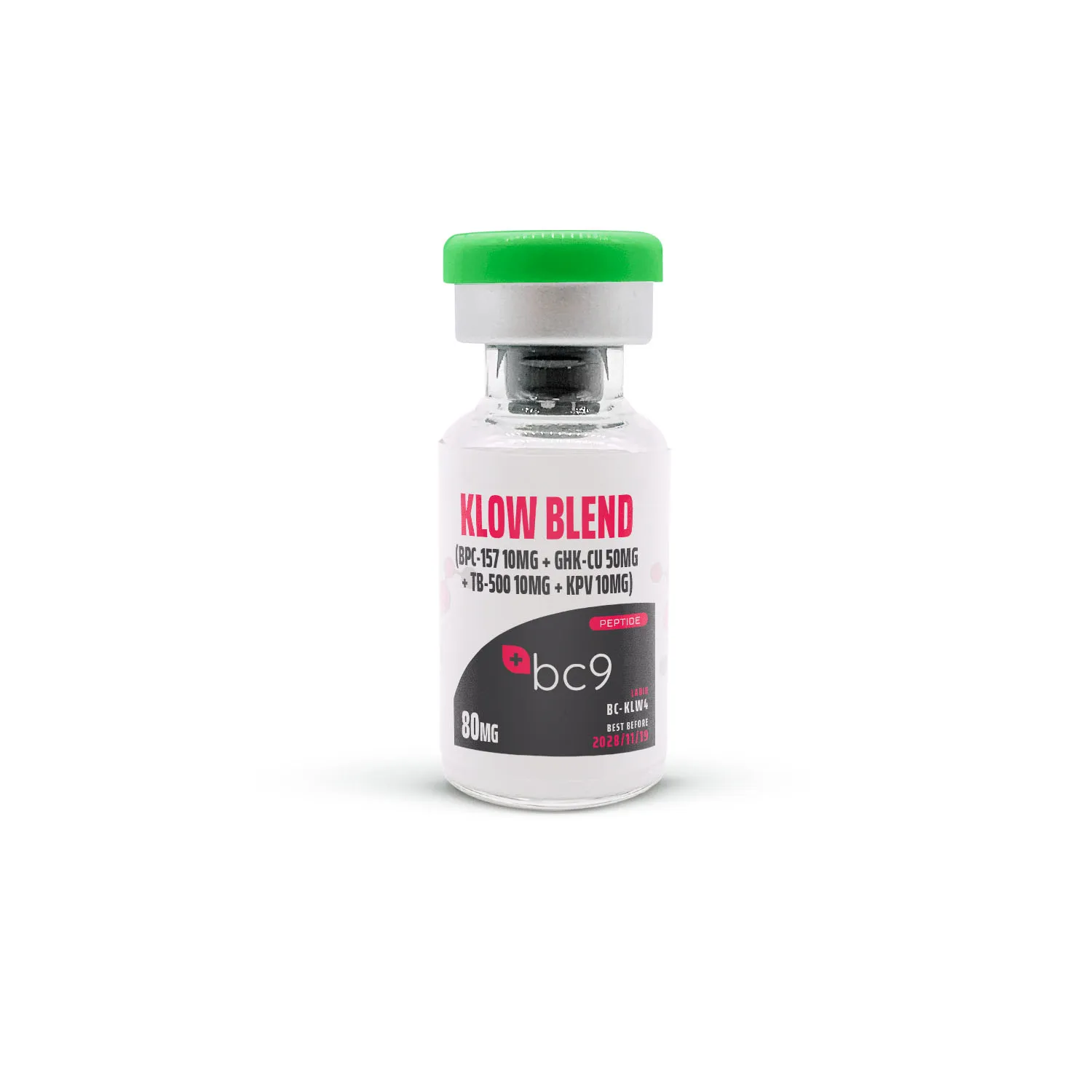
| Total Vial Content | 80mg (BPC-157 10mg + GHK-Cu 50mg + TB-500 10mg + KPV 10mg) |
| CAS – BPC-157 | 137525-51-0 | Sequence: GEPPPGKPADDAGLV (15-AA pentadecapeptide) | MW 1419.5 Da |
| CAS – GHK-Cu | 89030-95-5 | Gly-His-Lys + Cu²⁺ | MW (GHK free tripeptide): 340.4 Da. PubChem CID 6324194 (copper complex) |
| CAS – TB-500 | 77591-33-4 | Sequence: Ac-LKKTETQ (7-AA fragment; Tβ4 residues 17–23) | MW 796.9 Da |
| CAS – KPV | 67727-97-3 | Sequence: Lys-Pro-Val (C-terminal α-MSH, residues 11–13) | MW 342.43 Da | Formula: C16H30N4O4 |
| Compound Class | Multi-peptide tissue repair + anti-inflammatory research blend | NOT SARMs |
| Mechanism Targets | VEGFR2/NO/FAK (BPC-157) | Cu²⁺/MMP-2/Collagen (GHK-Cu) | G-Actin/ILK (TB-500) | PepT1/NF-κB (KPV) |
| Physical Form | Lyophilized powder | 80mg per vial |
| Purity | ≥98% per component |
| Stability / Shelf Life | ≥24 months lyophilized |
| Storage Instructions | −20°C, sealed, protected from light and moisture |
| WADA | TB-500: WADA S2.3 prohibited | BPC-157: FDA PCAC review pending |
| Regulatory Status | Research use only | None FDA-approved | BPC-157 under FDA PCAC review |
Overview
KLOW Blend is a four-component peptide and peptide-metal complex research formulation extending the three-compound GLOW Blend (BPC-157 + GHK-Cu + TB-500) with the addition of KPV (Lys-Pro-Val, 10mg) as a fourth mechanistically distinct anti-inflammatory tool compound. The four components each operate on independent, non-overlapping molecular pathways: BPC-157 (GEPPPGKPADDAGLV, 10mg) on the VEGFR2-Akt-eNOS angiogenic and FAK-paxillin cytoprotective axis; GHK-Cu (Gly-His-Lys copper complex, 50mg) on Cu²⁺-mediated integrin signalling, MMP-2 modulation, and collagen synthesis gene regulation; TB-500 (Ac-LKKTETQ, 10mg) on G-actin sequestration and integrin-linked kinase (ILK) pathway-driven cell migration; and KPV (Lys-Pro-Val, 10mg) on PepT1-mediated intracellular NF-κB nuclear translocation inhibition via IκB-α stabilisation. KPV’s PepT1/NF-κB anti-inflammatory pathway represents the mechanistic addition that distinguishes KLOW from GLOW, introducing a fourth research axis relevant to mucosal repair, intestinal anti-inflammation, and investigation of innate immune pathways.
This compound is not FDA-approved for human or veterinary use. Not a dietary supplement or consumer product. BPC-157 is under FDA PCAC review. TB-500 is WADA S2.3 prohibited. Availability restricted to qualified researchers and licensed laboratory institutions. IRB guidance required for clinical research. IACUC compliance required for preclinical animal research.
Working Mechanism of KLOW Blend
BPC-157 → VEGFR2 / eNOS / FAK-Paxillin Cytoprotective Axis: BPC-157 (GEPPPGKPADDAGLV) is a synthetic 15-AA pentadecapeptide derived from a gastric juice protein sequence. In preclinical cell models, it is observed to upregulate VEGFR2 (vascular endothelial growth factor receptor 2) expression on endothelial cells and activate the VEGFR2-Akt-eNOS signalling cascade, increasing nitric oxide (NO) production and endothelial cell proliferation. BPC-157 additionally activates focal adhesion kinase (FAK) and paxillin, facilitating directional migration of fibroblasts, repair cells, and endothelial cells to injury sites in rodent organ injury models. Its resistance to gastric acid degradation and absence of a defined systemic receptor distinguish it pharmacologically from classical growth factor research tools.
GHK-Cu → Cu²⁺ Integrin / MMP-2 / Collagen Synthesis: GHK (Glycyl-L-Histidyl-L-Lysine) coordinates Cu²⁺ with high affinity (Ka ~10¹⁶) via the imidazole nitrogen of histidine and the terminal amino groups of glycine. At 1–10 nM in fibroblast cell cultures, GHK-Cu has been documented to stimulate type I and III collagen synthesis, dermatan sulfate, chondroitin sulfate, and the proteoglycan decorin; to stimulate MMP-2 (matrix metalloproteinase-2) gene expression while modulating TIMP balance (enabling balanced ECM remodelling rather than fibrotic overdeposition); and to activate ILK on cell membranes, driving PI3K/Akt and MAPK downstream signalling. A 2018 gene expression study (Pickart & Margolina) documented GHK-Cu modulating the expression of over 4,000 human genes, including significant enrichment in collagen synthesis, antioxidant response, DNA repair, and anti-inflammatory pathways. GHK-Cu is dominant by mass at 50mg/vial (62.5% of blend).
TB-500 → G-Actin Sequestration / ILK / Cell Migration: TB-500 (Ac-LKKTETQ, residues 17–23 of Thymosin Beta-4) sequesters G-actin monomers in a 1:1 stoichiometric complex via the WH2 actin-binding domain, maintaining the cytoplasmic G-actin pool available for rapid F-actin nucleation at the leading edge of migrating cells. This drives directional cell migration in fibroblasts, keratinocytes, and endothelial cells. Bock-Marquette et al. (2004, Nature, PMID 15558062) documented Tβ4 activating ILK → Akt phosphorylation → anti-apoptotic signalling in murine cardiac repair. TB-500 retains the actin-binding and cell migration activity of full-length Tβ4 via the LKKTETQ domain. TB-500 is WADA S2.3 prohibited.
KPV → PepT1-Mediated Intracellular NF-κB Inhibition (Fourth Mechanism): KPV (Lys-Pro-Val, CAS 67727-97-3) is the C-terminal tripeptide (residues 11–13) of alpha-melanocyte-stimulating hormone (α-MSH). It enters intestinal epithelial and immune cells via PepT1 (SLC15A1), the proton-coupled di/tripeptide transporter expressed at high levels in intestinal epithelium, immune cells, and other cell types. Inside the cell, KPV inhibits NF-κB nuclear translocation by a receptor-independent mechanism: it stabilises IκB-α (preventing IκB kinase-mediated phosphorylation and proteasomal degradation) and blocks p65/RelA subunit binding to importin-α (preventing nuclear import). At nanomolar concentrations, this results in dose-dependent suppression of TNF-α, IL-1β, and IL-6 secretion from activated macrophages and intestinal epithelial cells (Dalmasso et al. 2008, Gastroenterology, PMID 18061177). KPV lacks significant MC1R agonist activity at anti-inflammatory concentrations, distinguishing it from full-length α-MSH, which carries melanocortin receptor pigmentation effects. In murine DSS-colitis and CD45RBhi transfer colitis models, KPV treatment led to earlier recovery, weight regain, and histologically confirmed reduction of inflammatory infiltrates (Kannengiesser et al. 2008, IBD, PMID 18092346).
Research Findings / Research Applications
Preclinical investigations have examined the individual KLOW Blend components in relation to:
- Multi-pathway angiogenesis research: BPC-157 activates VEGFR2-Akt-eNOS signalling; GHK-Cu upregulates VEGF and bFGF gene expression in fibroblast models; TB-500 drives endothelial cell chemotaxis via actin dynamics. Three mechanistically non-overlapping angiogenic pathways in one formulation, enabling comparative multi-pathway vascular biology investigation in tube formation, scratch assay, and aortic ring sprouting model systems
- ECM remodelling and wound repair research: GHK-Cu modulates collagen synthesis, proteoglycan deposition, and MMP-2/TIMP balance; TB-500 promotes fibroblast directional migration; BPC-157 supports granulation tissue formation markers in rodent models. Together, these three ECM-active components span collagen production, cellular migration, and vascular ingrowth research axes
- NF-κB anti-inflammatory pathway research (KPV-specific): KPV’s PepT1-mediated intracellular NF-κB inhibition is investigated in intestinal epithelial cell models (Dalmasso 2008, PMID 18061177), murine DSS-colitis and transfer colitis models (Kannengiesser 2008, PMID 18092346), and macrophage cytokine suppression assays. KPV’s addition to the GLOW platform introduces a mucosal repair and innate immune anti-inflammatory axis not present in the three-compound blend
- Combined cytoprotective + anti-inflammatory pathway research: BPC-157 (VEGFR2/NO cytoprotective) + KPV (NF-κB anti-inflammatory) operating simultaneously in cell model systems provides a research tool for investigating complementary cytoprotective and anti-inflammatory pathway contributions to organ protection in GI, hepatic, and vascular cell model systems
Note: These findings are based on early-stage and preclinical research. Results are not consistent across all models, and data remain limited without validation in human clinical settings.
Risks & Handling Information
- The use of appropriate personal protective equipment (PPE) is essential. Nitrile gloves, a laboratory coat, and eye protection are required at a minimum.
- Handling should occur within controlled laboratory environments. Reconstitute under aseptic conditions with sterile or bacteriostatic water. For copper-sensitive assay systems, use a copper-free buffer to avoid GHK-Cu copper interference with copper-chelating reagents.
- Do not inhale, ingest, or make direct skin contact with the compound. GHK-Cu contains Cu²⁺; TB-500 and BPC-157 are biologically active peptides in tissue repair pathway systems.
- The toxicological profile of this specific four-component blend formulation is not established. No controlled data exists for KLOW Blend as a co-formulated product. Individual compound preclinical data do not constitute a safety profile for the combined formulation. No human safety data has been established. GHK-Cu at supraphysiological copper concentrations may generate oxidative stress signals in cell model systems. BPC-157 is under FDA PCAC review; regulatory status may change. Exposure risks remain uncertain.
- Improper storage conditions, including exposure to heat, light, or moisture, may result in peptide degradation and copper complex instability. Store lyophilized at −20°C, sealed, light-protected.
- WADA S2.3 notice: TB-500 is WADA S2.3 prohibited. Research programmes involving subjects with anti-doping obligations must comply with applicable regulations.
FAQs
What does KPV add that the GLOW Blend (BPC-157 + GHK-Cu + TB-500) does not have?
KPV (Lys-Pro-Val) introduces a fourth mechanistic axis: PepT1-mediated intracellular NF-κB pathway inhibition via IκB-α stabilisation and p65/RelA nuclear import blockade. The GLOW Blend’s three components cover angiogenesis (BPC-157/VEGFR2), ECM remodelling (GHK-Cu/MMP-2), and cell migration (TB-500/actin). KPV adds innate immune anti-inflammatory signalling suppression at the NF-κB transcriptional level – making KLOW Blend relevant to research designs requiring combined cytoprotective, ECM, migratory, and anti-inflammatory pathway investigation in a single formulation.
Is KPV the same as alpha-MSH?
No. KPV (Lys-Pro-Val) is the C-terminal tripeptide fragment (residues 11–13) of the 13-residue alpha-MSH. It retains the anti-inflammatory activity of the parent hormone while lacking the MC1R-mediated melanocortin receptor agonism responsible for α-MSH’s pigmentation-driving and other systemic effects. At anti-inflammatory research concentrations, KPV has not been documented to produce significant MC1R-dependent effects, distinguishing it from the full α-MSH sequence.
What is the BPC-157 regulatory status?
BPC-157 is under FDA Pharmacy Compounding Advisory Committee (PCAC) review for potential designation as a bulk substance prohibited from compounding under FDCA Section 503A/503B. It is not FDA-approved for any indication. This vial is a research reagent only. Monitor FDA announcements for updates to BPC-157 regulatory status.
How does KPV enter cells to exert its NF-κB inhibitory effect?
KPV enters cells primarily via PepT1 (SLC15A1), the proton-coupled di/tripeptide transporter expressed at high levels in intestinal epithelium, immune cells, and other tissues. This transporter-mediated intracellular delivery is the mechanistic basis for KPV’s receptor-independent NF-κB inhibition at nanomolar concentrations, as demonstrated in Dalmasso et al. 2008 (PMID 18061177). PepT1 expression levels in target cell types are an important experimental consideration for in vitro KPV research designs.
Storage conditions?
Store lyophilized at −20°C, sealed, light-protected. Reconstitute with sterile or bacteriostatic water under aseptic conditions. Do not re-freeze reconstituted solution. Stable ≥24 months lyophilized.
References
- Dalmasso G, Charrier-Hisamuddin L, Nguyen HT, et al. PepT1-mediated tripeptide KPV uptake reduces intestinal inflammation. Gastroenterology. 2008;134(1):166–178. https://pubmed.ncbi.nlm.nih.gov/18061177/
- Kannengiesser K, Maaser C, Heidemann J, et al. Melanocortin-derived tripeptide KPV has anti-inflammatory potential in murine models of inflammatory bowel disease. Inflammatory Bowel Diseases. 2008;14(3):324–331. https://pubmed.ncbi.nlm.nih.gov/18092346/
This content is presented exclusively for educational purposes and should not be construed as medical advice. THE MATERIALS REFERENCED HEREIN ARE EXCLUSIVELY INTENDED FOR LABORATORY AND RESEARCH USE.
Any clinical research initiatives must be conducted under the guidance of the relevant Institutional Review Board (IRB). Similarly, preclinical research involving animals must comply with the directives of the Institutional Animal Care and Use Committee (IACUC), adhering to the standards delineated by the Animal Welfare Act (AWA).
Our informational content is meticulously designed for research-oriented insights and is not a substitute for individual analysis and verification from credible sources before any purchasing decisions are made.
Upon finalizing your order and payment, you explicitly acknowledge and agree to adhere to our Terms and Conditions. Customer satisfaction stands as our paramount concern. If you are dissatisfied with the product received, kindly contact us at 419-707-5450 or email our support team at support@bc9.co.
IMPORTANT NOTICE: All products showcased on our platform are EXCLUSIVELY INTENDED FOR LABORATORY AND RESEARCH APPLICATIONS. They are expressly not intended for veterinary or human utilization.

Reviews
There are no reviews yet