
Description
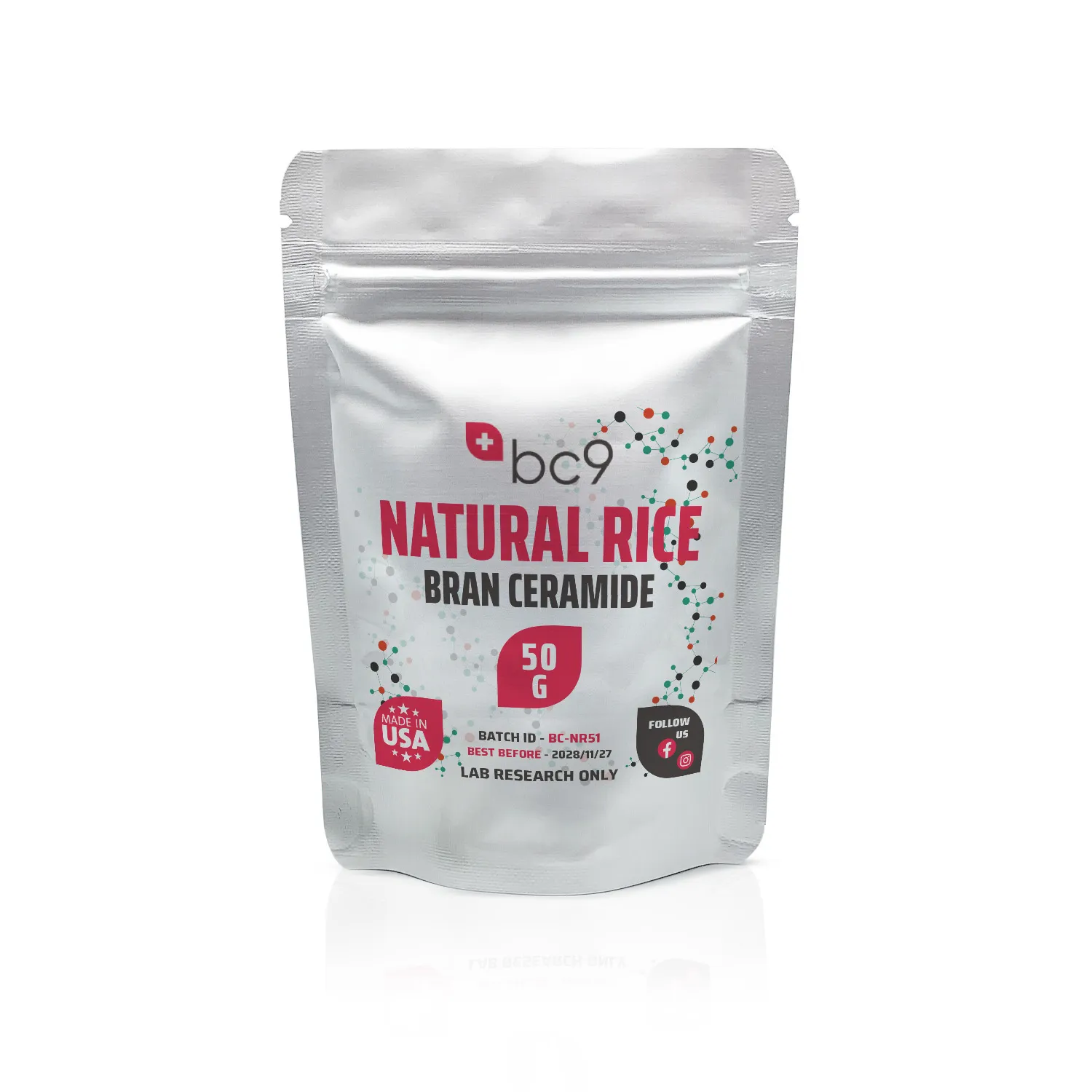
| Natural Rice Bran Ceramide | |
| Source | Rice bran (Oryza sativa), lipid extract |
| CAS reference: | 100403-19-8 (dominant Ceramide NP species; rice bran ceramide is a mixture and no single CAS applies to the full extract) |
| Class | Glucosylceramide (GlcCer) / Ceramide (Cer) mixture |
| Molecular Weight Range | ~350–600 Da per species (C18–C26 fatty acid chain length) |
| Standardized Content | HPLC-standardized ceramide/glucosylceramide grades (commonly 10%–98%, varies by supplier grade) |
| Solubility | Water-dispersible; soluble in water, ethanol, and polar oils |
| Key Components | 4,8-sphingadienine-based glucosylceramides, C23/C24 ceramide species, glycosphingolipids |
Introduction
Natural Rice Bran Ceramide is a plant-derived lipid extract supplied for dermatological and epidermal-barrier research. It is composed of a mixture of glucosylceramide and ceramide species isolated from rice bran, rather than a single defined compound. This product is intended strictly for laboratory and research use, not for human or animal consumption.
Key Characteristics
The extract is HPLC-standardized to verify glucosylceramide and ceramide content, giving researchers a consistent lipid composition across batches for reproducible experimental conditions.
Research Applications
Rice Bran Ceramide is used in dermatological and lipid biochemistry research investigating stratum corneum structure, epidermal barrier lipid organization, and transepidermal water loss (TEWL) dynamics.
Research Benefits
Rice Bran Ceramide and Transepidermal Water Loss Regulation
In a hairless mouse model, dietary glucosylceramide sourced from rice bran and germ was investigated for its effect on epidermal water loss following both chronic and acute barrier perturbation. Researchers observed that supplementation was associated with reduced TEWL and improved stratum corneum flexibility during the recovery period, offering a model for studying how dietary lipids influence barrier repair kinetics.
Rice Bran Ceramide and Stratum Corneum Lipid Organization
Research suggests that specific glucosylceramide and ceramide species purified from rice, when applied to a reconstructed human epidermis model, may contribute to lamellar lipid organization by upregulating glucosylceramide synthase activity. This was linked to increased keratohyalin granules and desmosomes, along with elevated filaggrin and corneodesmosin expression — proteins studied for their role in epidermal cohesion and hydration signaling.
Rice Bran Ceramide and Human Skin Barrier Studies
Studies have investigated orally administered plant-derived glucosylceramide and ceramide mixtures in a randomized, double-blind, placebo-controlled human trial. Participants receiving the plant-derived ceramide extract showed significantly lower TEWL after 12 weeks compared to placebo, offering researchers a framework for evaluating how dietary sphingolipids may be explored in human skin barrier research.
Summary
Natural Rice Bran Ceramide is a research-grade glucosylceramide/ceramide extract derived from rice bran, supplied for investigations into epidermal barrier function. Research applications span transepidermal water loss regulation, stratum corneum lipid organization, and human skin barrier study models. This product is intended exclusively for laboratory and research use and is not approved for human consumption or therapeutic application.
Disclaimer
This content is presented exclusively for educational purposes and should not be construed as medical advice. THE MATERIALS REFERENCED HEREIN ARE EXCLUSIVELY INTENDED FOR LABORATORY AND RESEARCH USE.
Any clinical research initiatives must be conducted under the guidance of the relevant Institutional Review Board (IRB). Similarly, preclinical research involving animals must comply with the directives of the Institutional Animal Care and Use Committee (IACUC), adhering to the standards delineated by the Animal Welfare Act (AWA).
Our informational content is meticulously designed for research-oriented insights and is not a substitute for individual analysis and verification from credible sources before any purchasing decisions are made.
Upon finalizing your order and payment, you explicitly acknowledge and agree to adhere to our Terms and Conditions. Customer contentment stands as our paramount concern. If you are dissatisfied with the product received, kindly contact us at 419-707-5450 or email our support team at support@bc9.co.
IMPORTANT NOTICE: All products showcased on our platform are EXCLUSIVELY INTENDED FOR LABORATORY AND RESEARCH APPLICATIONS. They are expressly not intended for veterinary or human utilization.
References
- Tsuji K, Mitsutake S, Ishikawa J, et al. Dietary glucosylceramide improves skin barrier function in hairless mice. J Dermatol Sci. 2006 Sep 26;44(2):101-7. doi: 10.1016/j.jdermsci.2006.08.005. PMID: 17000082. Read More
- Takeda S, Yoneda A, Miyasaka K, et al. Comparative Study on Epidermal Moisturizing Effects and Hydration Mechanisms of Rice-Derived Glucosylceramides and Ceramides. Int J Mol Sci. 2022 Dec 21;24(1):83. doi: 10.3390/ijms24010083. PMID: 36613524. Read More
- Sanjaya A, Ishida A, Li X, et al. Efficacy and Safety of Oral Administration of Wine Lees Extract (WLE)-Derived Ceramides and Glucosylceramides in Enhancing Skin Barrier Function: A Randomized, Double-Blind, Placebo-Controlled Study. Nutrients. 2024 Jul 1;16(13):2100. doi: 10.3390/nu16132100. PMID: 38999848. Read More

Reviews
There are no reviews yet