
Description
Disclaimer: This compound is provided strictly for laboratory and scientific research purposes only. It is not approved by the U.S. Food and Drug Administration (FDA) for human or veterinary use, including ingestion, injection, or any form of administration.
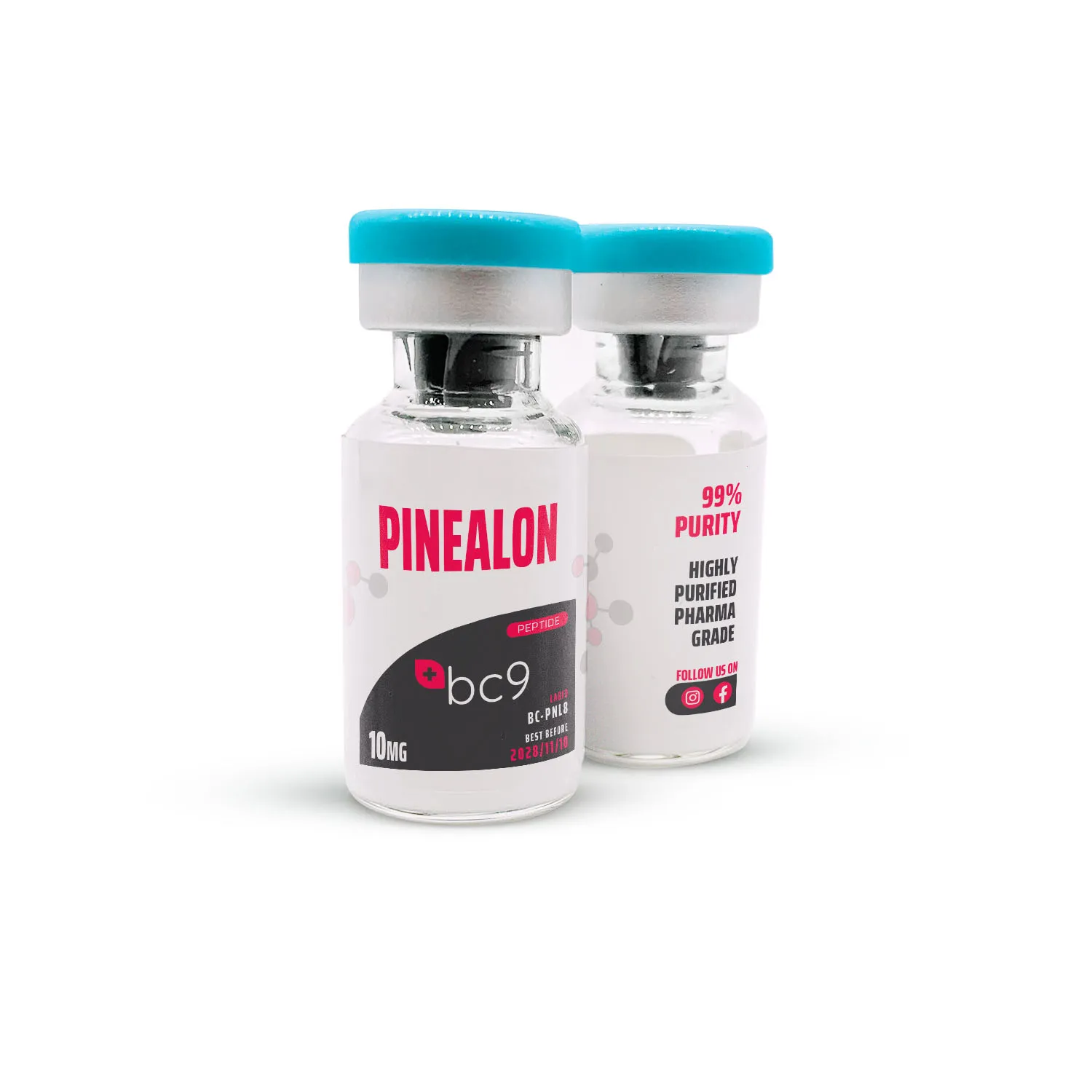
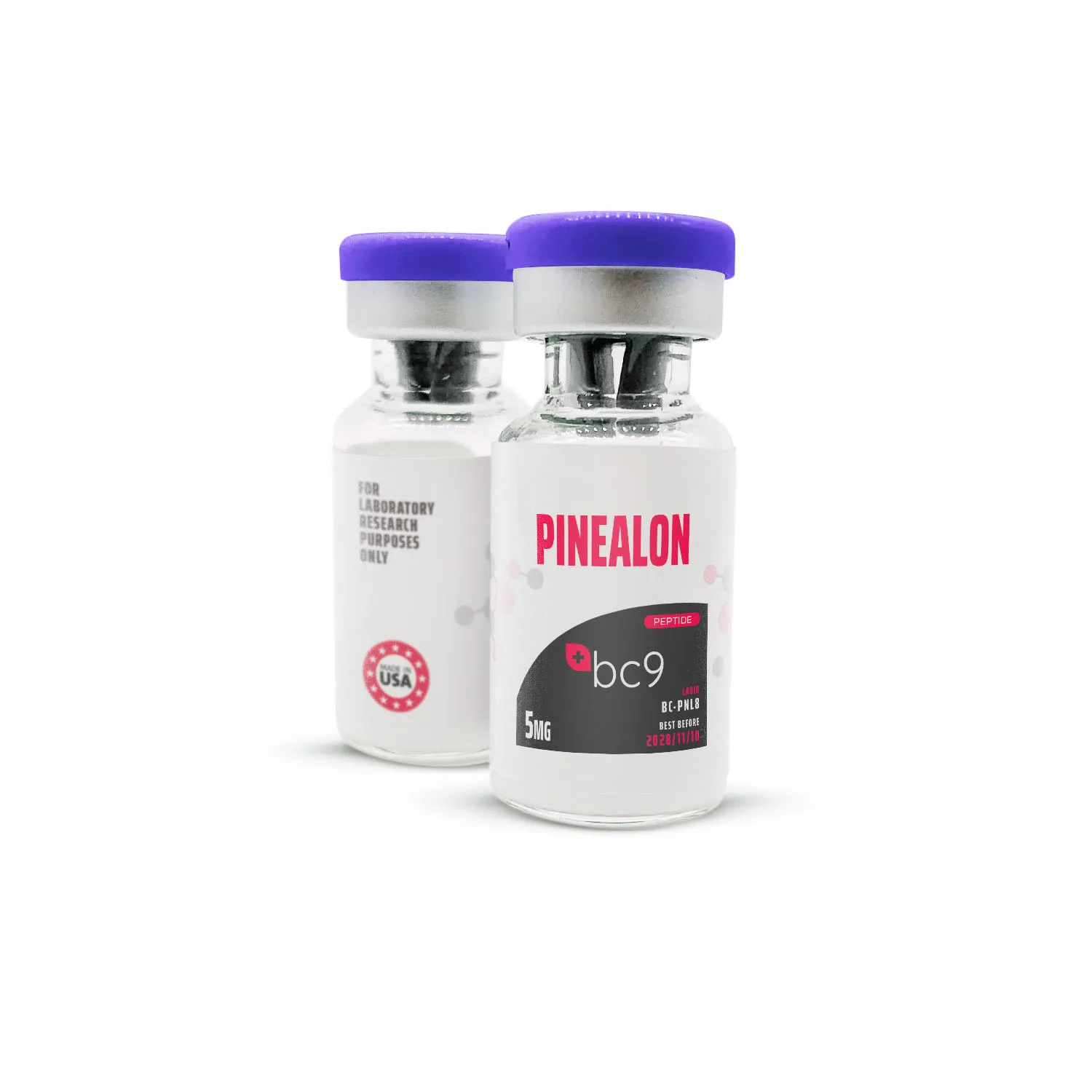
Available SKUs: Pinealon 5mg per vial · Pinealon 10 mg per vial. Identical compound and mechanism. Differentiated by vial mass for different research programme volume requirements.
Single-Laboratory Data Disclosure: All primary Pinealon preclinical data originate from the Khavinson research group (St. Petersburg Institute of Bioregulation and Gerontology). Independent replication by external laboratories has not been published in peer-reviewed literature as of June 2026. This limitation is a mandatory disclosure for any Pinealon research programme.
Chemical Properties of the Compound
Shared Properties – Both Vial Sizes
| Property | Details |
| Compound Name | Pinealon (EDR tripeptide) |
| Sequence | Glu-Asp-Arg (H-Glu-Asp-Arg-OH) |
| CAS Number | 175175-23-2 |
| PubChem CID | 10273502 |
| Molecular Formula | C15H26N6O8 |
| Molecular Weight | 418.41 g/mol |
| IUPAC Name | ((4S)-4-Amino-5-[[(2S)-3-carboxy-1-[[(1S)-1-carboxy-4-(diaminomethylideneamino)butyl]amino]-1-oxopropan-2-yl]amino]-5-oxopentanoic acid |
| Synonyms | EDR | Glu-Asp-Arg | Pinealon | Cortexin-derived neuroprotective tripeptide | Khavinson peptide |
| Compound Class | Khavinson short peptide bioregulator | Neuroprotective tripeptide | NOT a SARM | NOT a prohormone |
| Physical Form | Lyophilized powder |
| Purity | ≥98% |
| Stability / Shelf Life | ≥24 months lyophilized; ~4 weeks reconstituted at 2–8°C |
| Storage Instructions | −20°C, sealed, protected from light and moisture |
| Purity Percentage | ≥98% |
| Regulatory Status | Not FDA-approved | Research use only | No WADA classification identified |
SKU Format Details
| Vial Size | Per-Vial Dose | Recommended Scale |
| Pinealon 5mg | 5mg per vial | Standard cell model assays: ROS quantification, cell viability, antioxidant enzyme expression, ERK 1/2 immunoblot |
| Pinealon 10mg | 10mg per vial | Extended research: multi-replicate independent replication, multi-concentration dose-response, longitudinal neural cell model protocols |
Overview
Pinealon (EDR, Glu-Asp-Arg) is a synthetic Khavinson tripeptide bioregulator originally isolated from Cortexin, a polypeptide neuroprotective preparation, by Vladimir Khavinson at the St. Petersburg Institute of Bioregulation and Gerontology. It belongs to the Khavinson short peptide bioregulator class – a family of di- to tetrapeptides including Epitalon (Ala-Glu-Asp-Gly) and Cortagen – characterized by their extremely short amino acid sequences and proposed chromatin-interaction mechanism rather than classical GPCR or receptor tyrosine kinase-mediated pharmacology. The three-residue sequence Glu-Asp-Arg (MW 392.32 g/mol) is the shortest member of the EDR series and is proposed in published Khavinson group data to cross the blood-brain barrier and interact directly with neuronal chromatin, modulating gene expression in antioxidant defence, circadian regulation, and neuroprotective pathways. No cell-surface receptor for Pinealon has been identified in the published literature.
BC9 supplies Pinealon in two vial sizes: 5mg (standard cell model assay scale) and 10mg (extended research, multi-replicate, or multi-concentration protocols). This compound is not FDA-approved for any use. It is not a dietary supplement or consumer product. Availability is restricted to qualified researchers and licensed laboratory institutions. IRB guidance required for clinical research. IACUC compliance required for preclinical animal research.
Working Mechanism of Pinealon (EDR)
Proposed Chromatin Interaction Mechanism – Direct DNA-Level Gene Regulation: Pinealon does not engage an identified cell-surface receptor. The Khavinson group’s proposed mechanism is direct nuclear chromatin interaction in neural tissue: after proposed BBB penetration, the EDR tripeptide is hypothesized to interact with DNA in neuronal chromatin, modulating gene transcription in antioxidant defence and neuroprotective pathways. This proposal is based on molecular modelling and in vitro binding assays from the Khavinson group and has not been confirmed by independent X-ray crystallography, cryo-EM structural analysis, or validated receptor binding assays in published external laboratory literature. The absence of an identified receptor is a key mechanistic limitation that researchers must account for in study design and result interpretation.
ROS Suppression and Antioxidant Enzyme Upregulation (Khavinson 2012): Khavinson et al. (2012, Rejuvenation Research, PMID 22567179) documented in cerebellar granule cell culture models that EDR treatment suppressed intracellular reactive oxygen species (ROS) levels, upregulated antioxidant enzymes superoxide dismutase 2 (SOD2) and glutathione peroxidase 1 (GPX1) at the gene expression level, improved cell viability under hypoxic stress conditions, and activated ERK 1/2 MAPK phosphorylation. This is the primary mechanistic characterisation study for Pinealon in the peer-reviewed literature and is the benchmark dataset for any replication or extension research programme.
Alzheimer’s Disease Pathway Gene Expression Research (Khavinson 2021): Khavinson et al. (2021, Molecules, PMID 33401560) reported EDR involvement in gene expression pathways relevant to Alzheimer’s disease pathogenesis: APP (amyloid precursor protein) processing pathway gene modulation, amyloid pathway-related gene expression changes, and dendritic spine restoration in Alzheimer’s model neural preparations. These findings extend the Pinealon research scope from antioxidant/cytoprotective endpoints to neurodegeneration pathway investigation. All data originates from the same single research group.
5mg vs 10mg Research Scale Rationale: The 5mg vial provides sufficient material for standard ROS quantification (DCFH-DA assay), MTT/LDH cell viability assays, SOD2/GPX1 qPCR expression analysis, and ERK 1/2 phospho-immunoblot studies in cerebellar granule cell, hippocampal, or cortical neuron culture model systems. The 10mg vial enables multi-replicate independent replication studies – particularly relevant given the single-laboratory origin of existing Pinealon data – as well as multi-concentration dose-response characterisation and extended longitudinal cell model protocols.
Research Findings / Research Applications
Preclinical investigations have examined Pinealon (EDR) in relation to:
- ROS suppression and antioxidant enzyme pathway research: Khavinson et al. (2012, PMID 22567179) documented EDR-mediated SOD2 and GPX1 upregulation in cerebellar granule cell cultures under oxidative and hypoxic stress. Replication of these findings in independent laboratory cell model systems is an unmet research need and a primary rationale for the 10mg vial format
- ERK 1/2 MAPK cascade investigation: EDR treatment was associated with ERK 1/2 phosphorylation in the Khavinson 2012 cerebellar granule cell data. This downstream signalling endpoint is investigated in neural cell model systems using phospho-ERK immunoblot and HTRF-based kinase activity assays
- Alzheimer’s disease model gene expression research: APP processing pathway and amyloid-related gene expression modulation following EDR treatment in Alzheimer’s model neural preparations (Khavinson 2021, PMID 33401560) – investigated in iPSC-derived neuronal models or established Alzheimer’s model cell lines as independent replication targets
- Dendritic spine morphology research: Dendritic spine restoration reported in Khavinson 2021 Alzheimer’s model data provides a structural neuroplasticity endpoint for investigation in hippocampal cell model systems using confocal morphometric analysis, relevant to the broader field of synaptic density and connectivity research
Note: These findings are based on early-stage and preclinical research. Results are not consistent across all models, and data remain limited without validation in human clinical settings.
Risks & Handling Information
- The use of appropriate personal protective equipment (PPE) is essential. Nitrile gloves, a laboratory coat, and eye protection are required at a minimum.
- Handling should occur within controlled laboratory environments. Reconstitute under aseptic conditions with sterile water or physiological buffer at appropriate pH for neural cell model use.
- Do not inhale, ingest, or make direct skin contact with the compound. Pinealon is a synthetic tripeptide with no identified receptor; off-target pathway interactions in biological systems have not been characterized.
- The toxicological profile of Pinealon is not established beyond the Khavinson group cell model data. No chronic toxicity data exists. No human safety data has been established for research-grade Pinealon at either vial size. Exposure risks remain uncertain due to limited independent safety characterization. Data scarcity does not equal confirmed safety.
- Improper storage conditions, including exposure to heat, light, or moisture, may result in tripeptide degradation and compromised sample integrity. Store at −20°C, sealed, light-protected.
FAQs
What is the difference between the 5mg and 10mg vials?
Both contain identical Pinealon (EDR) at ≥98% purity with the same proposed mechanism. The 5mg vial is calibrated for standard cell model assays (ROS quantification, cell viability, SOD2/GPX1 expression, ERK phospho-immunoblot) at typical laboratory volumes. The 10mg vial is designed for multi-replicate independent replication studies, multi-concentration dose-response characterisation, or extended longitudinal neural cell model protocols where higher total reagent volume is required.
What is the key data limitation for Pinealon research?
All primary Pinealon preclinical data originate from the Khavinson group (St. Petersburg Institute of Bioregulation and Gerontology). No independent external laboratory replication of Pinealon-specific findings has been published in peer-reviewed literature. No cell-surface receptor has been identified. These limitations must be central to any Pinealon research programme design, statistical power calculation, and result interpretation framework.
How does Pinealon differ from Epitalon (another Khavinson peptide)?
Epitalon (Ala-Glu-Asp-Gly) is a four-residue Khavinson bioregulator derived from the pineal gland extract Epithalamin, primarily investigated for telomerase activation and circadian melatonin pathway modulation. Pinealon (EDR, Glu-Asp-Arg) is a three-residue bioregulator derived from Cortexin, primarily investigated for neuroprotective, antioxidant, and Alzheimer’s pathway gene expression modulation in neural tissue. Despite their structural similarity as Khavinson tripeptides, their proposed target tissues, gene expression targets, and research applications are distinct.
What storage conditions are required for both vials?
Store both 5mg and 10mg lyophilized vials at −20°C in sealed, light-protected containers. Reconstitute with sterile water under aseptic conditions. Reconstituted solution stable for approximately 4 weeks at 2–8°C. Avoid repeated freeze-thaw cycles.
Is Pinealon a SARM or a prohormone?
No. Pinealon is a synthetic neuroprotective tripeptide (Glu-Asp-Arg). It does not interact with androgen receptors (not a SARM) and does not convert to an active steroid hormone (not a prohormone). It is classified as a Khavinson short peptide bioregulator in the neuroprotective research category.
References
- Khavinson V, Ribakova Y, Kulebiakin K, et al. Pinealon increases cell viability by suppressing free radical levels and activating proliferative processes. Rejuvenation Research. 2012;15(3):313–316. https://pubmed.ncbi.nlm.nih.gov/22567179/
- Khavinson V, Linkova N, Diatlova A, Trofimova S. EDR Peptide: Possible mechanism of gene expression and protein synthesis regulation involved in the pathogenesis of Alzheimer’s disease. Molecules. 2021;26(1):159. https://pubmed.ncbi.nlm.nih.gov/33401560/
This content is presented exclusively for educational purposes and should not be construed as medical advice. THE MATERIALS REFERENCED HEREIN ARE EXCLUSIVELY INTENDED FOR LABORATORY AND RESEARCH USE.
Any clinical research initiatives must be conducted under the guidance of the relevant Institutional Review Board (IRB). Similarly, preclinical research involving animals must comply with the directives of the Institutional Animal Care and Use Committee (IACUC), adhering to the standards delineated by the Animal Welfare Act (AWA).
Our informational content is meticulously designed for research-oriented insights and is not a substitute for individual analysis and verification from credible sources before any purchasing decisions are made.
Upon finalizing your order and payment, you explicitly acknowledge and agree to adhere to our Terms and Conditions. Customer satisfaction stands as our paramount concern. If you are dissatisfied with the product received, kindly contact us at 419-707-5450 or email our support team at support@bc9.co.
IMPORTANT NOTICE: All products showcased on our platform are EXCLUSIVELY INTENDED FOR LABORATORY AND RESEARCH APPLICATIONS. They are expressly not intended for veterinary or human utilization.

Reviews
There are no reviews yet