

TLDR (Quick Takeaways)
- MOTS-C is a 16-amino-acid mitochondria-encoded peptide. It was discovered in 2015 and may act as a regulator and stress responder.
- Preclinical (animal + cellular) evidence is substantial. MOTS-C is believed to improve insulin sensitivity. It also has the potential to reduce diet-induced weight gain. Some studies suggest that MOTS-C may enhance metabolic flexibility. All of these are based on mice and cell models.
- Mechanism: Several potential effects of MOTS-C are attributed to its ability to activate AMPK. Some are influenced by the peptide’s regulatory cross-talk between mitochondria and the nucleus.
- Human data is limited: There are observational studies of circulating MOTS-C and its known analogs. However, no broad, completed Phase 3 trials can establish MOTS-C’s efficacy and safety in humans.
- Safety/Regulatory: MOTS-C is classified as a research compound, not approved for human use. Moreover, sports anti-doping authorities (e.g., USADA) flag MOTS-C as prohibited for athletes under metabolic modulators.
What is MOTS-C?
MOTS-C stands for mitochondrial open reading frame of 12s rRNA type-C. It is a 16-amino-acid peptide encoded within the mitochondrial genome. MOTS-C was first discovered in 2015. [1]
This research chemical belongs to a family of mitochondrial-derived peptides (MDPs). As such, MOTS-C appears to communicate metabolic status between mitochondria and the nucleus/cytosol. In research settings, MOTS-C was observed to act as a signaling molecule that influences systemic metabolism.
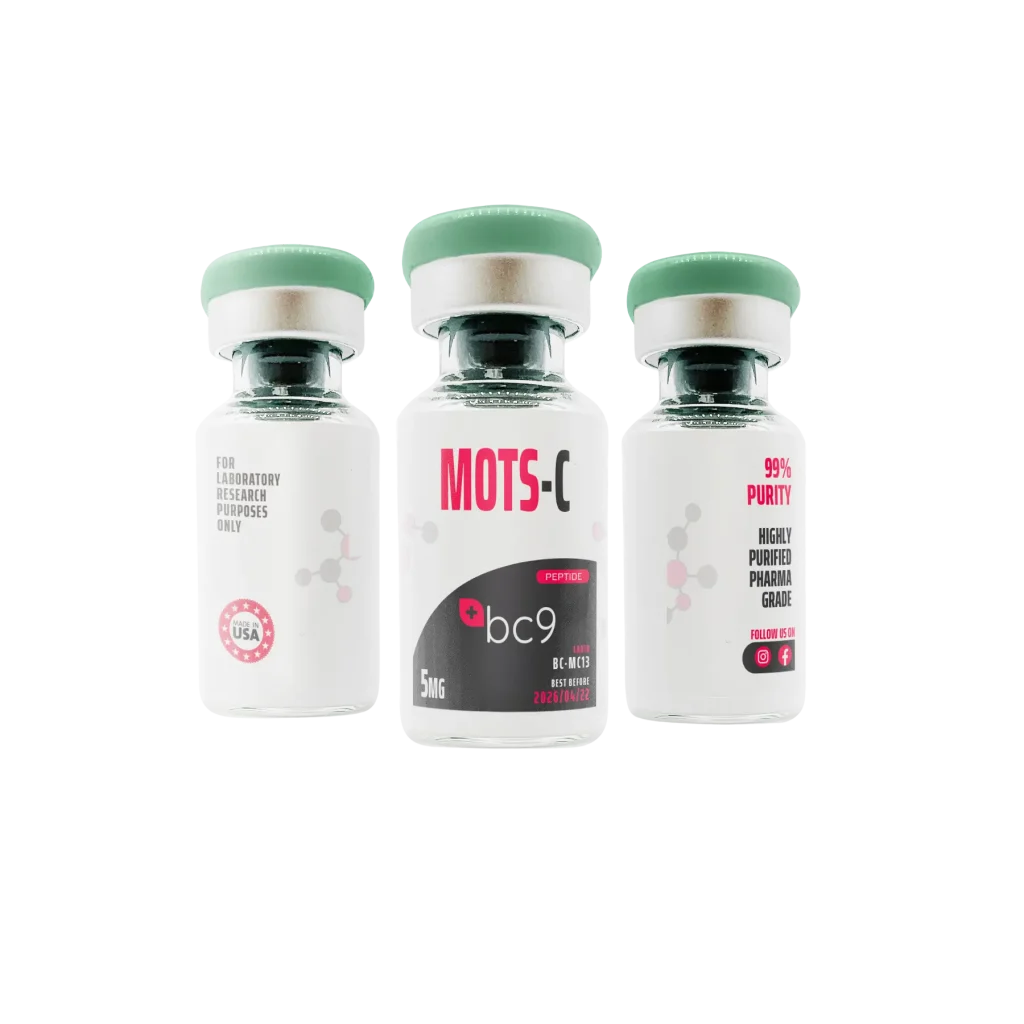
How MOTS-C Works
Below are the known mechanisms of action of the MOTS-C research peptide:
Activation of AMPK (Cellular Energy Sensor)
Several studies show that MOTS-C activates the AMP-activated protein kinase (AMPK). Through this action, the investigational chemical could promote glucose uptake, fatty acid oxidation, and mitochondrial biogenesis signals. All of these processes occur during exercise. [2]
Nuclear Translocation and Gene Regulation
Another notable property of the MOTS-C peptide is its ability to translocate to the nucleus. This occurs during metabolic stress. It can also modulate the gene expression of nuclear genes involved in metabolism and stress response. [3]
Interactions with Signaling Proteins
Current research suggests that MOTS-C binds or modulates specific targets. These could be CK2 and Bcl-2 family members. With this mechanism of action, MOTS-C can be linked to muscle regulation, cell survival, and anti-senescence pathways. [4]
Antioxidant and Anti-inflammatory Pathways
Several studies indicate MOTS-C may reduce levels of reactive oxygen species (ROS) and inflammatory markers. It has also demonstrated the ability to modulate pathways like Keap1-Nfr2 in the liver and other tissues. [5]
Potential MOTS-C Peptide Benefits Backed By Research
Skeletal Muscle Dynamics
In laboratory studies with mice, the MOTS-C peptide has been shown to counteract age-related changes in muscle tissue. [6]
One of its notable effects is its ability to enhance glucose uptake into skeletal muscle. This is achieved when MOTS-C improves sensitivity to AMPK activation. The pathway is known for operating independently of insulin. This means that glucose may still be shuttled into muscle cells even when insulin signaling is impaired.
Lipid Utilization and Storage Control
Animal research suggests that MOTS-C influences fat regulation at multiple levels.
In mouse models with low estrogen, administration of MOTS-C was purported to improve brown fat activity. It was also observed to reduce adipose tissue build-up. Additional work shows that the peptide can help protect fat tissue from inflammation and dysfunction. [7]
Glucose Regulation and Insulin Responsiveness
Some preclinical data connect MOTS-C to insulin responsiveness.
In mouse models, supplementation of the MOTS-C peptide improved insulin sensitivity. On the other hand, some observational studies suggest that circulating MOTS-C levels are associated with insulin sensitivity among lean research subjects. [8]
Bone Remodeling and Structural Integrity
Cell-based experiments indicate that MOTS-C can potentially support bone health. This effect is believed to enhance the TGF-beta/SMAD signaling pathway in osteoblasts. These are the cells responsible for building bone. [9]
Using this action, MOTS-C promoted type I collagen synthesis and improved osteoblast survival.
Genetic Variants and Lifespan Associations
Some genetic studies have identified a naturally occurring variant of MOTS-C. It is a lysine-to-glutamate substitution at position 14 of the peptide. The mentioned variation has been linked to exceptional longevity in specific research subjects. As such, MOTS-C has also sparked interest related to its possible effect on longevity. [10]
Vascular Function and Cardiac Stress Response
Certain research models have revealed a connection between MOTS-C and vascular health.
In clinical observations, lower circulating MOTS-C levels correlated with higher markers of endothelial dysfunction. [11]
Moreover, complementary animal studies demonstrated that MOTS-C may improve microvascular responsiveness. This was observed when the experimental peptide supposedly enhanced the sensitivity of endothelial cells to signaling molecules (acetylcholine). [11]
IMPORTANT: MOTS-C is classified as a research compound, meaning it is not FDA-approved for human consumption. The potential effects mentioned in this section are derived from limited animal and cell studies. These are provided for educational purposes only, not to be taken as a promotion for medical use. Only buy MOTS-C for laboratory research purposes.
Safety, Side Effects, and Regulatory Status
- Known/Reported Side Effects: Because MOTS-C is a research compound and not an approved therapeutic, there are no established safety profiles for human use. However, based on animal studies and anecdotal reports from research settings, the following MOTS-C peptide side effects have been noted:
- Injection-site reactions
- Alterations in metabolic rate markers
- Changes in stress-response signaling pathways
- Anti–Doping Agencies: Sporting authorities (USADA and related bodies) consider MOTS-C a metabolic modulator. As such, it is flagged as prohibited for athletes.
MOTS-C vs Other Performance Research Peptides
| Peptide | Primary Mechanism of Interest | Research Applications | Distinguishing Feature |
| MOTS-C | Mitochondrial signaling → AMPK activation, nuclear gene regulation | Metabolism, aging, bone health, vascular biology | Encoded in mitochondrial DNA |
| Ipamorelin | Ghrelin receptor agonism → Growth hormone release | Endocrine research, GH regulation | Highly selective GH secretagogue |
| TB-500 | Actin-binding fragment → Cell migration & angiogenesis | Tissue repair, regeneration, wound healing | Synthetic peptide fragment of Thymosin Beta-4 |
BC9 sells Ipamorelin and TB-500 as research compounds.
BC9 Your Reliable MOTS-C Online Provider
When sourcing MOTS-C for your research, BC9 stands out as a trusted and reliable supplier. Every vial is accompanied by a certificate of analysis (COA) to ensure product transparency. This practice also verifies purity and consistency.
Manufactured under strict quality controls, all of our peptides are research-grade and suitable for your advanced scientific studies. With a broad catalogue of research compounds, the BC9 team supports a wide range of experimental needs. This allows laboratories to source multiple peptides from a single dependable partner.
Conclusion
MOTS-C represents an intriguing example of a mitochondria-derived peptide with diverse biological roles under study. This is due to the compound’s links to metabolic regulation, stress adaptation, and aging pathways.
Promising data exists in preclinical studies. However, further work is required to clarify its mechanisms, applications, and long-term implications.
References
- Lee, C., Zeng, J., Drew, Brian G., Sallam, T., Martin-Montalvo, A., Wan, J., Kim, S.-J., Mehta, H., Hevener, Andrea L., de Cabo, R., & Cohen, P. (2015). The Mitochondrial-Derived Peptide MOTS-c Promotes Metabolic Homeostasis and Reduces Obesity and Insulin Resistance. Cell Metabolism, 21(3), 443–454. https://doi.org/10.1016/j.cmet.2015.02.009
- Yang, B., Yu, Q., Chang, B., Guo, Q., Xu, S., Yi, X., & Cao, S. (2021). MOTS-c interacts synergistically with exercise intervention to regulate PGC-1α expression, attenuate insulin resistance, and enhance glucose metabolism in mice via the AMPK signaling pathway. Biochimica et Biophysica Acta (BBA) – Molecular Basis of Disease, 1867(6), 166126. https://doi.org/10.1016/j.bbadis.2021.166126
- Kim, K. H., Son, J. M., Benayoun, B. A., & Lee, C. (2018). The Mitochondrial-Encoded peptide MOTS-C translocates to the nucleus to regulate nuclear gene expression in response to metabolic stress. Cell Metabolism, 28(3), 516-524.e7. https://doi.org/10.1016/j.cmet.2018.06.008
- Kumagai, H., Coelho, A. R., Wan, J., Mehta, H. H., Yen, K., Huang, A., Zempo, H., Fuku, N., Maeda, S., Oliveira, P. J., Cohen, P., & Kim, S. (2021). MOTS-c reduces myostatin and muscle atrophy signaling. AJP Endocrinology and Metabolism, 320(4), E680–E690. https://doi.org/10.1152/ajpendo.00275.2020
- Chen, F., Li, Z., Wang, T., Fu, Y., Lyu, L., Xing, C., Li, S., & Li, N. (2025). MOTS-c mimics exercise to combat diabetic liver fibrosis by targeting Keap1-Nrf2-Smad2/3. Scientific Reports, 15(1). https://doi.org/10.1038/s41598-025-03526-2
- Wan, W., Zhang, L., Lin, Y., Rao, X., Wang, X., Hua, F., & Ying, J. (2023). Mitochondria-derived peptide MOTS-c: effects and mechanisms related to stress, metabolism, and aging. Journal of Translational Medicine, 21(1). https://doi.org/10.1186/s12967-023-03885-2
- Lu, H., Tang, S., Xue, C., Liu, Y., Wang, J., Zhang, W., Luo, W., & Chen, J. (2019). Mitochondrial-derived peptide MOTS-C increases adipose thermogenic activation to promote cold adaptation. International Journal of Molecular Sciences, 20(10), 2456. https://doi.org/10.3390/ijms20102456
- Yin, Y., Pan, Y., He, J., Zhong, H., Wu, Y., Ji, C., Liu, L., & Cui, X. (2021). The mitochondrial-derived peptide MOTS-c relieves hyperglycemia and insulin resistance in gestational diabetes mellitus. Pharmacological Research, 175, 105987. https://doi.org/10.1016/j.phrs.2021.105987
- Yi, X., Hu, G., Yang, Y., Li, J., Jin, J., & Chang, B. (2023). Role of MOTS-c in the regulation of bone metabolism. Frontiers in Physiology, 14. https://doi.org/10.3389/fphys.2023.1149120
- Fuku, N., Pareja‐Galeano, H., Zempo, H., Alis, R., Arai, Y., Lucia, A., & Hirose, N. (2015). The mitochondrial‐derived peptide MOTS‐c: a player in exceptional longevity? Aging Cell, 14(6), 921–923. https://doi.org/10.1111/acel.12389
- Qin, Q., Delrio, S., Wan, J., Widmer, R. J., Cohen, P., Lerman, L. O., & Lerman, A. (2017). Downregulation of circulating MOTS-c levels in patients with coronary endothelial dysfunction. International Journal of Cardiology, 254, 23–27. https://doi.org/10.1016/j.ijcard.2017.12.001