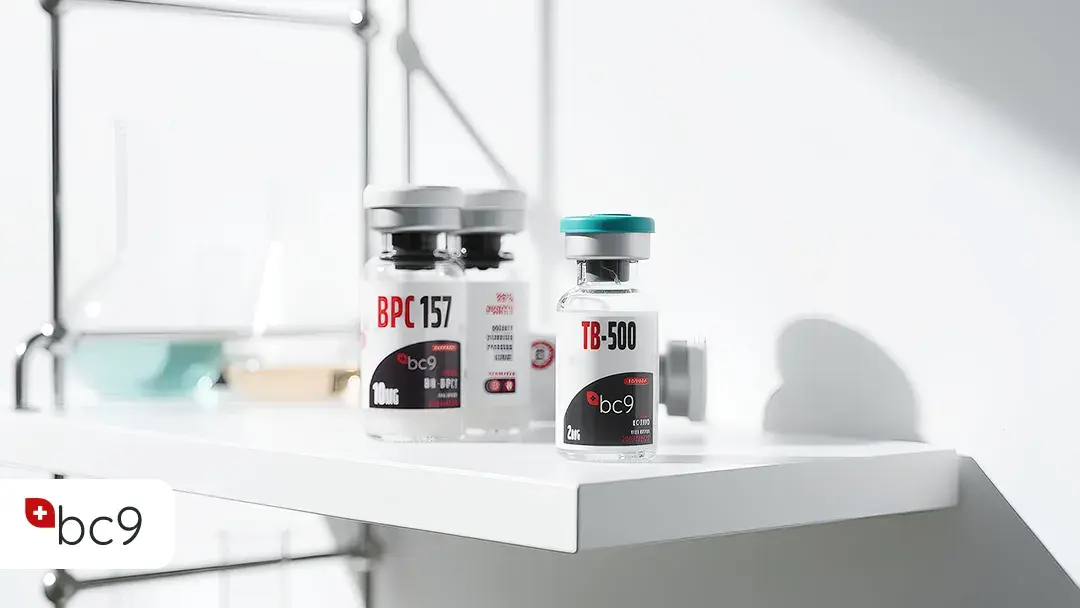
You might have heard of the term “glow peptides.” This is a non-clinical term used to describe a small group of research peptides. These have drawn attention for their possible roles in cellular repair, signaling, and tissue-level regeneration. The peptides’ potential benefits are discussed only for research purposes.
Understanding Peptides in Biological Research
Peptides are biological molecules consisting of short chains of amino acids. These are linked by peptide bonds. Within biological systems, peptides may act as signaling molecules. This means they help regulate how cells respond to damage, stress, and environmental changes. [1]
Unlike structural proteins, peptides are transient. They are capable of delivering instructions, triggering cascades, and then will undergo degradation. Because of this, peptides are widely studied in cellular biology, regenerative science, and tissue repair research. [2]
Glow peptides fall into this specific category. They possess relevance to skin-related research. This is due to their interaction with fibroblasts, endothelial cells, keratinocytes, and components of the cellular matrix. [3]
What Are Glow Peptides?
Glow peptides refer to an informal research grouping. This is not a scientific classification. This labeling functions only to collectively describe peptides that:
- Support tissue repair pathways [4]
- Influence collagen and extracellular matrix activity [5]
- Modulate inflammation-related signaling [6]
- Affect vascular or cellular migration processes [7]
The peptides that most often fit these descriptions are:
- BPC-157
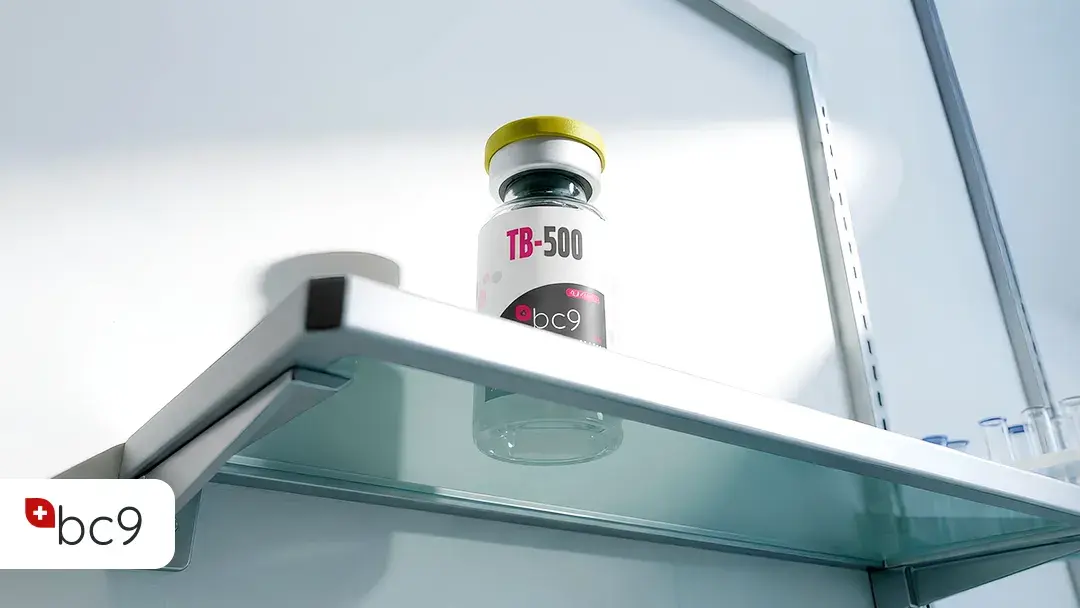
- TB-500
- GHK-Cu
Each peptide functions through a distinct biological mechanism. Blended together, they are studied for how coordinated cellular signaling may lead to tissue integrity and noticeable skin quality.
BPC-157 (Body Protection Compound)
Mechanism of Action
BPC-157 is a synthetic peptide obtained from a naturally occurring protein fragment. In research models, it has been shown to interact with multiple cellular signaling pathways. These are all involved in tissue repair and angiogenesis.
Studies suggest BPC-157 influences:
- Fibroblast migration
- Endothelial cell signaling
- Growth factor expression
- Nitric oxide-related pathways
The man-made chemical does not only act on a single target. Rather, it appears to coordinate repair signaling across different cell types. This effect was specifically observed among connective tissue environments.
Potential Biological Effects Observed in Research Contexts Only
In laboratory and animal models, BPC-157 has been associated with:
- Accelerated tissue organization
- Support of collagen alignment
- Improved cellular communication during repair phases
- Stabilization of damaged tissue structures
These effects are why BPC-157 is typically referenced in discussions regarding skin structure and tissue resilience.
TB-500 (Thymosin Beta-4 Fragment)
Mechanism of Action
TB-500 is a synthetic version of a segment of thymosin beta-4. The latter is a peptide involved in actin regulation. Actin refers to a structural protein essential for cell movement and shape.
TB-500 has undergone extensive studies for its ability to:
- Regulate cytoskeletal organization
- Promote cell migration
- Support angiogenic signaling
- Modulate inflammatory responses
By influencing how cells move and reorganize, TB-500 plays a specific role in remodeling processes.
Potential Biological Effects Observed in Research Only
Research models have linked TB-500 to the following:
- Enhanced cellular migration into damaged areas
- Improved coordination during tissue regeneration
- Support vascular network formation
- Reduction of disorganized tissue repair
GHK-Cu (Copper Tripeptide)
Mechanism of Action
GHK-Cu is a naturally occurring tripeptide that binds copper ions. It is one of the most extensively studied peptides related to skin and connective tissue research.
GHK-Cu interacts with cells by providing the following effects:
- Regulating gene expression related to collagen and elastin
- Supporting antioxidant defense pathways
- Influencing metalloproteinase activity
- Modulating inflammatory signaling
Copper binding is vital to the peptide’s activity. This is because copper plays a specific role in enzymatic processes. The latter is involved in tissue maintenance.
Potential Biological Effects Observed in Research Only
Among scientific studies, GHK-Cu has been associated with the following potential actions:
- Improved extracellular matrix organization
- Support of collagen synthesis balance
- Enhanced tissue remodeling efficiency
- Protection against oxidative stress at the cellular level
These properties explain why GHK-Cu is often discussed in relation to skin vitality. Some studies highlight its potential effect on structural integrity.
Why These Peptides Are Grouped as “Glow Peptides”
When labeled “glow peptides,” it is not based on immediate visual effects. Rather, it reflects a specific idea within controlled experimental settings. The idea is this: Healthy tissue structure and balanced cellular signaling that may lead to improved skiing quality.
When collagen fibers are well-organized, inflammation is regulated, and cellular turnover proceeds efficiently. If these effects occur skin appears smoother, clearer, and more uniform. Again, these observations were recorded within laboratory settings only.
The trio of peptides discussed above is grouped since they influence complementary pathways:
- Structural support
- Cellular migration
- Matrix remodeling
- Inflammatory balance
Glow, Tissue Health, and Cellular Organization
Skin appearance is an outcome of biology. Smoothness, clarity, and luminosity are typically linked to how evenly tissue is structured. These qualities are also related to how effectively cells communicate during repair and renewal cycles.
It is important to emphasize that glow peptides are not studied as cosmetic enhancers. Each peptide is investigated as a possible biological signaling tool. They can help researchers understand how tissue integrity is maintained.
Important Scientific Context
The peptides mentioned in this post are:
- Studied in laboratory and preclinical research settings
- Not approved as drugs, cosmetics, or consumer products
- Use to investigate biological mechanisms, not to make cosmetic claims
This post is prepared for Glow peptides within an educational and research-based framework. Any potential benefits mentioned are not intended to promote human consumption.
Final Thoughts
“Glow peptides” is just a descriptive designation to describe the group of BPC-157, TB-500, and GHK-Cu. This is based on their roles in tissue signaling and repair research. Each research compound operates through a distinct mechanism. However, their mechanisms of action contribute to cellular processes that affect tissue structure and organization.
References:
- Forbes, J., & Krishnamurthy, K. (2023, August 28). Biochemistry, peptide. StatPearls – NCBI Bookshelf. https://www.ncbi.nlm.nih.gov/books/NBK562260/
- Zhong, G., Chang, X., Xie, W., & Zhou, X. (2024). Targeted protein degradation: advances in drug discovery and clinical practice. Signal Transduction and Targeted Therapy, 9(1), 308. https://doi.org/10.1038/s41392-024-02004-x
- Pintea, A., Manea, A., Pintea, C., Vlad, R., Bîrsan, M., Antonoaea, P., Rédai, E. M., & Ciurba, A. (2025). Peptides: Emerging Candidates for the Prevention and Treatment of Skin Senescence: a review. Biomolecules, 15(1), 88. https://doi.org/10.3390/biom15010088
- Cushman, C. J., Ibrahim, A. F., Smith, A. D., Hernandez, E. J., MacKay, B., & Zumwalt, M. (2024). Local and Systemic Peptide Therapies for Soft Tissue Regeneration: ANarrative Review. The Yale Journal of Biology and Medicine, 97(3), 399–413. https://doi.org/10.59249/tknm3388
- Zague, V., Amaral, J. B. D., Teixeira, P. R., De Oliveira Niero, E. L., Lauand, C., & Machado‐Santelli, G. M. (2017). Collagen peptides modulate the metabolism of extracellular matrix by human dermal fibroblasts derived from sun‐protected and sun‐exposed body sites. Cell Biology International, 42(1), 95–104. https://doi.org/10.1002/cbin.10872
- Guo, Z., Shi, T., Xu, P., Wang, Z., Hu, B., Xin, Y., Guo, Z., Gu, Z., Dong, D., & Zhang, L. (2025). Novel Anti-Inflammatory Bioactive Peptide Derived from Yak Bone Collagen Alleviates the Skin Inflammation of Mice by Inhibiting the NF-κB Signaling Pathway and Modulating Skin Microbiota. Foods, 14(24), 4238. https://doi.org/10.3390/foods14244238
- Gattringer, J., Gruber, C. W., & Hellinger, R. (2023). Peptide modulators of cell migration: Overview, applications and future development. Drug Discovery Today, 28(5), 103554. https://doi.org/10.1016/j.drudis.2023.103554